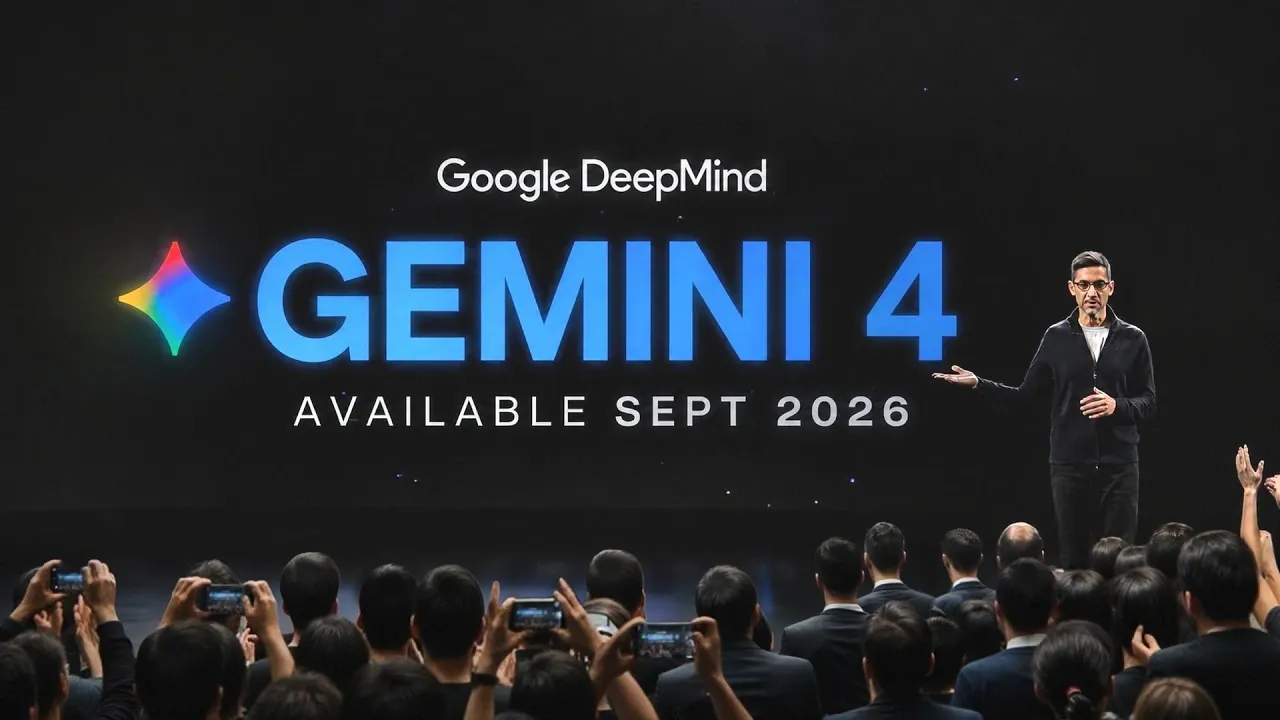
Google’s Gemini 4 represents the next step in the company’s AI development, with its pre-training phase confirmed to have started. Announced during Alphabet’s Q2 earnings call, this model is expected to expand on prior advancements, such as incorporating multimodal capabilities or increasing context window sizes. While specific details about its architecture remain undisclosed, AI Master notes that the lack of transparency has sparked widespread discussion about its potential scale and complexity.
Explore this overview to uncover Gemini 4’s projected development timeline and its possible integration into platforms like the Omni product family. Learn how these advancements could influence Google’s position within the competitive AI landscape. By examining both verified updates and informed analysis, this overview provides a detailed look at what Gemini 4 may bring to the evolving field of artificial intelligence.
What We Know About Gemini 4’s Pre-Training
TL;DR Key Takeaways :
- Google has initiated the pre-training phase of its ambitious AI model, Gemini 4, which aims to set new benchmarks in artificial intelligence, though key details like architecture and capabilities remain undisclosed.
- Speculation surrounds Gemini 4’s potential features, including a 10-million-token context window and integration into Google’s multimodal Omni product family, but none of these have been officially confirmed.
- The model’s release is anticipated, depending on the complexity of its development and ongoing evaluations.
- Google continues to expand its AI portfolio with models like Gemini 3.6 Flash and 3.7 Flash, while testing Gemini 3.5 Pro, showcasing incremental advancements ahead of Gemini 4’s launch.
- Leadership changes at DeepMind and the intensifying AI competition highlight the evolving landscape, with Google using its platforms like Search and Workspace to maintain a competitive edge.
Gemini 4 is expected to build on Google’s existing AI expertise, potentially setting new benchmarks in artificial intelligence. The lack of specific information has only heightened the intrigue surrounding this next-generation model, as industry observers and analysts speculate on its potential impact.
The pre-training phase is a critical foundation in the development of any advanced AI model and Gemini 4 is no exception. This stage involves training the model on vast datasets to establish its core capabilities, which will later be refined through post-training, safety evaluations and infrastructure optimization. Sundar Pichai’s announcement confirmed that Gemini 4’s pre-training is underway, but Google has yet to reveal technical specifics such as the model’s parameter size, architecture, or context window.
The absence of these details suggests that Gemini 4 is still in the early stages of development. Analysts have speculated that the model’s release could occur very soon, though this remains uncertain. The timeline will likely depend on the complexity of the training process and the results of ongoing evaluations.
Rumors and Speculation: Separating Fact from Fiction
The lack of concrete information has given rise to a wave of speculation about Gemini 4’s capabilities. Some rumors suggest that the model will feature a new 10-million-token context window, allowing it to process significantly larger inputs than its predecessors. Others claim that Gemini 4 will boast an unprecedented number of parameters, potentially surpassing other leading AI models in terms of scale and complexity.
Additionally, there is speculation that Gemini 4 may be integrated into Google’s Omni product family, which includes multimodal tools capable of processing text, images and video. While these possibilities are intriguing, it is important to approach such claims with caution. Google has not officially confirmed any of these features, emphasizing the need for skepticism when interpreting unverified reports.

Here are more detailed guides and articles that you may find helpful on Gemini 4.
- Leaked Gemini 4 Launch Targets August 2026 to Rival ChatGPT
- Google Confirms Gemini 4 Will Replace the Gemini 3.5 Pro
- Google Reportedly Cancels Gemini 3.5 Pro for Gemini 4 Pivot
- Google Confirms Gemini 4 Replaces Gemini 3.5 Pro Entirely
- Google Reportedly Pivots to Gemini 4 Over Gemini 3.5 Pro Flaws
- Google Launches Gemini 3.7 Flash to Rival Meta AI Models
- Gemini 4 Flash Leaks Show Strong SVG Focus but Weak Logic
Google’s Current AI Offerings
While Gemini 4 remains in development, Google has continued to expand its existing AI portfolio. Recent releases include Gemini 3.6 Flash and 3.7 Flash, which were launched in July and August 2026, respectively. These models are designed to deliver improved performance and cost efficiency, addressing the growing demand for faster and more affordable AI solutions.
In addition, Google is testing Gemini 3.5 Pro with select partners. Although no timeline for its general availability has been announced, this model is expected to offer enhanced capabilities tailored to specific use cases. These incremental advancements demonstrate Google’s commitment to refining its AI technologies while preparing for the eventual launch of Gemini 4.
Multimodal AI and the Omni Product Family
Google’s Omni product family represents a significant step forward in multimodal AI, allowing seamless interaction across text, image and video inputs. This suite of tools has been praised for its versatility and potential to streamline workflows in various industries. While there is speculation that Gemini 4 may incorporate similar multimodal capabilities, no official confirmation has been provided.
If Gemini 4 does integrate multimodal functionality, it could position the model as a direct competitor to other leading AI systems with similar capabilities. This potential integration would not only enhance user interactions but also expand the range of applications for which the model could be used, from content creation to advanced data analysis.
The Intensifying AI Race
The AI landscape is becoming increasingly competitive, with companies like Anthropic and its Claude Fable 5 model, as well as emerging players like Quen, making significant advancements. These competitors are focusing on areas such as enhanced coding capabilities, cost efficiency and user accessibility. In this context, Google’s ability to integrate its AI models into widely used platforms like Search, Workspace and YouTube gives it a distinct advantage.
Google’s strategic focus on accessibility and practicality ensures that its AI technologies remain relevant and useful to a broad audience. As the race to develop more advanced AI systems continues, this approach could prove to be a key differentiator in maintaining market leadership.
Market Predictions and Strategic Shifts
Market analysts predict that Gemini 4 could debut between late 2026 and mid-2027, depending on the progress of its development. However, recent leadership changes at DeepMind, Google’s AI research subsidiary, may influence this timeline. In August 2026, key leadership transitions were announced, signaling potential shifts in strategic priorities.
These changes could impact the pace and direction of Gemini 4’s development. Strategic adjustments may also reflect broader trends in the AI industry, as companies adapt to evolving market demands and technological advancements.
How to Navigate the Current AI Landscape
As the AI field continues to evolve, it is essential to focus on tools and models that are currently available. Google’s Gemini 3.6 Flash, 3.7 Flash and the Omni product family offer practical solutions for a wide range of applications, from content creation to data analysis. These technologies provide valuable insights into Google’s ongoing advancements and serve as a foundation for future innovations.
When evaluating new developments, it is crucial to rely on verified information from primary sources. Speculative leaks and unconfirmed reports should be approached with caution to avoid misinformation. By staying informed and focusing on existing technologies, users can make the most of the current AI landscape while keeping an eye on emerging advancements like Gemini 4.
Media Credit: AI Master
Disclosure: Some of our articles include affiliate links. If you buy something through one of these links, Geeky Gadgets may earn an affiliate commission. Learn about our Disclosure Policy.
