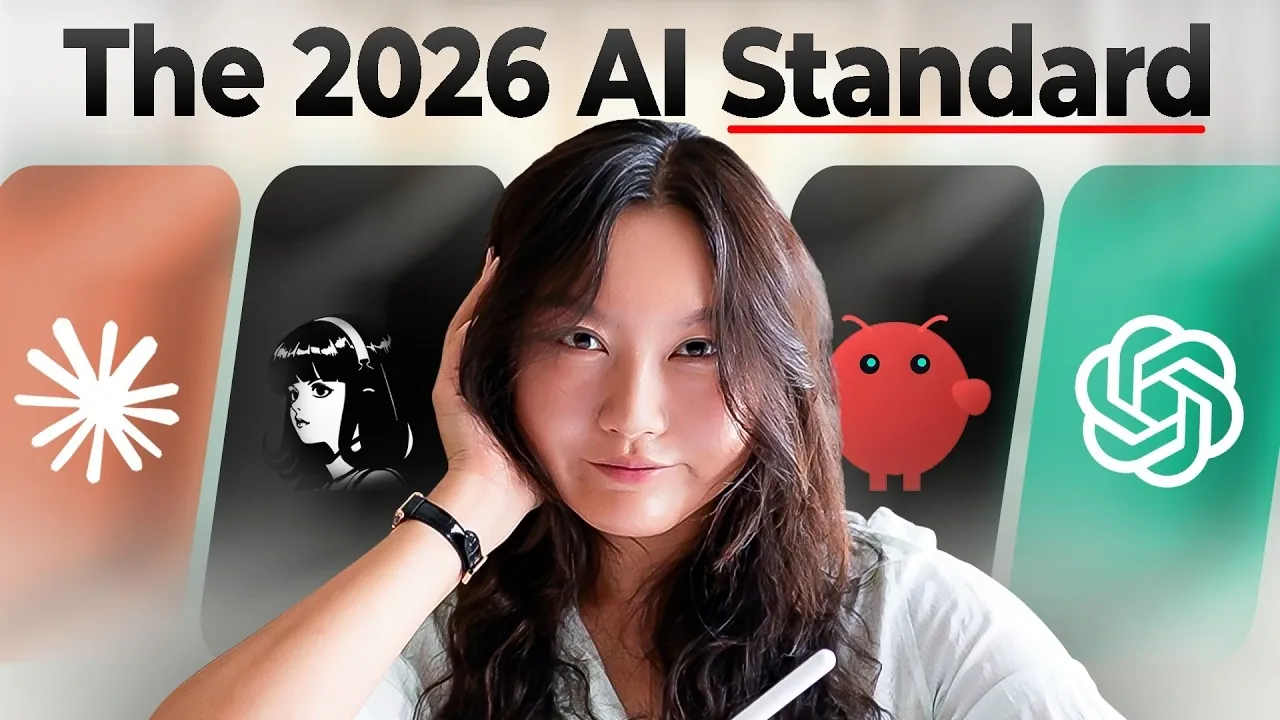
Artificial intelligence is reshaping the professional landscape and by 2026, understanding its essential skills will be critical for staying relevant. Tina Huang highlights the importance of both foundational and advanced competencies, with a focus on practical applications. For example, mastering effective prompting—the ability to craft precise and structured queries, can greatly improve interactions with AI systems, leading to more accurate and relevant outputs. This skill is particularly impactful in areas such as research, content creation and decision-making, making it a key capability for professionals working with AI.
Explore this analysis to gain insight into three specific areas of AI proficiency. Learn how AI agents can streamline complex workflows with minimal oversight, examine the role of data visualization techniques in identifying patterns and trends and understand advanced practices like ethical AI development to promote responsible use. This roadmap provides a structured approach to building the skills needed for an AI-driven future.
Basic Skills
TL;DR Key Takeaways :
- Mastering foundational AI skills, such as effective prompting and proficiency with core AI tools like ChatGPT and Claude, is essential for interacting with AI systems and integrating them into daily activities.
- Intermediate skills, including using AI agents and analyzing data with tools like Tableau or Power BI, enable automation, customization and improved efficiency in workflows.
- Advanced AI skills, such as developing AI agents, creating multi-component pipelines (MCPs), and AI-driven coding, are critical for innovation and solving complex problems in various industries.
- Ethical AI development is a key advanced skill, making sure transparency, fairness and alignment with societal values to mitigate risks and build trust in AI systems.
- Progressing from foundational to advanced AI expertise is vital for thriving in an AI-driven world, positioning individuals for success in the rapidly evolving AI-powered economy by 2026 and beyond.
Building a solid foundation in AI starts with mastering essential skills that enable you to interact effectively with AI systems and integrate them into your daily activities.
- AI-Informed Decision-Making: AI is transforming decision-making processes across various domains, such as finance, healthcare and business strategy. For example, in investing, AI tools can analyze market trends, assess risks and recommend portfolio adjustments based on real-time analytics. By using these tools, you can make data-driven decisions that align with your goals, enhancing both efficiency and outcomes.
- Effective Prompting: Communicating with AI systems requires clarity and precision. Crafting well-structured prompts ensures that AI tools deliver accurate and relevant outputs, whether for research, content creation, or problem-solving. Developing this skill can significantly improve your ability to extract value from AI-powered platforms, making your interactions more productive and efficient.
- Proficiency with Core AI Tools: Familiarity with widely-used AI tools such as ChatGPT, Claude and Gemini is essential. These tools assist with tasks like writing, brainstorming and learning. Additionally, specialized platforms like Perplexity for research or Jasper for marketing can enhance productivity in specific fields. Becoming comfortable with these tools is a critical first step in adopting AI for personal and professional use.
Intermediate Skills
After mastering the basics, intermediate skills enable you to harness AI for more complex and goal-oriented tasks. These competencies focus on improving efficiency, automating workflows and customizing AI solutions to meet specific needs.
- Using AI Agents: AI agents are autonomous systems designed to perform tasks with minimal human intervention. They can automate processes such as scheduling, overview generation, or investment monitoring. For instance, an AI agent could compile a personalized daily digest of news or updates tailored to your interests, saving you time and effort while keeping you informed.
- Implementing Local AI Agents: Local AI agents operate directly on your personal devices, offering enhanced privacy and customization. These agents are particularly valuable for automating tasks without relying on cloud-based services, making sure greater control over your data. Understanding how to configure and optimize open source or proprietary models is essential for maximizing their potential.
- Data Analysis and Visualization: Intermediate AI users should develop the ability to analyze and visualize data using AI tools. Platforms like Tableau, Power BI, or AI-enhanced Python libraries can help you uncover insights, identify trends and present findings in a clear and actionable format. This skill is especially useful for professionals in data-driven fields such as marketing, finance and operations.
Here are more detailed guides and articles that you may find helpful on AI skills.
- The $400K AI Jobs That Companies Are Desperate to Fill
- 9 Advanced Claude Skills You Need to Master in 2026
- How to Set Up Hermes Agent : The AI That Actually Learns from You
- Anthropic Drops Claude Code Skills 2.0 : Adds Evals, A/B Testing Tools & More
- Claude Cowork vs ChatGPT Codex : Which is Actually Better for Everyday Users?
- Claude Just Gained an “Infinite” Context Window : Here is What It Means for Your Workflows
- Convex Chef Review : Simplifying Full-Stack Development for Everyone
- ChatGPT 5.5 Instant Launches : Navigating Its Strengths and Weaknesses
- Introducing Claude Skills : Meet Your New Productivity Partner
- Stop Using Claude Like a Beginner: Every Skill Level Explained
Advanced Skills
Advanced AI skills empower you to design, build and deploy sophisticated AI systems. These competencies are essential for driving innovation, solving complex problems and leading in the rapidly evolving AI landscape.
- Developing AI Agents: Creating AI agents for commercial or specialized applications requires technical expertise. These agents can automate intricate processes, such as client onboarding, fraud detection, or generating detailed financial reports. Success in this area demands a focus on building stable, reliable and cost-effective solutions tailored to specific use cases.
- Creating Multi-Component Pipelines (MCPs): MCPs integrate AI agents with third-party applications and data sources to enable seamless workflows. For example, an MCP might connect a chatbot to a customer relationship management (CRM) platform, automating responses and updating records in real time. Proficiency in MCP development is highly sought after in industries prioritizing operational efficiency through AI.
- AI Coding and Agentic Engineering: Writing and optimizing code with the assistance of AI tools is a critical skill for advanced users. AI platforms can generate code snippets, debug errors and suggest architectural improvements. However, this requires a strong understanding of programming languages such as Python, Java, or C++, as well as a commitment to continuous learning. Mastering AI-driven software development positions you as a leader in the competitive tech landscape.
- Ethical AI Development: As AI systems become more pervasive, understanding and addressing ethical considerations is paramount. Advanced practitioners must ensure that AI solutions are transparent, unbiased and aligned with societal values. This involves implementing fairness algorithms, conducting regular audits and adhering to regulatory standards. Ethical AI development not only builds trust but also mitigates risks associated with misuse or unintended consequences.
Thriving in an AI-Driven World
The progression from foundational AI literacy to advanced technical expertise mirrors the increasing integration of AI into every aspect of life. Basic skills, such as effective prompting and familiarity with AI tools, are essential for participating in an AI-driven society. Intermediate skills, including using AI agents and analyzing data, enhance productivity and streamline workflows. Advanced skills, such as developing AI agents, creating MCPs and ethical AI development, unlock opportunities for innovation and leadership in the AI-powered economy.
By investing in these skills, you can position yourself to excel in 2026 and beyond. As AI continues to shape industries and redefine possibilities, staying ahead of these advancements ensures that you remain adaptable, informed and prepared for the challenges and opportunities of the future.
Media Credit: Tina Huang
Disclosure: Some of our articles include affiliate links. If you buy something through one of these links, Geeky Gadgets may earn an affiliate commission. Learn about our Disclosure Policy.
