For years, rugged phone cases have followed a simple formula: more protection means more material. Thicker corners, heavier shells, deeper bezels, and bulkier frames have traditionally been used to put more distance between a smartphone and the ground.
TORRAS is challenging that brute-force approach with the Ostand Q3 Series. Instead of simply adding material, the company is treating protection as an engineering problem: how can impact energy be intercepted, redirected, and dispersed before it reaches the phone? That philosophy sits behind the Ostand Q3 Air Pro and Ostand Q3 Rugged. The two cases use different structural approaches, but both reflect the same idea: a case can work harder through smarter engineering rather than simply becoming bigger.
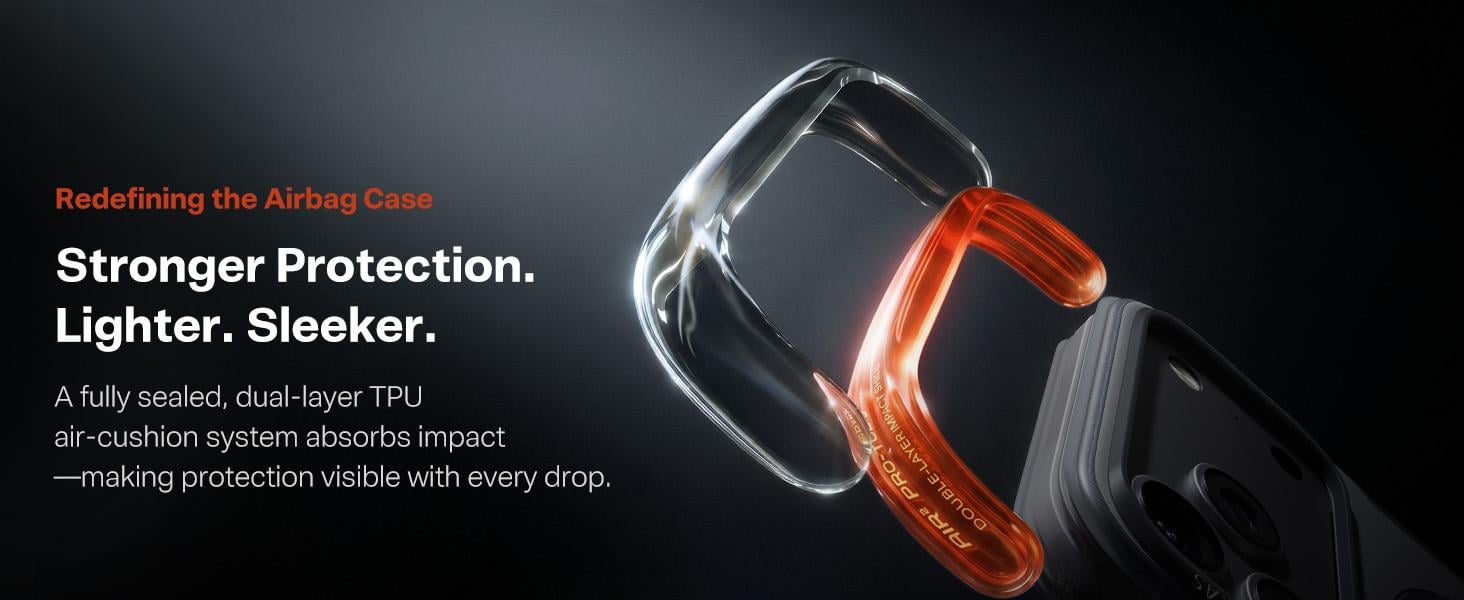
Air Pro-Tech™ Changes the Path of Impact
At the center of the Q3 Air Pro is TORRAS’s Air Pro-Tech™ architecture and its Air Duet™ dual-layer airbag system.
The important distinction is that the two layers are not simply stacked cushions doing the same job. They manage different stages of an impact.
The outer airbag intercepts the initial hit and begins absorbing the force through controlled deformation. The inner airbag then manages the remaining energy, reshaping and dispersing the residual shock across a wider area rather than allowing it to continue inward in a concentrated path.
In simple terms, the process moves from initial impact to cushioning, then to force redistribution and wider energy dispersion.
That changes the traditional protection equation. Instead of relying primarily on thickness, TORRAS is attempting to control how force travels through the case itself.
The company rates the Q3 Air Pro for drop protection from heights of up to 16 feet. TORRAS has also supplied a creator-led durability test in which an iPhone 17 Pro equipped with the case underwent 104 drops from approximately 1.2 meters over one hour, with only minor frame scratches reported afterward.
These figures matter less as isolated specifications than as evidence of the engineering principle behind the product: protection can come from managing impact more intelligently, not simply surrounding the phone with more plastic.
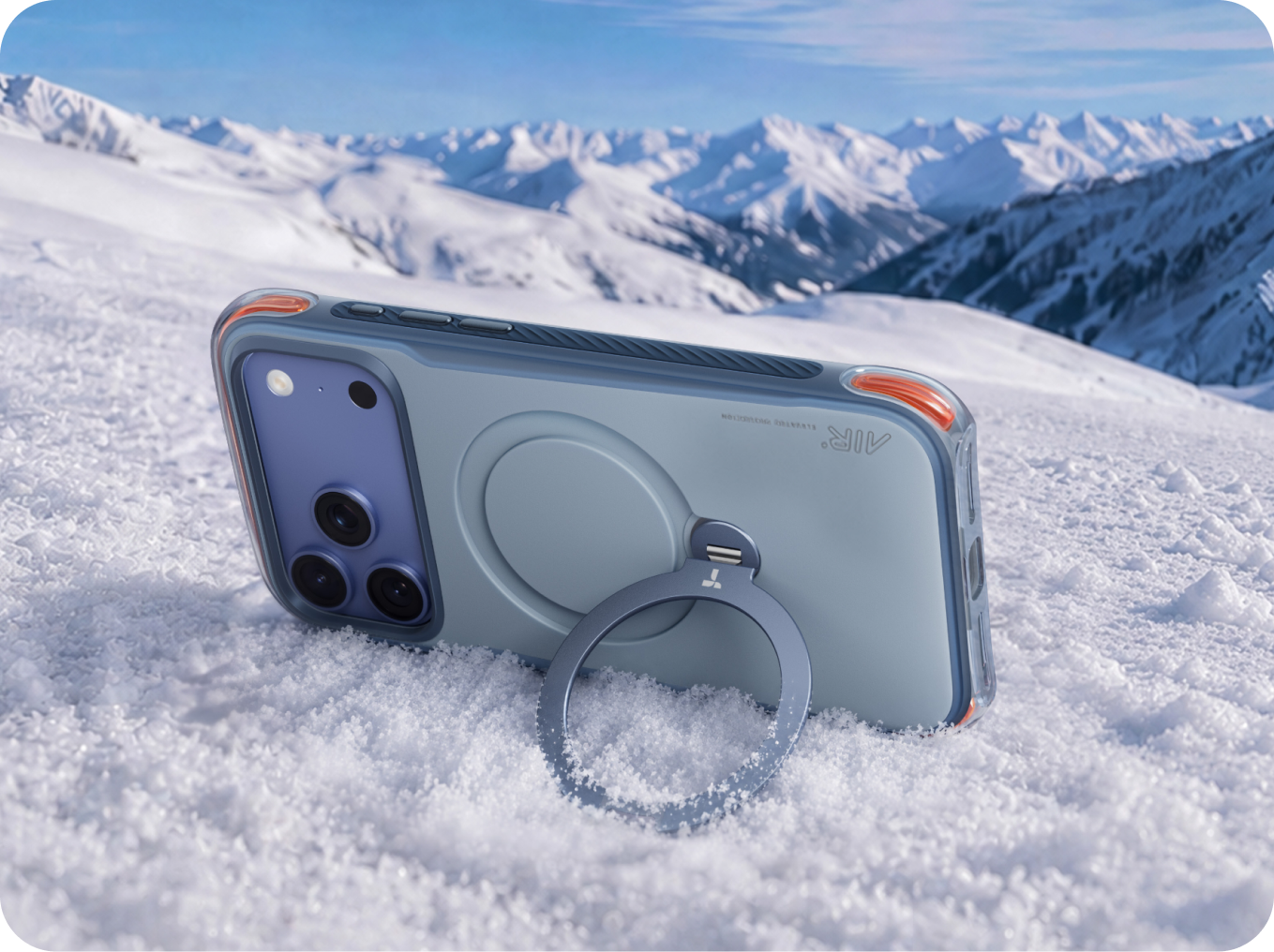
Q3 Rugged Approaches Protection From Another Direction
The Q3 Rugged addresses a different part of the same problem.
For people using their phones while exercising, commuting, cycling, hiking, or working outdoors, preventing a drop can be just as important as surviving one.
That is why the Rugged design combines reinforced structural protection with pronounced side grip. Its overmolded TPU frame, air-cushioned corners, and rigid back structure help manage impact, while textured side rails are designed to give users more control when hands are sweaty, gloved, or constantly moving.
This is not simply a “more extreme” version of the Air Pro. It represents a different protection logic: reduce the likelihood of accidental slips while strengthening the areas most exposed when a drop does happen.
The result reinforces TORRAS’s broader engineering argument. Protection begins before impact, with the way the phone is held and handled, and continues through the case structure if that grip is lost.
Ostand Turns a Kickstand Into a Mechanical System
The engineering thinking continues beyond drop protection.
Both Q3 models integrate TORRAS’s Ostand system using the Tora-QuadraLock™ architecture. Rather than attaching a conventional kickstand to the back of the case, TORRAS builds the mechanism into the product itself.
The idea can be summarized as: 180° Flip. 360° Lock.
That range allows the phone to move between portrait, landscape, and intermediate viewing positions for video calls, content viewing, workouts, navigation, photography, or desk use.
But the more interesting story is what sits inside the mechanism.
TORRAS fits eight structural layers into an approximately 2.7 mm ring, combining rotation, angle stability, and magnetic attachment in a very small space. The hinge axis is machined to a diameter of 1.2 mm with a tolerance of ±0.01 mm, reflecting how precisely the mechanism has to balance movement and resistance.
A stand needs to rotate smoothly, but it also has to remain stable once positioned. Too loose, and the phone moves. Too stiff, and daily adjustment becomes frustrating.
Making that mechanism feel simple is, ironically, a fairly complicated engineering problem.
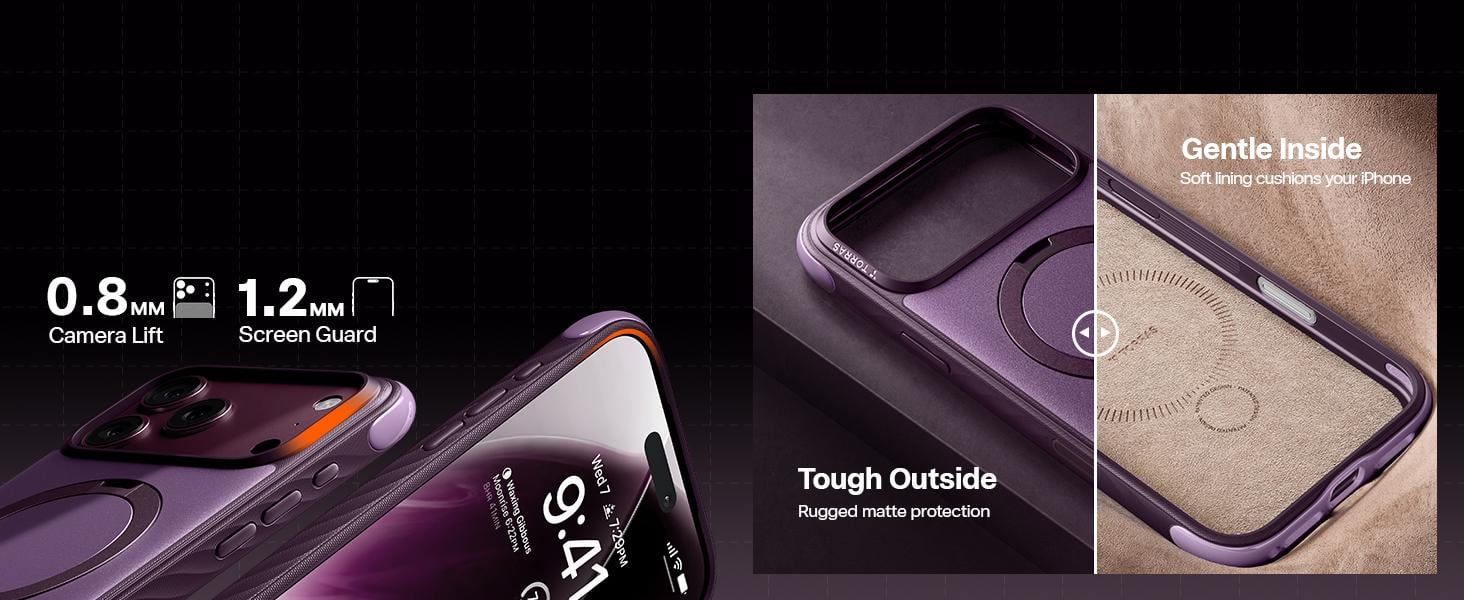
CMF Makes the Engineering Feel Invisible
That leads to another important part of TORRAS’s process: CMF, or Color, Material, and Finish.
For TORRAS, CMF is not simply the cosmetic step that happens after the engineering is complete. It is part of how the engineering becomes usable in everyday life.
The company says each series goes through more than 500 CMF tests and molding verifications. For the back panel alone, TORRAS conducted 576 texture tests to balance smoothness, grip, transparency, material composition, and resistance to yellowing.
The Ostand receives similar attention. It uses 6061 aerospace-grade aluminum, with multiple sandblasting treatments and anodized color development. TORRAS says more than 400 trials were carried out to refine the interaction between texture, metallic tone, color, and reflected light.
Those details serve a practical purpose.
A case may contain airbags, reinforced corners, a precision hinge, magnets, and multiple materials, but it still has to feel like one coherent everyday product. If every technical feature looks like an attachment, functionality quickly turns into clutter.
The role of CMF is therefore to bring the engineering back under control—to make the technology feel integrated rather than accumulated.
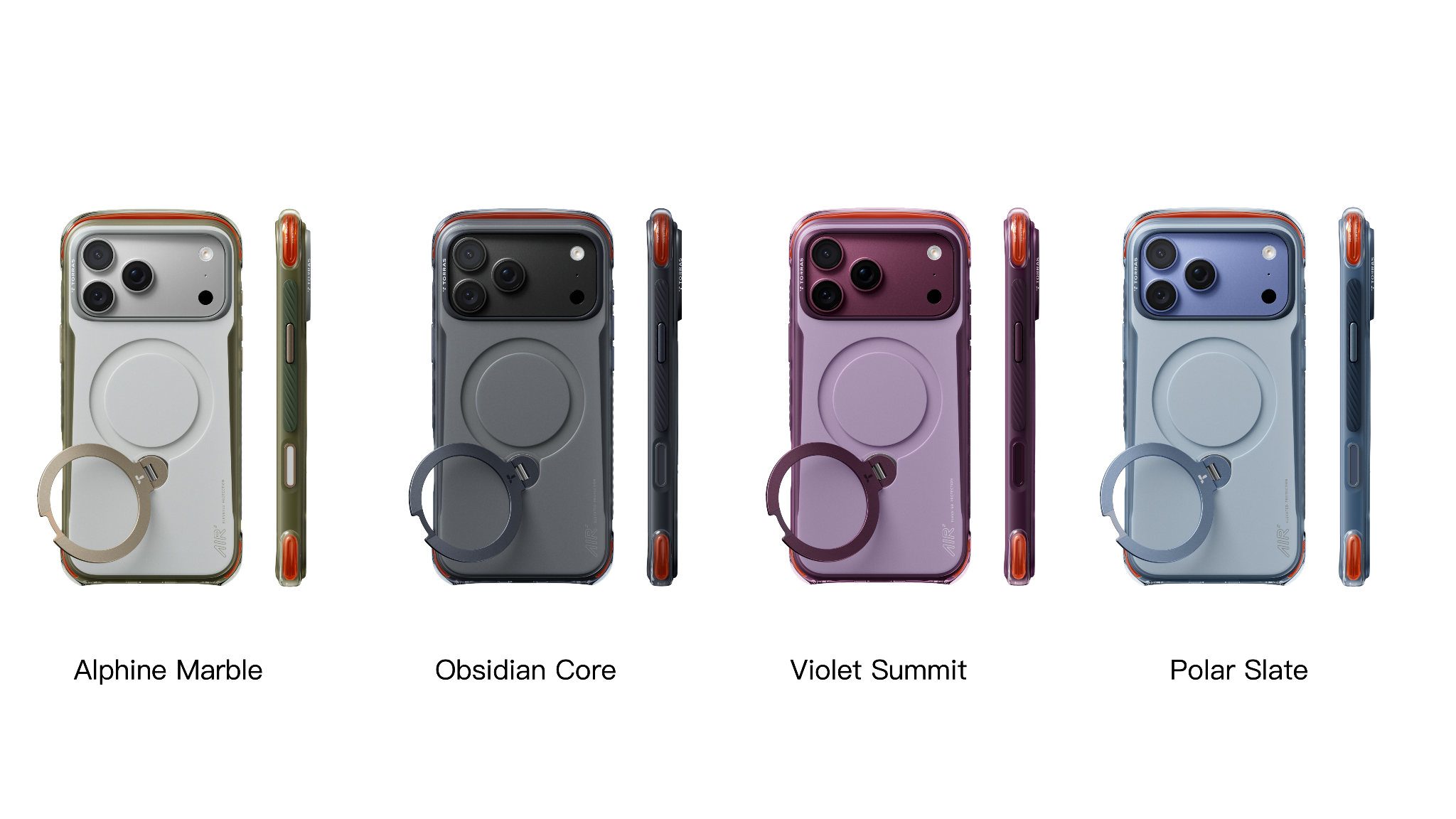
Smarter Engineering Instead of More Material
The Ostand Q3 Series is ultimately built around a different interpretation of ruggedness.
The Q3 Air Pro uses Air Pro-Tech™ and Air Duet™ to change how impact forces move through the structure. The Q3 Rugged combines reinforced protection with grip geometry designed for more active handling. Tora-QuadraLock™ turns the integrated stand into a precision mechanical system, while TORRAS’s CMF process helps package that complexity into something restrained enough for everyday use.
None of these ideas suggests that material no longer matters. It clearly does. But TORRAS is making the case that better protection should not automatically mean adding more of it.
The case works harder because it is engineered more intelligently—not because it simply uses more material.
Disclosure: Some of our articles include affiliate links. If you buy something through one of these links, Geeky Gadgets may earn an affiliate commission. Learn about our Disclosure Policy.
