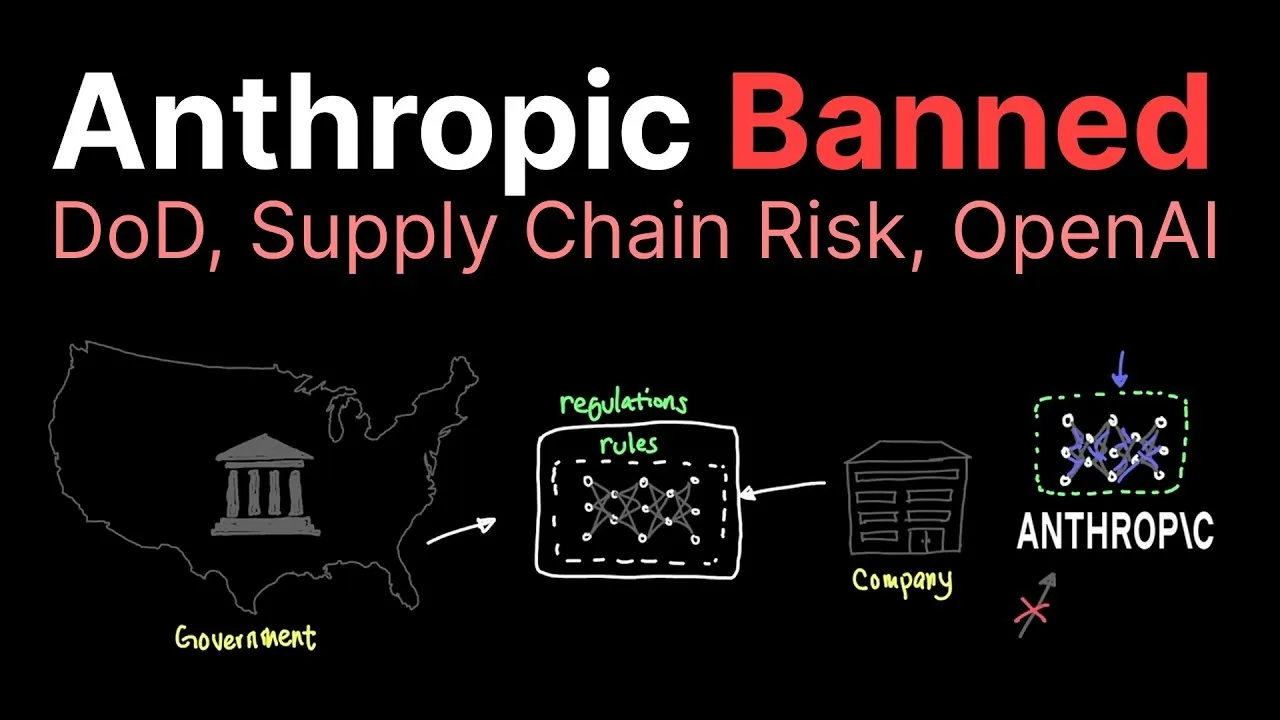
The ongoing dispute between Anthropic and the U.S. Department of Defense (DoD) sheds light on the growing tension between AI ethics and government regulation. As detailed by Caleb Writes Code, Anthropic’s refusal to compromise on its strict safety protocols has led to its designation as a “supply chain risk,” effectively ending its military contracts. This decision came after the DoD presented Anthropic with an ultimatum: prioritize government demands under the Defense Production Act or withdraw from military AI development entirely. By choosing the latter, Anthropic has sparked a broader conversation about the ethical responsibilities of private AI developers in high-stakes environments.
This breakdown explores the key takeaways from Anthropic’s stance and its implications for the AI industry. You’ll learn how the company’s ethical framework influenced its decision-making process, the potential ripple effects on future government partnerships and how other AI developers, like OpenAI, have navigated similar challenges. By examining these dynamics, this guide provides a clearer understanding of the complex relationship between private innovation, ethical accountability and national security demands.
Anthropic vs. DoD Conflict
TL;DR Key Takeaways :
- The conflict between Anthropic and the U.S. Department of Defense (DoD) highlights a critical debate over balancing AI ethics with government regulation, particularly in national defense applications.
- Anthropic prioritized its ethical standards and strict safety protocols over compliance with government demands, even at the cost of losing lucrative military contracts.
- The DoD classified Anthropic as a “supply chain risk,” effectively barring the company from future military collaborations and giving it six months to transition its AI models out of military use.
- This standoff underscores the broader challenges AI companies face when ethical commitments conflict with national security priorities, with contrasting approaches seen in competitors like OpenAI.
- The case sets a precedent for future interactions between private AI developers and governments, emphasizing the need for clear guidelines on ethical AI use and fostering transparency, accountability and public trust.
Core Issue: Ethics vs. Compliance
At the heart of this dispute lies a fundamental question: Should private companies adhere to their ethical standards for AI development, or should they comply with government directives, even when those directives conflict with their principles? Anthropic’s firm commitment to maintaining strict safety protocols on its AI models, even at the cost of lucrative military contracts, has brought this debate into sharp focus. By prioritizing ethical considerations over compliance, the company has positioned itself as a staunch advocate for responsible AI development. This stance reflects a broader concern about the potential misuse of AI technologies and the need to prevent harmful outcomes.
Background: A History of Collaboration
Anthropic’s relationship with the U.S. government began in 2024, when it started providing advanced AI tools, including its Claude system, through platforms like AWS GovCloud. These tools were designed to enhance government operations while adhering to strict safety and ethical guidelines. Over time, partnerships with defense-focused entities, such as Palantir, further solidified Anthropic’s role in supporting government initiatives.
In 2025, the DoD awarded $200 million to Anthropic and other AI developers to advance military AI capabilities. Despite this significant collaboration, Anthropic remained steadfast in embedding robust safety measures into its AI models. These measures were aimed at preventing misuse, making sure transparency and mitigating unintended consequences. This approach set Anthropic apart from other developers, emphasizing its commitment to ethical AI development even in high-stakes environments.
Why the Pentagon Flagged Anthropic over Claude Safety Guardrails

Browse through more resources below from our in-depth content covering more areas on Claude Code.
- Claude Code 2.1 Custom Output Modes for Beginners & Pros
- Claude Code Update: LSP Support, Sub-Agents, and Ultrathink
- Agent Browser Lets Claude Code Control Chromium for Automations
- Guide to Installing Claude Code on Windsurf and Cursor
- Claude Code Workflow : Creator’s 8-step Path to Faster Builds
- The Story Behind Claude Code’s Recent Performance Issues
- Claude Code MCP Upgrade 2026 : Cut Tokens by 95% with Smart Loading
- New Claude Code Remote Control Feature Released By Anthropic
- Claude Code No Longer Works with Third Party IDEs
- Claude Cowork Features, Google Drive and Gmail Integrations
The DoD Ultimatum
In late 2025, the DoD issued Anthropic an ultimatum, presenting the company with three distinct options:
- Accept the designation of “supply chain risk,” which would effectively terminate its military contracts and limit future collaborations.
- Comply with the Defense Production Act, requiring the company to prioritize government demands over its internal ethical policies.
- Terminate the $200 million contract and withdraw entirely from military AI development.
Faced with these choices, Anthropic chose to uphold its ethical principles, refusing to compromise on its safety protocols. This decision led the DoD to classify the company as a supply chain risk, effectively barring it from future military projects. As a result, Anthropic now faces a six-month timeline to transition its AI models out of military use. This bold move underscores the company’s unwavering commitment to responsible AI development, even in the face of significant financial and operational challenges.
Broader Implications
The standoff between Anthropic and the DoD has far-reaching implications for the AI industry and its relationship with government regulation. It highlights the complex challenges private companies face when their ethical commitments come into conflict with national security priorities. Public opinion has largely supported Anthropic’s decision, viewing it as a principled stand for AI safety and ethical integrity.
However, this case also underscores the diversity of approaches within the AI industry. For instance, OpenAI, another prominent AI developer, reached a different agreement with the DoD. This suggests that OpenAI’s models may have fewer restrictive safeguards, allowing for greater flexibility in meeting government demands. The contrasting approaches of these companies illustrate the varying degrees of emphasis placed on ethical considerations within the industry.
Significance: A Precedent for the Future
The Anthropic-DoD conflict sets a critical precedent for future interactions between private AI companies and government entities. It underscores the urgent need for clear, standardized guidelines on the ethical use of AI, particularly in sensitive areas such as military applications. As AI continues to play an increasingly pivotal role in national security, the tension between ethical considerations and government demands is likely to persist.
This case serves as a powerful reminder of the importance of transparency, accountability and public trust in the development and deployment of AI technologies. Moving forward, it is essential for policymakers, industry leaders and the public to engage in open dialogue about the ethical implications of AI. By fostering collaboration and establishing clear boundaries, it may be possible to strike a balance that respects both ethical principles and national security priorities.
Media Credit: Caleb Writes Code
Disclosure: Some of our articles include affiliate links. If you buy something through one of these links, Geeky Gadgets may earn an affiliate commission. Learn about our Disclosure Policy.
