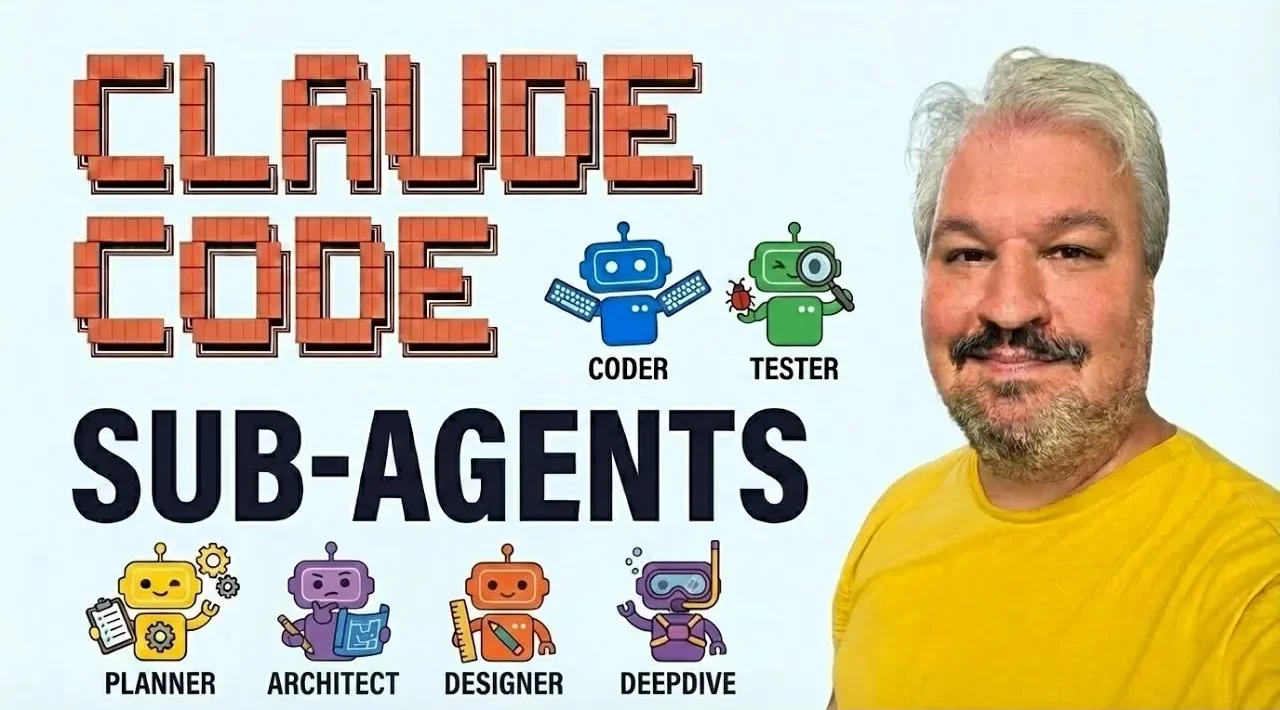
What if you could manage complex projects with the precision of a symphony conductor, delegating tasks seamlessly while keeping the big picture in focus? Leon van Zyl walks through how Claude Code’s sub-agents are transforming workflows by breaking down intricate tasks into manageable, specialized components. Imagine assigning coding to one agent, design to another, and testing to a third, all while preserving the clarity and context of your main project thread. This modular approach doesn’t just save time; it transforms how developers tackle ambitious goals, making sure nothing gets lost in the shuffle. If you’ve ever felt overwhelmed by the sheer volume of details in a large-scale project, sub-agents might be the fantastic option you didn’t know you needed.
In this guide, we’ll explore how sub-agents like the Coder Agent, Code Reviewer Agent, and UI Expert Agent can streamline your development pipeline and enhance collaboration. You’ll discover how these specialized components work in tandem to execute tasks in parallel, maintain critical context, and deliver higher-quality results. Whether you’re building a responsive web app or managing a feature-rich software project, the flexibility and efficiency of sub-agents open up new possibilities for innovation. By the end, you might find yourself rethinking how you approach project management altogether.
Streamlining Workflows with Sub-Agents
TL;DR Key Takeaways :
- Sub-agents in Claude Code are specialized tools designed to handle specific tasks like coding, planning, and testing, allowing efficient task delegation and streamlined workflows.
- They help manage context by offloading tasks, preserving the main thread’s focus, and avoiding unnecessary token usage, which is crucial for large-scale projects.
- Sub-agents can be customized with specific roles and tools, such as UI Expert Agents, Coder Agents, and Code Reviewer Agents, to address unique project requirements effectively.
- Parallel task execution by sub-agents accelerates development by allowing multiple processes, such as planning, coding, and reviewing, to occur simultaneously.
- Key benefits of sub-agents include improved multitasking, enhanced quality through specialization, and efficient management of complex workflows, making sure high-quality project outcomes.
What Are Sub-Agents?
Sub-agents are auxiliary components within Claude Code designed to handle specific tasks. They specialize in areas such as coding, planning, or testing, making sure that the main conversation thread remains uncluttered and focused. Examples of built-in sub-agents include:
- Bash Agent: Executes command-line operations seamlessly.
- Explore Agent: Conducts research and gathers relevant information.
- Claude Code Guide Agent: Provides detailed instructions and guidance for complex tasks.
The primary advantage of sub-agents lies in their ability to compartmentalize tasks. For instance, when developing a feature-rich application, you can assign coding responsibilities to a Coder Agent while a Code Reviewer Agent ensures adherence to best practices. This modular approach enhances efficiency and allows you to maintain focus on the primary objectives of your project.
How Sub-Agents Manage Context
In large language models like Claude Code, the context window determines how much information the system can process at any given time. Exceeding this limit can lead to data loss and reduced performance. Sub-agents play a crucial role in mitigating this issue by offloading specific tasks, thereby preserving the main thread’s context for critical interactions.
For example, when building a responsive web application, you can assign a UI Expert Agent to handle design-related queries. This ensures that the main conversation remains focused on broader project goals, avoiding unnecessary token usage and maintaining clarity. By delegating specialized tasks to sub-agents, you can ensure that the system operates efficiently without compromising on the quality of outputs.
Claude Code Sub-Agents Setup Guide 2026
Unlock more potential in Claude Code by reading previous articles we have written.
- 36 Claude Code Tips for Smarter, Faster AI Coding Workflows
- Claude Code Update: LSP Support, Sub-Agents, and Ultrathink
- Claude Code Keeps Improving New Features Overview
- How to use Claude Code Web For Software Development in 2025
- Claude Code Workflow : Creator’s 8-step Path to Faster Builds
- New Claude Code 2.0 Agentic AI Coding Agent : The Secret
- GPT-5 vs Claude Code : Comprehensive AI Design Comparison
- How to Build Custom AI Agents with Claude Code SDK
- How Claude Code Brings AI Coding to Your Mobile Devices
- How Claude Code 2.0 Simplifies Complex Coding Challenges for
Configuring Sub-Agents for Your Needs
Customizing sub-agents to suit your project requirements is a straightforward process. You can configure them with specific roles, tools, and models to address unique challenges. Examples of specialized sub-agents include:
- UI Expert Agent: Focuses on creating responsive designs and making sure cross-platform compatibility.
- Coder Agent: Writes modular, secure, and efficient code tailored to your project’s needs.
- Code Reviewer Agent: Conducts thorough reviews to ensure compliance with security standards and coding best practices.
To further enhance their capabilities, you can integrate tools such as Opus, Sonnet, or Haiku, depending on the complexity of your project. This flexibility allows you to build a robust team of sub-agents capable of handling diverse tasks, making sure that every aspect of your project is addressed comprehensively.
Parallel Task Execution
One of the most powerful features of sub-agents is their ability to execute tasks in parallel. This capability significantly reduces development time and ensures that multiple aspects of a project progress simultaneously. For example:
- A Planning Agent can outline project phases and define specific tasks.
- A Coder Agent can begin implementing initial modules of the application.
- A Code Reviewer Agent can validate the output in real-time, making sure quality and adherence to standards.
This parallel execution is particularly beneficial for large-scale projects. For instance, when developing a feature-rich to-do list application, tasks such as database integration, authentication system development, and responsive design can be handled concurrently. This approach not only accelerates the development process but also ensures a more efficient and organized workflow.
Optimizing Workflows for Complex Projects
Sub-agents are invaluable for managing intricate workflows, especially in large-scale projects. A typical process might include the following steps:
- Planning: Use a Planning Agent to create a detailed roadmap, dividing the project into manageable phases.
- Implementation: Assign coding tasks to specialized agents like the Coder Agent to ensure high-quality outputs.
- Review: Engage a Code Reviewer Agent to validate code for security and compliance with best practices.
- Testing: Use sub-agents to identify and resolve issues efficiently, making sure a polished final product.
For example, when developing a to-do list app, sub-agents can manage user authentication, integrate a database for task storage, and ensure a responsive design. This collaborative approach ensures that all aspects of the project are addressed systematically, resulting in a well-rounded and functional application.
Key Benefits of Sub-Agents
Incorporating sub-agents into your workflow offers several significant advantages:
- Improved Multitasking: Sub-agents enable effective task delegation, allowing multiple processes to run simultaneously without bottlenecks.
- Enhanced Quality: Specialized agents ensure that each task is handled by an expert, resulting in higher-quality outputs and fewer errors.
- Context Preservation: Offloading tasks to sub-agents reduces token usage in the main conversation, maintaining critical context for essential interactions and decisions.
These benefits make sub-agents an indispensable tool for managing complex projects, making sure that workflows remain efficient and outcomes meet the highest standards.
Finalizing and Testing Your Project
Once the primary tasks are completed, sub-agents can assist in finalizing and testing your application to ensure it meets all requirements. For example:
- A Testing Agent can identify and resolve bugs, making sure the application functions as intended.
- A Workflow Optimization Agent can analyze the overall performance and make adjustments to improve efficiency.
These final steps are crucial for delivering a fully functional product. Whether it’s user authentication, database integration, or advanced features like a Kanban board, sub-agents ensure that every detail is addressed, resulting in a polished and reliable application.
The Role of Sub-Agents in Modern Development
Sub-agents in Claude Code are essential for managing complex tasks with precision and efficiency. By delegating responsibilities to specialized agents, you can streamline workflows, preserve context, and ensure high-quality results. Whether you’re developing a simple application or tackling a large-scale project, sub-agents provide the tools and flexibility needed to succeed in today’s fast-paced development environment.
Media Credit: Leon van Zyl
Disclosure: Some of our articles include affiliate links. If you buy something through one of these links, Geeky Gadgets may earn an affiliate commission. Learn about our Disclosure Policy.
