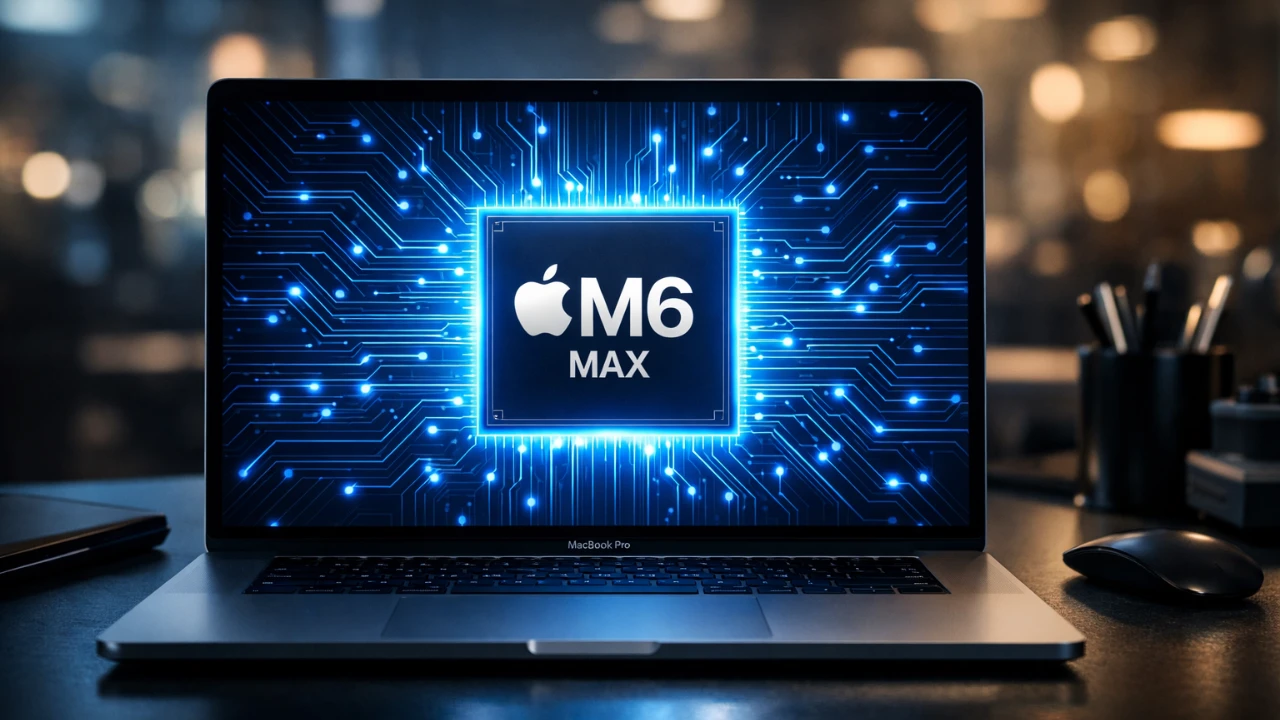
Apple is preparing to introduce its next-generation M6 chip, a development that is expected to bring substantial performance enhancements and new features to its Mac and iPad lineup. This transition marks a significant step forward, as the company continues to refine its in-house silicon technology. While the current M5 chip powers most MacBooks, the shift to the M6 series is anticipated to begin in late 2026. However, production challenges and supply chain constraints could influence the rollout timeline, particularly for desktop Macs and high-capacity configurations. The video below from Matt Talks Tech gives us more details on what Apple has planned for its M6 Macs.

Current Landscape of Apple’s Mac and iPad Lineup
At present, Apple has successfully integrated the M5 chip into most of its MacBook lineup, delivering notable improvements in both performance and energy efficiency. However, desktop Macs, including the iMac, Mac Studio and Mac Mini, are still operating on the older M4 series. These devices are overdue for updates and many users are eager for them to adopt the M5 chip before the M6 rollout begins.
The iPad lineup reflects a similar staggered transition. The iPad Pro is expected to be among the first devices to feature the M6 chip, while the iPad Air will likely receive the M5 chip as its final upgrade before moving to the next generation. This approach underscores Apple’s strategy of gradually phasing in new technology across its product lines.
Production Challenges and Supply Chain Constraints
Apple’s production plans face significant obstacles due to ongoing shortages of RAM and NAND storage, which have already delayed updates for desktop Macs. These supply chain issues are particularly impactful for high-capacity configurations of the Mac Studio and Mac Mini, pushing their anticipated updates to late 2026 or even early 2027.
These constraints could also affect the M6 chip launch schedule, potentially leading to staggered releases across different product lines. For instance, while the MacBook Pro and iPad Pro with M6 chips are expected to debut in late 2026, other devices may follow several months later. This phased approach allows Apple to manage supply limitations while making sure flagship devices showcase the new chip’s capabilities first.
Projected Timeline for M6-Powered Devices
The rollout of the M6 chip is expected to begin with flagship devices, setting the stage for broader adoption across Apple’s product lineup. Here’s a projected timeline for M6-powered devices:
- Late 2026: MacBook Pro and iPad Pro with M6 chips debut, showcasing enhanced performance and efficiency.
- March 2027: MacBook Air transitions to the M6 chip, offering improved capabilities for everyday users.
- April–May 2027: OLED MacBook Pros with M6 Pro and M6 Max chips launch, featuring design updates and advanced display technology.
Desktop Macs, including the iMac, Mac Studio and Mac Mini, are expected to transition to the M6 chip by late 2027. However, these updates are likely to focus on internal performance improvements rather than major design changes. This measured approach ensures that Apple can maintain consistency in its product offerings while introducing innovative technology.
Design and Feature Enhancements
While most devices in Apple’s lineup are expected to retain their current designs, the OLED MacBook Pro is poised to stand out with several key updates. These enhancements may include:
- Upgraded OLED display technology, delivering improved visuals with richer colors and deeper contrasts.
- Potential support for cellular connectivity, enhancing portability and versatility for professionals who require seamless connectivity on the go.
These updates could position the OLED MacBook Pro as a premium option within Apple’s lineup, appealing to users who prioritize advanced features and innovative technology. However, this premium positioning may also come with higher price points. For other devices, such as the Mac Mini, Mac Studio and iMac, Apple is expected to focus on refining internal components and optimizing performance rather than introducing significant design changes.
Pricing Considerations
The introduction of advanced features, such as OLED displays and cellular connectivity, is expected to increase the cost of certain models, particularly the MacBook Pro. These devices will likely target professionals and users seeking the latest technology. Meanwhile, other devices, such as the Mac Mini and iMac, are expected to maintain their current pricing structure, making sure they remain accessible to a broader audience. This pricing strategy reflects Apple’s commitment to catering to both high-end and mainstream users.
What the M6 Chip Means for You
The rollout of Apple’s M6 chip represents a significant leap in performance and innovation across its product lineup. Here’s what you can expect:
- Flagship devices like the MacBook Pro and iPad Pro will lead the transition in late 2026, showcasing the M6 chip’s enhanced capabilities.
- Desktop Macs and other devices will follow in 2027, with updates focused on internal performance rather than design changes.
- Advanced features, such as OLED displays and cellular connectivity, will likely be exclusive to premium models, offering innovative options for professionals.
While production challenges and supply chain constraints may impact the timeline, Apple’s M6 series is poised to set a new standard for performance and efficiency. Whether you’re a professional seeking top-tier technology or a casual user looking for reliable performance, the M6 chip promises to deliver meaningful advancements across Apple’s ecosystem.
Here are more detailed guides and articles that you may find helpful on M6 chip release timeline.
- 2026 Mac Roadmap Revealed: When to Expect the M6 MacBook, Mini and Studio
- Mac Roadmap LEAKED: M5, M6, OLED MacBooks, & 2026 Redesign Timeline
Source: Matt Talks Tech
Disclosure: Some of our articles include affiliate links. If you buy something through one of these links, Geeky Gadgets may earn an affiliate commission. Learn about our Disclosure Policy.
