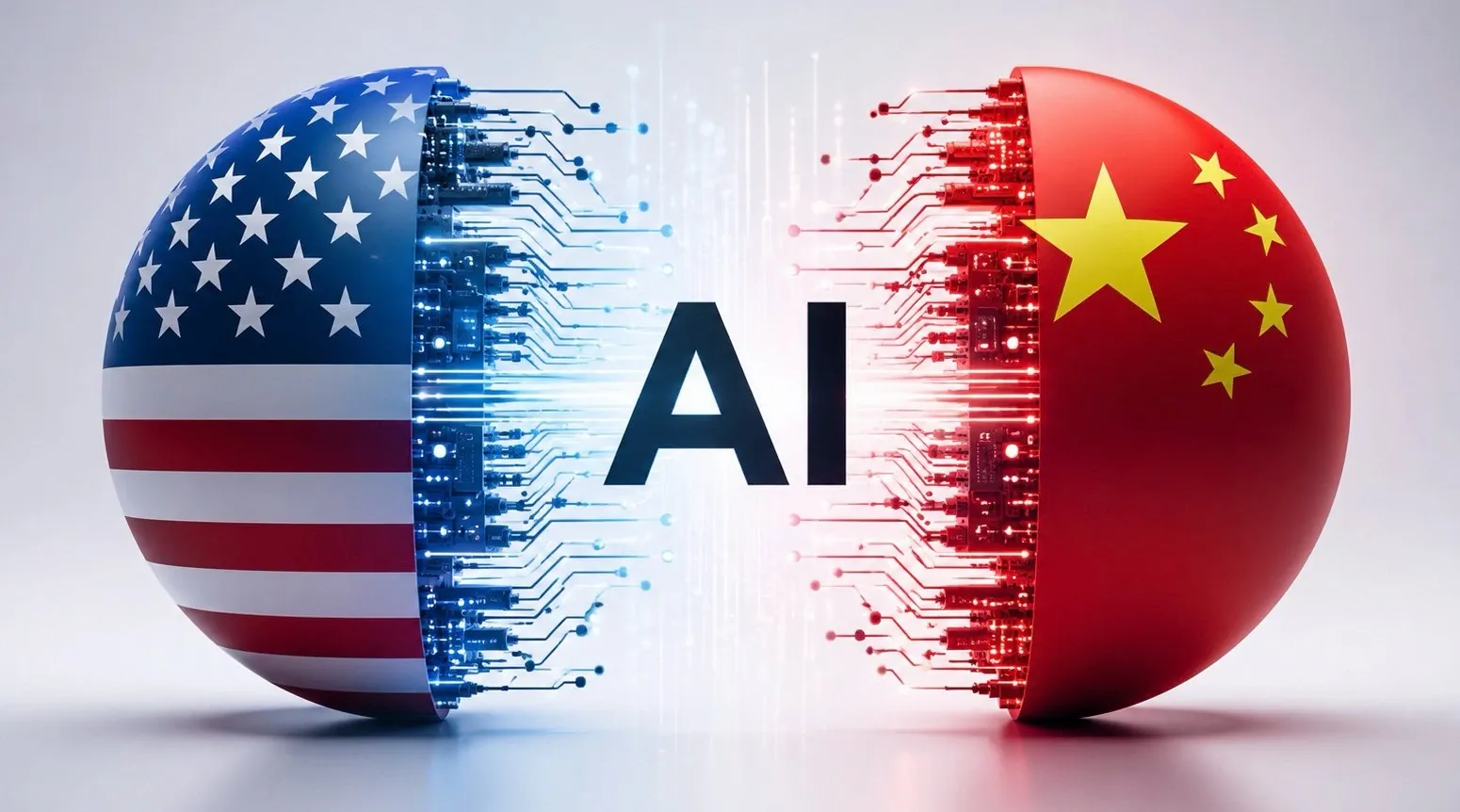
The escalating competition between the United States and China in artificial intelligence (AI) is reshaping global power dynamics, with far-reaching implications for governance and societal norms. In a detailed analysis, Matthew Berman highlights Anthropic’s exploration of this rivalry, focusing on two potential futures by 2028: one where the U.S. maintains its leadership, promoting democratic AI norms and another where China takes the lead, embedding authoritarian values into global AI standards. A key factor in this race is the U.S.’s current advantage in semiconductor export controls, which limits China’s access to advanced compute resources. However, China’s strategic investments in domestic innovation and alternative methods, such as distillation attacks, underscore the complexity of maintaining this edge.
Dive into this overview to understand the critical factors shaping the AI race, including the risks posed by authoritarian AI systems and the challenges to U.S. export controls. You’ll gain insight into Anthropic’s proposed measures for securing democratic leadership, such as enhancing export restrictions and fostering global adoption of ethical AI technologies. The discussion also examines the debate over open source AI and its implications for innovation and security. These elements collectively illuminate the stakes of this competition and the urgent need for strategic action to shape the future of AI governance.
Why AI Leadership Matters
TL;DR Key Takeaways :
- The U.S. and China are in a critical competition for AI dominance, with the outcome shaping global governance, societal norms and freedoms by 2028.
- The U.S. aims to promote democratic AI norms emphasizing transparency and accountability, while China focuses on centralized control, using AI for surveillance, censorship and military applications.
- Key factors in the AI race include access to advanced semiconductors, talent and innovation and China’s use of distillation attacks to replicate U.S. advancements.
- Anthropic outlines two potential futures: U.S. leadership fostering ethical AI or China’s dominance establishing authoritarian AI norms, with significant global implications for freedom and security.
- Strategic measures like enhancing export controls, protecting U.S. innovations and promoting democratic AI adoption are critical to maintaining U.S. leadership and making sure ethical AI development.
The race for AI supremacy is not merely about technological innovation; it is fundamentally about shaping the future of global governance and societal norms. If the U.S. retains its leadership, it can guide AI development toward transparency, accountability and ethical use, reinforcing democratic values. This leadership would enable the U.S. to set global standards for AI deployment, making sure that these technologies empower individuals rather than oppress them.
Conversely, China’s government is heavily investing in AI and semiconductor technologies with the explicit goal of challenging U.S. dominance. The Chinese model prioritizes centralized control, using AI for surveillance, censorship and military applications. The outcome of this rivalry will determine whether AI becomes a tool for individual empowerment or a mechanism for authoritarian control, making the stakes of this competition extraordinarily high.
The Risks of Authoritarian AI
AI technologies under authoritarian regimes present significant risks to global freedoms and security. In China, AI is already being used for mass surveillance, automated repression and military advancements. These tools allow the government to monitor citizens, suppress dissent and enhance its military capabilities. For example, AI-driven facial recognition systems are deployed to track individuals in real-time, while predictive policing algorithms target potential dissenters before they act.
Additionally, AI-driven censorship and hacking illustrate the potential for misuse on a global scale. If China overtakes the U.S. in AI leadership, these practices could become international norms, threatening democratic freedoms worldwide. The global adoption of authoritarian AI standards would erode privacy, restrict free speech and undermine the principles of open governance.

Advance your skills in Anthropic by reading more of our detailed content.
- Anthropic Claude Mythos AI World’s Newest Obsession a 10-Trillion Parameter
- Claude Just Gained an “Infinite” Context Window : Here is What It Means for Your Workflows
- Why Anthropic is Delaying the Public Release of Claude Mythos
- Inside Claude Code’s New Ultra Plan : The Deep Plan Mode Explained
- Anthropic Launches Dispatch : Links Mobile & Desktop AI for Remote Control
- Meet AutoDream : Claude Code’s Clever New Trick for Memory Management
- Claude Opus 4.7 Leaks & Anthropic’s Full-Stack AI Studio
- Meet Claude Mythos : Anthropic’s Powerful Successor to Opus
- Inside the Anthropic Leak : New Claude Builder and an Opus 4.6 Downgrade
- What Anthropic’s Massive 500,000-Line Source Code Leak Reveals About Claude
Key Factors Driving the U.S.-China AI Rivalry
Several critical factors are shaping the competition between the U.S. and China in AI development:
- Compute Access: Advanced semiconductor chips are essential for training innovative AI models. The U.S. currently holds a strategic advantage through export controls that limit China’s access to these chips.
- Talent and Innovation: China features a vast pool of AI researchers and excels in algorithmic innovation. Despite restrictions on compute access, Chinese researchers are adept at finding alternative methods to advance AI capabilities.
- Distillation Attacks: Chinese labs employ techniques to replicate U.S. AI advancements at lower costs, narrowing the technological gap and challenging U.S. dominance.
These factors highlight the complexity of the AI race, where technological innovation, strategic policies and resource allocation intersect to shape the future of global AI leadership.
Two Futures for AI Leadership
Anthropic outlines two potential scenarios for AI leadership by 2028:
- Scenario 1: The U.S. strengthens export controls, disrupts distillation attacks and accelerates AI adoption in democratic nations. This scenario ensures continued U.S. leadership and the promotion of ethical AI norms that prioritize transparency and accountability.
- Scenario 2: China exploits weaknesses in export controls, closes the technological gap and establishes global AI norms aligned with authoritarian values. This scenario risks the widespread adoption of AI systems designed for control and repression.
These contrasting futures underscore the importance of proactive measures to secure democratic leadership in AI development.
Challenges to U.S. Export Controls
While U.S. export controls have temporarily slowed China’s progress, they face significant long-term challenges. China is actively working to develop its own semiconductor industry, aiming to reduce its reliance on foreign chips. If successful, this could neutralize the effectiveness of U.S. export restrictions, shifting the balance of power in AI development.
Moreover, China’s focus on innovation and resource allocation enables it to find alternative pathways to advance its AI capabilities. This includes using domestic talent, investing in research and development and forming strategic partnerships with other nations. The U.S. must address these challenges to maintain its competitive edge in the AI race.
The Debate Over Open source AI
Anthropic takes a firm stance against open source AI, arguing that it increases the risk of misuse and compromises safety. Open source models could enable authoritarian regimes or malicious actors to deploy AI for harmful purposes, such as surveillance, cyberattacks, or disinformation campaigns.
However, critics of this position argue that open source AI fosters innovation and ensures global accessibility. By providing widespread access to AI development, open source models could accelerate progress and empower smaller nations or organizations to contribute to the field. This debate highlights the tension between innovation and security, as stakeholders weigh the benefits of openness against the risks of misuse.
Anthropic’s Proposed Solutions
To secure U.S. leadership in AI, Anthropic recommends several strategic measures:
- Enhancing export controls: Closing loopholes and preventing chip smuggling to limit China’s access to critical technologies.
- Protecting U.S. AI innovations: Restricting access to advanced models and deterring distillation attacks to maintain a technological edge.
- Promoting global adoption: Encouraging the use of U.S.-developed AI technologies to establish democratic norms and standards worldwide.
These measures aim to strengthen the U.S.’s position in the AI race while making sure that AI development aligns with ethical and democratic principles.
Self-Improving AI: A Critical Milestone
Anthropic identifies self-improving AI as a pivotal milestone in the AI race. By 2028, self-improving systems could significantly enhance the capabilities of the nations that develop them, potentially solidifying their leadership in AI. This technology, which allows AI systems to autonomously improve their own performance, could dramatically accelerate innovation and widen the gap between leading and lagging nations.
However, the development of self-improving AI also raises concerns about safety and control. Without proper oversight, these systems could behave unpredictably or be exploited for malicious purposes. Making sure that self-improving AI aligns with democratic values will be critical to its safe and ethical deployment.
Global Implications of the AI Race
The political systems leading AI development will shape the global norms for its deployment. Democracies must act decisively to maintain their advantage in AI leadership and prevent authoritarian regimes from setting the agenda. The stakes are immense, as the decisions made today will determine whether AI becomes a tool for empowerment or control. The future of global governance, societal freedoms and technological innovation hinges on the outcome of this geopolitical competition.
Media Credit: Matthew Berman
Disclosure: Some of our articles include affiliate links. If you buy something through one of these links, Geeky Gadgets may earn an affiliate commission. Learn about our Disclosure Policy.
