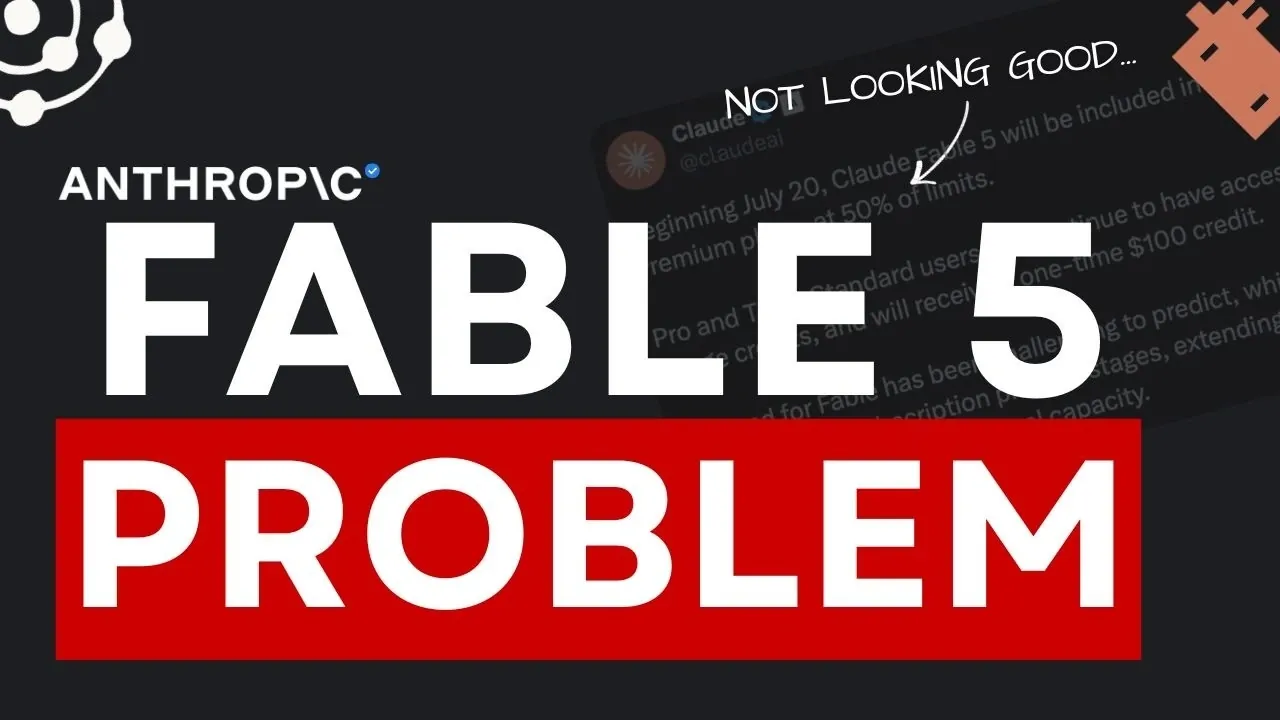
Anthropic’s recent struggles with its Fable 5 model highlight the challenges of staying competitive in the rapidly evolving AI landscape. According to Universe of AI, the company has limited Fable 5’s availability to its Max and Team Premium users, while downgrading others to the older Opus 4.8 model. This decision, coupled with operating Fable 5 at only 50% capacity, has sparked dissatisfaction among users who expected consistent performance from Anthropic’s premium services. These changes reflect the growing pressures faced by AI labs as they navigate operational constraints and rising competition from industry players like Moonshot AI and SpaceX.
In this feature, you’ll gain insight into how Anthropic’s infrastructure upgrades aim to address user concerns and whether they might restore confidence in Fable 5. Explore the competitive dynamics shaping the AI sector, including the rise of Moonshot AI’s Kimmy K3 model and SpaceX’s ambitious Grock 4.6. Additionally, understand how geopolitical forces and regulatory shifts are influencing the broader market, creating both challenges and opportunities for established players and emerging innovators alike.
Fable 5: Anthropic’s Struggle to Stay Ahead
TL;DR Key Takeaways :
- Anthropic faces challenges with its Fable 5 model, including operational constraints and user dissatisfaction, as competitors like Moonshot AI and SpaceX gain ground.
- Moonshot AI’s Kimmy K3 model is emerging as a strong competitor, with plans to release an upgraded version, Kimmy K3.1, showcasing the agility of smaller AI labs.
- SpaceX is entering the AI market with its Grock models, with the upcoming Grock 4.6 boasting 2 trillion parameters, signaling the rise of non-traditional players in AI innovation.
- Geopolitical factors, particularly the U.S.-China rivalry, are shaping AI development, with initiatives like the U.S. “Gold Eagle” program addressing regulation and security concerns.
- The AI industry is rapidly evolving, with speculation about AGI and advancements like OpenAI’s rumored GPT-6 highlighting the urgency for companies to innovate and adapt.
Anthropic’s Fable 5, once a leading AI model, is now under pressure due to operational constraints and intensifying competition. Recently, the company limited Fable 5’s availability to its Max and Team Premium users, operating the model at only 50% capacity. As a result, Pro and Team Standard users were downgraded to the older Opus 4.8 model, with a $100 usage credit offered as compensation. These changes have sparked dissatisfaction among users, many of whom expected consistent and reliable performance from Anthropic’s premium-tier services.
To address these concerns, Anthropic has committed to upgrading its infrastructure. However, questions remain about the company’s ability to maintain its competitive edge, especially as rivals introduce models that match or even exceed Fable 5’s capabilities. The situation highlights the challenges of sustaining leadership in a rapidly evolving market where user expectations and technological benchmarks are constantly shifting.
Moonshot AI’s Kimmy K3: A Rising Star
Moonshot AI has emerged as a formidable competitor, with its Kimmy K3 model gaining significant attention for its performance. In several key areas, Kimmy K3 is reported to rival or surpass Fable 5, signaling a shift in the competitive dynamics of the AI industry. This development demonstrates that smaller, more agile AI labs are increasingly capable of challenging established players.
Adding to the competitive pressure, Moonshot AI has announced plans to release Kimmy K3.1, an upgraded version expected to deliver enhanced capabilities. This rapid pace of innovation underscores the growing influence of smaller labs, which are using their agility to introduce innovative solutions and disrupt the status quo.

Discover other guides from our vast content that could be of interest on Fable 5.
- Fable 5 is Expected to Return Soon With New Enterprise Features
- Claude Fable 5 Returns After Government Security Scare
- Fable 5 Built a Startup Business with One Prompt in Just 3 Hours
- How to Use Fable 5 for Complex Tasks Before July 7th
- Claude Fable 5 Halves Coding Time Compared to Opus 4.8
- Fable 5 Returns with 50% Usage Cuts and New Paid Credits
- The Hidden Trade-Offs in Anthropic’s New Mythos 5 and Claude Fable 5 Release
- OpenAI Reportedly Rushes ChatGPT 6 Release to Counter Fable 5.1
- Why Anthropic’s Fable 5 Marks the End of Free AI Services
- OpenAI’s Stealth Tests Reveal ChatGPT 5.6 Pro’s True Power
SpaceX’s Grock Models: A New Player in AI
SpaceX, traditionally known for its achievements in aerospace, is making significant strides in the AI sector with its Grock models. The current Grock 4.5 model is already competing with mid-tier players like Google DeepMind, while the upcoming Grock 4.6 is poised to set a new standard. With an impressive 2 trillion parameters, Grock 4.6 promises improved efficiency and performance, positioning SpaceX as a serious contender in the AI market.
This move reflects a broader trend of diversification, where companies from outside the traditional AI ecosystem are entering the field and driving innovation. SpaceX’s progress with its Grock models highlights the increasing complexity of the competitive landscape and the potential for non-traditional players to influence the future of AI development.
Geopolitical Forces Shaping AI Development
The global race for AI supremacy is increasingly shaped by geopolitical factors, particularly the rivalry between the United States and China. Both nations view AI as a strategic priority, investing heavily in research and development to gain a competitive edge. This competition has been described as an “AI arms race,” with far-reaching implications for global power dynamics and technological leadership.
In the United States, the government has intensified its involvement in AI regulation. The recently launched “Gold Eagle” program aims to establish stricter controls on AI development and deployment, addressing concerns related to cybersecurity, intellectual property theft and ethical considerations. These measures reflect growing awareness of the risks associated with AI technologies and the need to safeguard national interests while fostering innovation.
Market Trends and the Road Ahead
The AI market is becoming increasingly crowded and competitive, with rapid advancements in model capabilities and the entry of new players. Speculation about the emergence of Artificial General Intelligence (AGI) has gained momentum, with some experts predicting its arrival by the end of the year. If realized, AGI could represent a pivotal milestone, fundamentally altering the trajectory of AI research and its applications across industries.
Meanwhile, OpenAI is rumored to be developing GPT-6, a model designed to surpass existing offerings in both scale and functionality. This relentless pace of innovation underscores the urgency for companies to adapt and innovate in a market that is constantly evolving. The race to develop more advanced models is not only a technological challenge but also a strategic imperative for organizations seeking to secure their position in the industry.
The Shifting Landscape of AI
The AI industry is at a critical juncture, characterized by fierce competition, rapid technological advancements and the influence of geopolitical forces. Anthropic’s struggles with Fable 5 illustrate the difficulties of maintaining leadership in such a dynamic environment. At the same time, competitors like Moonshot AI and SpaceX are proving that new entrants can disrupt the market and challenge established players. As governments and international stakeholders shape the regulatory and strategic framework for AI, the future of the industry remains uncertain yet undeniably pivotal.
Media Credit: Universe of AI
Disclosure: Some of our articles include affiliate links. If you buy something through one of these links, Geeky Gadgets may earn an affiliate commission. Learn about our Disclosure Policy.
