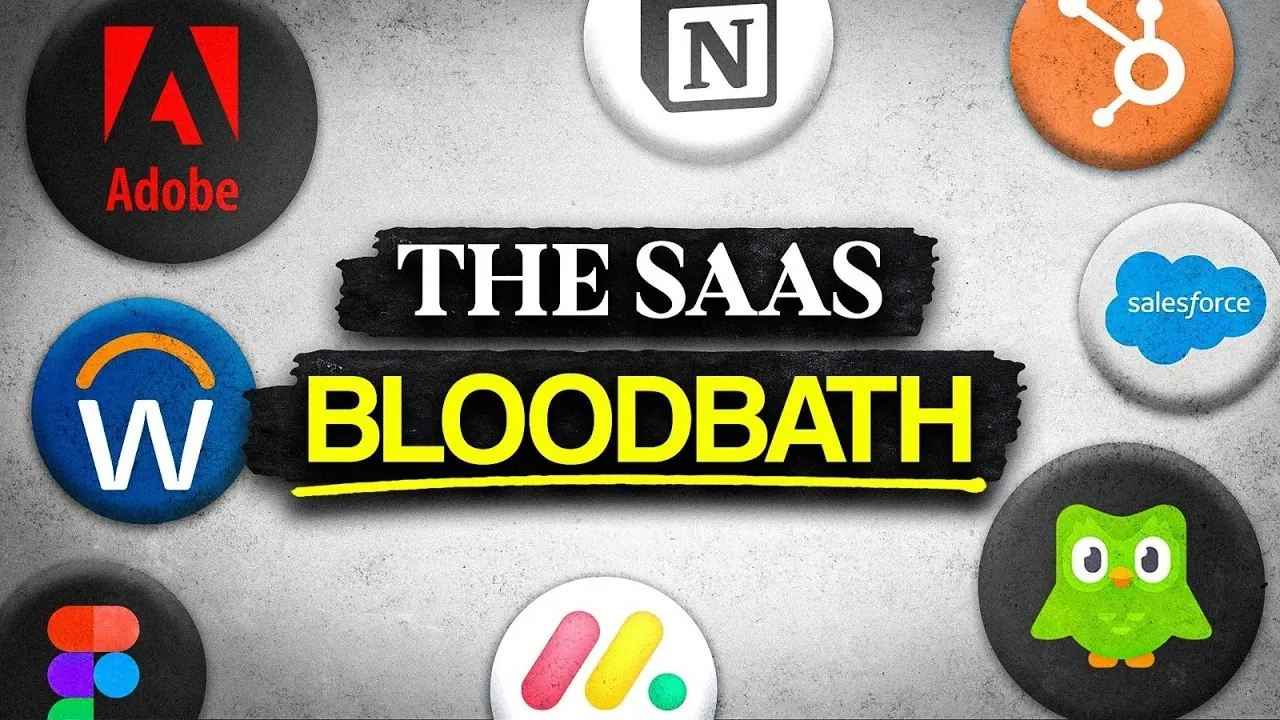
Below the Invisible Game examines how artificial intelligence and changing enterprise needs are disrupting the software industry. Over the last 20 years, the Software-as-a-Service (SaaS) model became a dominant framework, offering steady subscription revenues and scalable operations. Now, as AI-driven solutions allow businesses to create tailored alternatives, traditional software models are losing ground. This shift has led to declining company valuations, significant layoffs, and increasing investor concerns about long-term viability.
This breakdown explores key challenges facing the industry, including inefficiencies caused by overlapping enterprise systems and the financial strain of adapting to AI-driven competition. It also examines the economic impact of these changes, such as reduced stock performance and heightened scrutiny on return on investment. By analyzing these trends, readers can gain a clearer understanding of the risks and adjustments shaping the future of software companies.
AI’s Disruption of Software
TL;DR Key Takeaways :
- The software industry is undergoing a major transformation due to the rise of artificial intelligence (AI), challenging traditional SaaS models and leading to declining valuations, layoffs, and investor skepticism.
- Enterprise clients, once a reliable revenue source, are reassessing their software spending due to inefficiencies and overlapping tools, pressuring providers to demonstrate clear value and efficiency.
- The market is saturated with competing software products, forcing companies to justify their ROI and adapt to cost-conscious enterprise demands.
- AI is disrupting the industry by allowing businesses to create custom solutions, reducing reliance on traditional software, and redefining the value of SaaS offerings.
- Financial instability, including stock declines and workforce reductions, highlights the urgency for software companies to innovate and embrace AI to remain competitive and regain investor confidence.
The Evolution of the Software Industry
The software industry has experienced remarkable growth and transformation since its inception. In its early stages, software was distributed on physical media such as CDs, which limited accessibility and scalability. The advent of cloud computing transformed the sector, allowing software to be delivered as a service over the internet. This innovation gave rise to the SaaS model, which became the dominant approach for software delivery.
SaaS offered subscription-based pricing, providing companies with steady and predictable revenue streams. This model gained significant traction following the 2008 financial crisis, as low-interest rates encouraged venture capitalists to invest heavily in high-growth opportunities. Companies like Salesforce and Adobe emerged as pioneers, demonstrating the profitability and scalability of SaaS. Their success set a benchmark for the industry, driving a wave of innovation and expansion that defined the software sector for years.
The Enterprise Dependency: Strengths and Vulnerabilities
Enterprise clients have long been the backbone of the software industry, accounting for a substantial portion of its revenue. Businesses across industries rely on a diverse array of specialized tools, from project management platforms to customer relationship management (CRM) systems, to enhance efficiency and streamline operations. This dependency on enterprise customers has been both a strength and a vulnerability for software companies.
While enterprise clients provide a reliable revenue base, their reliance on numerous overlapping tools has created inefficiencies, increased costs, and operational complexities. Many organizations now manage hundreds of software solutions, leading to a reassessment of their spending priorities. As businesses scrutinize their budgets, software providers face heightened exposure to shifts in enterprise spending and evolving demands. This dynamic underscores the need for companies to demonstrate clear value and efficiency in their offerings to retain enterprise clients.
The Collapse of Software Companies

Gain further expertise in SaaS by checking out these recommendations.
- Anthropic Contract Tool Highlights Risk for Per-User SaaS Licensing
- How to Use Loveable for Rapid SaaS Prototyping and Deployment
- Microsoft CEO Predicts AI Agents Will Replace Traditional Software
- Designing for Agentic Software in B2B SaaS, a 2026 Roadmap
- Veeam Data Cloud for Salesforce
- Write Code Faster and Smarter : The Power of OpenAI Codex
- Using Nano Banana to Build a Team of Creative AI Agents
- Qwen 3 Coder Agentic Coder Performance Tested
- Claude Sonnet 5 Leak Shows 1M Tokens and Faster TPU Training
- How to Build No-Code Apps with Firebase Studio & n8n AI Agents
Challenges in a Crowded and Saturated Market
The software market has reached a saturation point, with an overwhelming number of products competing for limited enterprise budgets. Companies are increasingly questioning the return on investment (ROI) of their software expenditures, leading to heightened scrutiny of the tools they use. This shift in perspective has placed significant pressure on software providers to justify their value propositions.
The recurring revenue model, once celebrated for its stability, has become a liability for many companies. As businesses seek to reduce expenses, the cost of maintaining and integrating multiple software solutions has fueled dissatisfaction among enterprise clients. These challenges highlight the fragility of traditional software business models in an environment where competition is fierce, and cost-efficiency is paramount.
The Fantastic Impact of Artificial Intelligence
Artificial intelligence is emerging as a disruptive force that is reshaping the software industry. AI-powered tools are now capable of performing tasks that once required specialized software, such as data analysis, content creation, and process automation. These advancements enable businesses to use AI platforms to develop custom solutions tailored to their unique needs, reducing their reliance on off-the-shelf SaaS products.
This shift is redefining the value proposition of traditional software offerings. As AI continues to advance, its impact on the industry will deepen, raising critical questions about the long-term viability of many established software companies. To remain competitive, businesses must embrace AI as both a challenge and an opportunity, integrating it strategically into their operations to deliver innovative and efficient solutions.
Financial Consequences: Declining Valuations and Workforce Reductions
The financial repercussions of these industry disruptions are already evident. Prominent software companies such as Duolingo, Monday.com, and Figma have experienced significant declines in their stock valuations. Layoffs have become widespread as firms grapple with the challenges of maintaining profitability in an increasingly competitive landscape dominated by AI-driven solutions.
Investor confidence in the software sector has waned, further compounding the industry’s difficulties. The once-reliable growth trajectory of software companies now appears uncertain, as the market adjusts to new realities. This financial instability underscores the urgency for companies to innovate and adapt to the changing technological landscape.
Investor Skepticism and the Struggle for Innovation
Investors are increasingly skeptical about the software sector’s ability to navigate an AI-dominated future. Many companies have attempted to pivot by incorporating AI into their offerings or rebranding themselves as AI-driven enterprises. However, these efforts are often perceived as reactive rather than genuinely innovative, failing to inspire confidence among stakeholders.
This skepticism highlights the broader challenges facing the industry. To regain investor trust and remain competitive, software companies must demonstrate authentic innovation and a clear vision for the future. The ability to anticipate and address the evolving needs of enterprise clients will be critical in restoring confidence and securing long-term success.
The Future of the Software Industry
The software industry stands at a critical juncture, facing a period of significant transformation as AI reshapes its foundations. While some companies may successfully integrate AI into their operations and redefine their value propositions, others are likely to struggle with the rapid pace of technological change. The industry’s future hinges on its ability to innovate, adapt, and remain relevant in an AI-driven world.
Key considerations for the road ahead include:
- Addressing inefficiencies and demonstrating clear value to enterprise clients to retain their trust and investment.
- Using AI as both a challenge and an opportunity to deliver innovative and efficient solutions.
- Fostering genuine innovation to restore investor confidence and secure a competitive edge in the market.
The struggles of software companies serve as a cautionary tale about the risks of complacency in a dynamic and competitive environment. As the industry continues to evolve, the question remains: will software companies adapt quickly enough to thrive, or will they be overshadowed by the very technologies they helped to create?
Media Credit: The Invisible Game
Disclosure: Some of our articles include affiliate links. If you buy something through one of these links, Geeky Gadgets may earn an affiliate commission. Learn about our Disclosure Policy.
