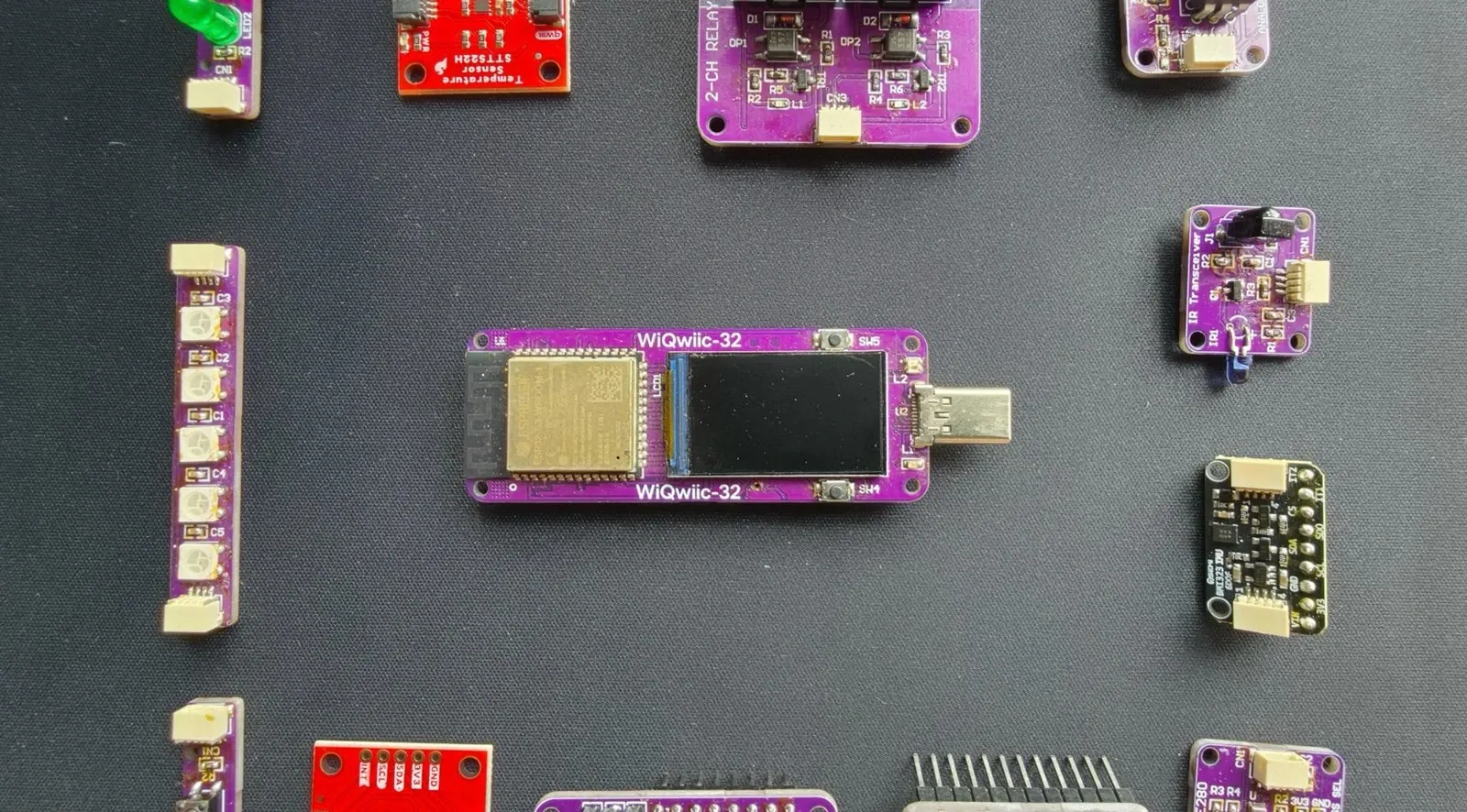
The WiQwiic-32 is a compact development board built around the ESP32-S3 microcontroller, offering wireless connectivity, modular Qwiic ports and a 1.14″ TFT LCD display. By integrating these features, it allows users to monitor data or debug projects directly on the device, minimizing the need for external hardware. According to Kickbooster, its straightforward design supports a wide range of users, from beginners to experienced developers, by simplifying setup and reducing wiring complexity.
Discover how the WiQwiic-32 can be applied to projects such as smart automation, sound-reactive systems and IoT dashboards. Gain insight into its compatibility with SparkFun’s Qwiic ecosystem for connecting sensors and modules, as well as its USB-C interface and dual voltage regulation for flexible power management. This guide outlines these features to help you understand their role in streamlining development workflows.
Key Specifications :
- Microcontroller: Powered by ESP32-S3 WROOM-1 with Wi-Fi and Bluetooth Low Energy (BLE) support.
- USB Type-C Interface: Fast and reliable power delivery and programming.
- Display: 1.14″ TFT LCD for real-time visual feedback.
- Input Controls: Boot, reset and dual user buttons for enhanced interactivity.
- Status Indicators: Dual RGB LEDs and a power LED for system status and activity monitoring.
- Audio Features: Built-in buzzer and microphone for sound detection and audio applications.
- Voltage Regulation: Supports both 3.3V and 5V components for compatibility with various modules.
- Modular Connectivity: Multiple Qwiic ports for easy integration of sensors and modules without soldering.
- Applications: Ideal for IoT, automation, sound-reactive systems, educational prototyping and more.
- Expandable Ecosystem: Compatible with Qwiic modules like environmental sensors, relays, GPIO expanders and RGB LED breakouts.
- Educational Benefits: Simplifies learning and prototyping with a plug-and-play design and compact form factor.
- Pricing: Approximately £79 with worldwide shipping expected by July 2026.
The WiQwiic-32 is a compact and versatile development board designed to streamline prototyping for developers, educators and innovators. Powered by the ESP32-S3 microcontroller, it integrates wireless connectivity, modular expansion and a built-in display into a single, user-friendly platform. Whether you are working on IoT projects, automation systems, or educational tools, the WiQwiic-32 offers a plug-and-play experience that eliminates the need for complex wiring or soldering, making it an ideal choice for both beginners and experienced users.
Core Features and Technologies
At the core of the WiQwiic-32 is the ESP32-S3 WROOM-1 microcontroller, a robust and efficient chip that supports Wi-Fi and Bluetooth Low Energy (BLE) for seamless wireless communication. This AI-ready processor is optimized for tasks such as machine learning and edge computing, making it a powerful tool for modern applications that demand high performance and flexibility.
Key features of the WiQwiic-32 include:
- USB Type-C Interface: Ensures fast and reliable power delivery and programming, compatible with modern devices and systems.
- 1.14″ TFT LCD Display: Offers real-time visual feedback, ideal for monitoring data or debugging projects directly on the device.
- Input Controls: Equipped with boot, reset and dual user buttons, providing enhanced interactivity and control over your projects.
- Status Indicators: Dual RGB LEDs and a power LED deliver clear visual cues for system status and activity.
- Audio Capabilities: Features a built-in buzzer and microphone, allowing sound detection and interactive audio applications.
- Voltage Regulation: Supports both 3.3V and 5V components, making sure compatibility with a wide range of sensors and modules.
These features make the WiQwiic-32 a highly adaptable platform for diverse applications, from simple prototypes to advanced systems requiring wireless communication and real-time feedback.
Exclusive early bird pledges are available for the WiQwiic-32 ESP32 board campaign, with crowd funding currently active on kickstarter. If the campaign proceeds as planned, worldwide shipping is expected around 2026-05-16. For full pledge tiers, stretch goals and delivery updates, discover the campaign details below.
Modular Connectivity with Qwiic Ports
The WiQwiic-32 incorporates multiple Qwiic ports, which are part of SparkFun’s modular Qwiic ecosystem. These ports allow you to connect additional sensors, actuators, or controllers without the need for soldering or complex wiring. By simply plugging in compatible components, you can rapidly prototype and iterate on your designs.
This modular connectivity is particularly beneficial for:
- Expanding Functionality: Add new capabilities to your projects by integrating specialized modules.
- Reducing Setup Time: Focus on development and innovation rather than troubleshooting hardware connections.
- Improving Scalability: Build more complex systems by combining multiple Qwiic modules seamlessly.
The Qwiic ecosystem ensures that the WiQwiic-32 remains a future-proof solution, adaptable to evolving project requirements and new technologies.
Applications and Use Cases
The flexibility and modularity of the WiQwiic-32 make it suitable for a wide range of applications. Its capabilities extend beyond basic prototyping, allowing you to create innovative solutions for real-world challenges. Some practical use cases include:
- Web-Based Control Systems: Use Wi-Fi connectivity to develop IoT dashboards, remotely control devices and monitor live data streams.
- Smart Automation: Design home automation systems with real-time feedback and logic-based triggers for enhanced efficiency and convenience.
- Infrared Control: Transform traditional devices into smart systems using the onboard IR transceiver for remote operation.
- Sound-Reactive Systems: Create interactive installations that respond to audio inputs, such as sound-driven LED visualizations.
- Educational Prototyping: Simplify the teaching of IoT and embedded systems concepts with a user-friendly and modular platform.
These use cases highlight the WiQwiic-32’s ability to bridge the gap between concept and implementation, empowering users to bring their ideas to life efficiently.
Expanding with the Qwiic Ecosystem
The WiQwiic-32 is fully compatible with a wide range of Qwiic breakout modules, allowing you to customize your projects to meet specific requirements. These modules are designed to integrate seamlessly with the WiQwiic-32, offering additional functionality without the need for complex configurations.
Popular Qwiic modules include:
- BME280 Environmental Sensor: Measures temperature, humidity and pressure, making it ideal for environmental monitoring and weather stations.
- 2-Channel Relay: Enables control of AC/DC loads with built-in safety features, suitable for automation and industrial applications.
- GPIO Expander: Adds 16 GPIO pins, allowing for more complex designs and expanded input/output capabilities.
- RGB LED Breakout: Provides addressable lighting options for creative and decorative projects.
- Qwiic to Header Converter: Bridges Qwiic modules with standard headers, facilitating hybrid prototyping setups.
By using the Qwiic ecosystem, you can tailor the WiQwiic-32 to suit a variety of applications, from simple experiments to sophisticated systems.
Educational and Prototyping Advantages
For educators and students, the WiQwiic-32 offers a practical introduction to embedded systems, IoT and AI hardware. Its modular design and plug-and-play functionality reduce setup time, allowing learners to focus on understanding core concepts and developing innovative solutions. The compact USB dongle form factor enhances portability, making it easy to integrate into existing setups or transport between classrooms and workspaces.
Key advantages for educational and prototyping purposes include:
- Ease of Use: Simplifies the learning curve for beginners, allowing them to quickly build and test projects.
- Hands-On Learning: Encourages experimentation and creativity by providing a flexible platform for prototyping.
- Cost-Effectiveness: Offers a comprehensive set of features at an accessible price point, making it suitable for budget-conscious educators and hobbyists.
The WiQwiic-32 serves as a gateway to innovation, equipping users with the tools and knowledge needed to explore the possibilities of modern technology.
Availability and Pricing
The WiQwiic-32 has already surpassed its crowdfunding goal, with £1,665 pledged against a target of £870. The campaign, based in Berlin, Germany, runs until May 16, 2026, with an estimated delivery date of July 2026. Priced at approximately £79, the developer kit is an affordable option for hobbyists, educators and professionals seeking a reliable and versatile prototyping tool.
For a complete list of all available early bird pledges, stretch goals, extra media and detailed specs for the ESP32 board, jump over to the official WiQwiic-32 crowd funding campaign page by clicking the link below.
Source : Kickstarter
Disclaimer: Participating in crowd funding campaigns such as those found on Kickstarter and Indiegogo, involves inherent risks. While many projects successfully meet their goals, others may fail to deliver due to numerous challenges. Always conduct thorough research and exercise caution when pledging your hard-earned money.
Disclosure: Some of our articles include affiliate links. If you buy something through one of these links, Geeky Gadgets may earn an affiliate commission. Learn about our Disclosure Policy.
