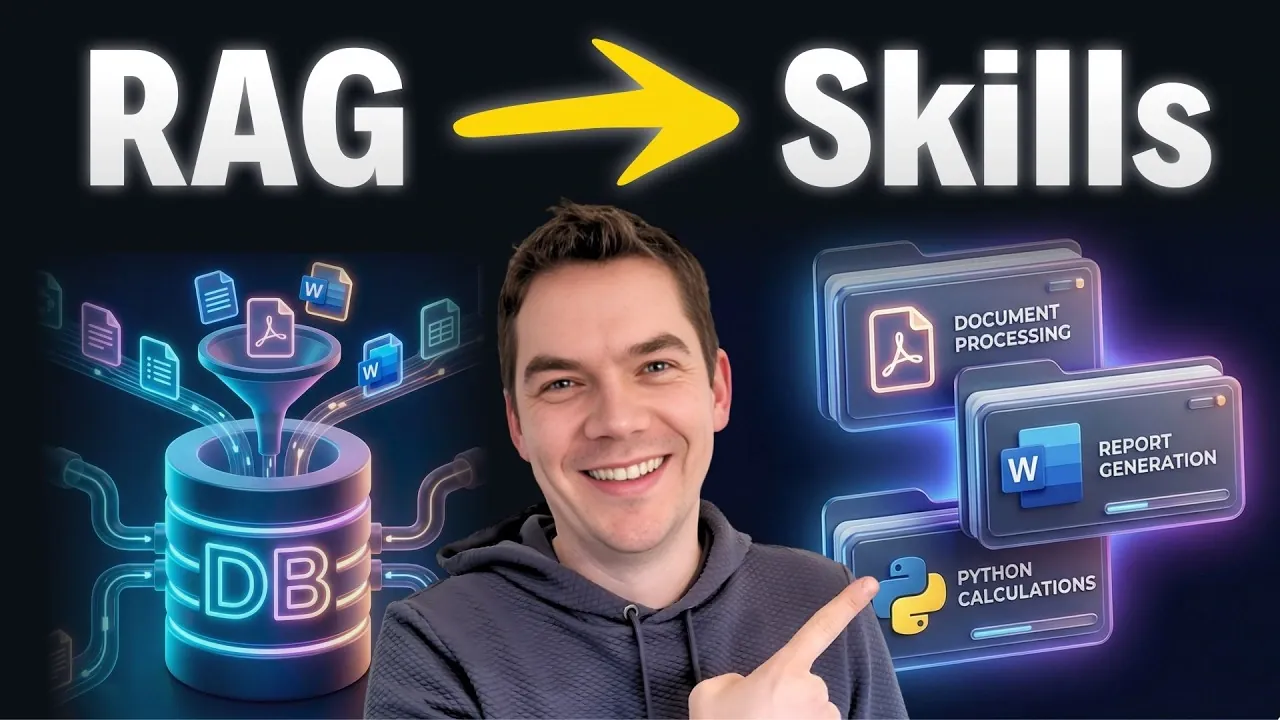
Agent skills, introduced by Anthropic, are modular workflows designed to enhance AI systems by focusing on task-specific execution. Each skill is defined by a metadata file and may include additional resources, such as Python scripts, to support precise and repeatable outcomes. According to The AI Automators, this structured approach addresses the limitations of static prompts and general-purpose models, allowing AI to meet specialized requirements in real-world scenarios.
Below learn how agent skills support multi-step processes, such as automating complex workflows or making sure secure execution of tasks. The feature also examines their compatibility across different platforms and the role of open standards in allowing collaboration. Additionally, it explores the technical components that make these workflows scalable for diverse applications.
What Are Agent Skills?
TL;DR Key Takeaways :
- Agent skills, introduced by Anthropic, are modular, task-specific workflows that enhance AI agents’ ability to perform specialized tasks with procedural knowledge, bridging the gap between general-purpose language models and actionable intelligence.
- These skills address limitations of traditional AI methods by allowing dynamic, scalable and structured execution of complex, multi-step workflows with precision and efficiency.
- Key features include multi-step workflow orchestration, progressive metadata disclosure to minimize computational overhead and interoperability across platforms and frameworks.
- Real-world applications span industries, including workflow automation, tool coordination, domain-specific intelligence and iterative refinement, offering significant value in enterprise and consumer contexts.
- Agent skills use secure code execution sandboxes and adhere to open standards, making sure safety, reliability and broad compatibility, fostering innovation and widespread adoption in the evolving AI ecosystem.
Agent skills are modular workflows specifically designed to enhance the functionality of AI agents. First introduced by Anthropic in December, these skills have rapidly gained traction, with over 77,000 skills now cataloged in Versel’s skills.sh directory. Each skill is organized as a folder containing essential components such as metadata, step-by-step instructions and optional reference files like Python scripts or branding guidelines. This modular structure allows you to customize AI agents for specific tasks, making sure accuracy, repeatability, and efficiency.
The modularity of agent skills enables AI systems to move beyond static, generalized responses. Instead, they can execute specialized workflows tailored to unique requirements. This adaptability makes agent skills a powerful tool for industries seeking to optimize processes and improve outcomes.
Why Traditional AI Approaches Fall Short
Traditional AI systems often rely on static methods, such as repetitive or overly complex prompts, to achieve task-specific outcomes. While these methods can sometimes deliver results, they lack the procedural knowledge and structured execution environments necessary for consistent and reliable performance. Custom GPTs or specialist agents, for example, require intricate orchestration, which can be inefficient and prone to errors when managing multi-step workflows.
These limitations highlight the need for a more scalable and structured solution. Agent skills address these challenges by providing a framework that combines procedural expertise with dynamic adaptability. This approach ensures that AI agents can handle complex tasks with greater precision and efficiency, making them a more practical choice for real-world applications.

Uncover more insights about Agent Skills in previous articles we have written.
- Deep Agent CLI Skills: Modular YAML Workflows Explained
- Gemini CLI Gets Modular Skill Plugins for Faster Terminal Coding
- Google Stitch Update : MCP Server, Agent Skills and CLI Support
- ChatGPT Agents Explained: Benefits, Limitations and Use Cases
- Antigravity’s Agent Kit Adds Skill Modules and 57 UI Styles
- Essential Guide to AI Skills for 2026 : Tools & Workflows
- Ultimate Guide to n8n AI Nodes to Boost Your Automation Skills
- Antigravity 3 Guide: New Skills, Weekly Quotas, Ultra Plan Notes
What Makes Agent Skills Different?
Agent skills stand out from traditional AI methods due to their unique features and capabilities. By allowing AI agents to execute specific workflows, they ensure tasks are completed with procedural expertise. Here are the key factors that set agent skills apart:
- Multi-Step Workflows: Agent skills can be linked together to handle complex, multi-step processes seamlessly, reducing the need for manual intervention.
- Progressive Disclosure: Only essential metadata is accessed during the discovery phase, minimizing computational overhead and preventing unnecessary context window bloat.
- Interoperability: Skills are designed to be compatible across various platforms and frameworks, making sure smooth integration into existing systems.
These features make agent skills a versatile and efficient tool for enhancing AI functionality. By addressing the shortcomings of traditional methods, they provide a robust solution for managing complex workflows and improving overall system performance.
How Agent Skills Work
Each agent skill is built around a core metadata file, commonly referred to as the Skill.md file. This file serves as the blueprint for the skill, outlining step-by-step instructions and task-specific data. Optional directories may include additional resources, such as Python scripts, branding guidelines, or other reference materials, to support execution.
During the discovery phase, only minimal metadata is accessed, conserving computational resources and making sure efficiency. As the task progresses, the full skill is activated, providing all necessary resources for successful completion. This modular design allows for flexibility and scalability, allowing AI agents to adapt to a wide range of tasks without compromising performance.
Real-World Applications
Agent skills have broad applications across various industries, particularly in scenarios requiring structured workflows. Some of the most common use cases include:
- Workflow Orchestration: Automating multi-step processes such as customer onboarding, overview generation, or supply chain management.
- Tool Coordination: Facilitating seamless API integrations and making sure interoperability between different tools and platforms.
- Domain-Specific Intelligence: Supporting specialized tasks like compliance checks, payment processing, or legal document analysis.
- Iterative Refinement: Improving output quality through structured, repeatable adjustments and optimizations.
These applications demonstrate the versatility of agent skills in addressing diverse challenges. By allowing AI agents to perform specialized tasks with precision, they offer significant value to both enterprise and consumer contexts.
Making sure Security with Code Execution Sandboxes
To safely execute AI-generated code, agent skills integrate with secure code execution sandboxes. These environments, often powered by technologies like Docker containers or GVisor, provide a controlled framework for running code. By isolating execution processes, sandboxes ensure that AI agents can perform meaningful actions without compromising security or efficiency.
Pre-warmed containers further enhance performance by reducing latency, making them particularly effective for real-time tasks. This integration of secure execution environments underscores the importance of maintaining safety and reliability in AI-driven processes, especially in industries where data integrity and security are paramount.
The Role of Open Standards
Agent skills adhere to the open standard defined at agentskills.io, making sure compatibility across platforms and frameworks. This standardization fosters collaboration and innovation, allowing skill creators to define precise workflows that can be widely adopted. Compatibility with repositories like Anthropic’s skill directory further expands the ecosystem, making it easier for you to implement these skills in your projects.
By promoting open standards, agent skills encourage the development of a unified framework for AI workflows. This approach not only simplifies integration but also paves the way for broader adoption and innovation, making sure that agent skills remain a key component of the evolving AI landscape.
What Lies Ahead?
The emergence of agent skills marks a pivotal moment in AI development. By combining procedural expertise, organizational context and repeatable processes, these skills elevate AI agents from generalists to specialists capable of performing meaningful, impactful actions. Open standards ensure widespread adoption and adaptability, creating a foundation for seamless integration into diverse workflows.
As agent skills continue to evolve, they hold the potential to redefine how AI is applied across industries. From automating complex workflows to enhancing decision-making processes, their ability to deliver precision, efficiency, and scalability positions them as a fantastic force in the future of AI. This technology not only unlocks new possibilities for innovation but also sets the stage for a more intelligent and interconnected world.
Media Credit: The AI Automators
Disclosure: Some of our articles include affiliate links. If you buy something through one of these links, Geeky Gadgets may earn an affiliate commission. Learn about our Disclosure Policy.
