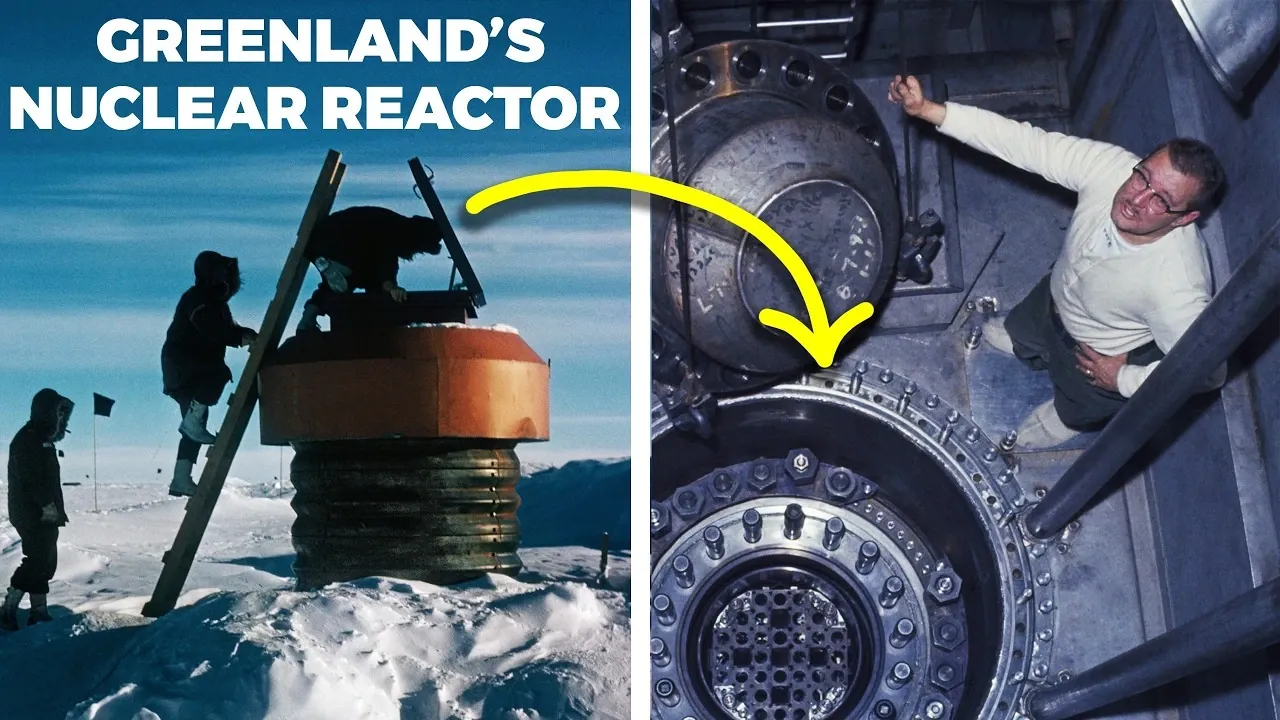
Beneath Greenland’s ice sheet lies the remnants of Project Iceworm, a covert Cold War initiative by the United States aimed at constructing a hidden missile base. At the heart of this effort was Camp Century, an experimental facility powered by the PM-2A nuclear reactor, a compact system engineered to function in the harsh Arctic environment. According to Real Engineering, the project was abandoned due to the unpredictable movement of the ice sheet, which caused structural instability. Decades later, the site remains buried, with radioactive waste and other remnants raising environmental concerns as the ice continues to melt.
Explore the technical challenges of maintaining a nuclear reactor in extreme conditions, the environmental consequences of Camp Century’s legacy and the broader geopolitical context of Greenland during the Cold War. Gain insight into how shifting ice disrupted military strategies and why this site continues to hold relevance for climate research and policy discussions today.
Project Iceworm: A Cold War Strategy
TL;DR Key Takeaways :
- Project Iceworm was a covert U.S. Cold War initiative to build a nuclear-powered military base beneath Greenland’s ice sheet for housing intercontinental ballistic missiles (ICBMs).
- Camp Century, established in 1959, served as a proof-of-concept with a network of tunnels and a portable nuclear reactor, showcasing the feasibility of Arctic operations.
- The project was abandoned by 1967 due to the instability of the ice sheet, logistical challenges and high costs, leaving behind hazardous materials like radioactive waste and diesel fuel.
- Climate change and melting ice sheets are now exposing these remnants, posing significant environmental risks to Arctic ecosystems and communities.
- The secrecy surrounding Project Iceworm strained U.S.-Denmark relations, highlighting the need for transparency and accountability in military operations with long-term consequences.
Project Iceworm was a critical component of the United States’ broader Cold War strategy, aimed at countering the Soviet Union’s growing nuclear arsenal. The plan envisioned a sprawling network of tunnels beneath Greenland’s ice sheet, where ICBMs could be discreetly stored and launched. Greenland’s Arctic location was strategically chosen for its proximity to the Soviet Union, offering a potential advantage in missile deployment. Additionally, the ice sheet provided natural concealment, making detection by adversaries exceedingly difficult. However, before committing to such an ambitious project, the U.S. military needed to test the feasibility of constructing and maintaining a base in one of the planet’s harshest environments.
Camp Century: Testing the Arctic Frontier
In 1959, the U.S. Army established Camp Century as a proof-of-concept for Project Iceworm. Situated on Greenland’s ice sheet, this experimental base consisted of 26 interconnected tunnels stretching over three kilometers. These tunnels housed essential facilities, including living quarters, a hospital, a library and even a chapel, showcasing the U.S. military’s determination to create a self-sustaining Arctic outpost. At the heart of Camp Century was the PM-2A nuclear reactor, a new innovation that provided the base with electricity and heat, allowing it to function in the extreme Arctic environment.
The PM-2A reactor was a portable nuclear power plant specifically designed for remote and challenging locations. Using highly enriched uranium as fuel, it supplied Camp Century with reliable power for 33 months, allowing the base to endure temperatures as low as -60°C and frequent, intense snowstorms. This technological milestone demonstrated the potential for nuclear energy to support operations in inhospitable regions. However, the reactor’s operation required meticulous oversight to manage the inherent risks of nuclear power. By 1964, the reactor was decommissioned and its fuel was removed, marking the beginning of Camp Century’s decline.

Explore further guides and articles from our vast library that you may find relevant to your interests in energy.
- Z Pinch Fusion Costs Drop, Compact Reactor Skips Magnets & Lasers
- Useful Energy vs Primary Energy: Clearer Way to Measure Electrification Gains
- Kesterite Solar Cells vs Perovskite: Efficiency and Stability
- EnergyLink’s Magnetic Wireless Charger Apple Watch Band
- Best Battery Life Smartphones of 2025: OnePlus 15 Leads the Way
- NASA’s Mechanical Battery: A Breakthrough in Sustainable Energy
- Donut Lab Solid State Battery Claims, 400 Wh/kg and Fast Charge
- Donut Lab Solid State Battery or Pseudo-Capacitor, Experts Weigh In
- CATL Sodium-Ion Battery Uses Water-Based Lines for Cheaper Cells
- Flywheel Energy Storage for Grid Inertia: Quint’s Approach in 2026
Why Project Iceworm Failed
Despite its innovative approach and strategic vision, Project Iceworm faced insurmountable challenges that ultimately led to its abandonment. The Greenland ice sheet, initially believed to be a stable foundation, proved to be highly dynamic and unpredictable. Glacial movement caused the tunnels to shift and collapse, necessitating constant and costly repairs. Additionally, the logistical demands of maintaining a base in such an extreme and remote environment were immense, stretching the limits of available resources and technology.
By 1967, the project was deemed unsustainable and Camp Century was abandoned. While the nuclear reactor and its fuel were safely removed, other materials, including radioactive waste, diesel fuel and construction debris, were left behind. These remnants now pose significant environmental risks as the ice sheet continues to melt due to rising global temperatures.
Environmental Risks as Ice Melts
The legacy of Camp Century has become a pressing environmental concern in the 21st century. Approximately 24 million liters of radioactive sewage and 200,000 liters of diesel fuel remain trapped within the ice. As global warming accelerates the melting of Greenland’s ice sheet, these hazardous materials are expected to resurface, potentially contaminating Arctic ecosystems. Scientists warn that the release of these pollutants could have far-reaching ecological consequences, threatening wildlife and local communities.
This situation underscores the long-term environmental impact of Cold War-era projects and highlights the challenges of addressing legacy pollution. The melting ice sheet serves as a stark reminder of the unintended consequences of past military ambitions and the urgent need for international cooperation to mitigate these risks.
Geopolitical Secrecy and Strategic Context
Project Iceworm was not only a technical and logistical challenge but also a geopolitical one. The United States pursued the project without fully informing Denmark, which holds sovereignty over Greenland. This lack of transparency violated international agreements and strained diplomatic relations between the two nations. The true purpose of Camp Century remained classified until 1996, when declassified documents revealed the project’s scope and objectives. This revelation sparked controversy, leading to calls for greater accountability and transparency in military operations.
The Arctic’s strategic importance during the Cold War cannot be overstated. Alongside Project Iceworm, the United States implemented other measures to maintain nuclear superiority, such as deploying submarine-launched ballistic missiles (SLBMs) and maintaining airborne nuclear bombers under Operation Chromedome. These efforts were part of a broader strategy to counter the perceived “missile gap” with the Soviet Union and ensure a credible deterrent against nuclear aggression. Greenland’s Arctic location played a pivotal role in these plans, underscoring its enduring geopolitical significance.
Modern Implications and Lessons Learned
The remnants of Camp Century stand as a powerful reminder of Cold War ambitions and their unintended consequences. The environmental risks posed by the melting ice sheet highlight the need for proactive measures to address legacy pollution and prevent further ecological damage. At the same time, Greenland’s strategic importance has only grown in recent years, with the Arctic emerging as a critical region for modern military operations, resource exploration and geopolitical competition.
The lessons of Project Iceworm emphasize the importance of transparency, environmental responsibility and international cooperation in addressing the challenges of the 21st century. As nations continue to navigate the complexities of Arctic geopolitics, the story of Camp Century serves as a cautionary tale of the long-term consequences of unchecked ambition.
- Project Iceworm exemplifies the intersection of military innovation and environmental impact.
- Melting ice sheets reveal the hidden legacies of Cold War-era projects.
- Greenland’s strategic importance continues to shape global geopolitics and environmental policy.
Media Credit: Real Engineering
Disclosure: Some of our articles include affiliate links. If you buy something through one of these links, Geeky Gadgets may earn an affiliate commission. Learn about our Disclosure Policy.
