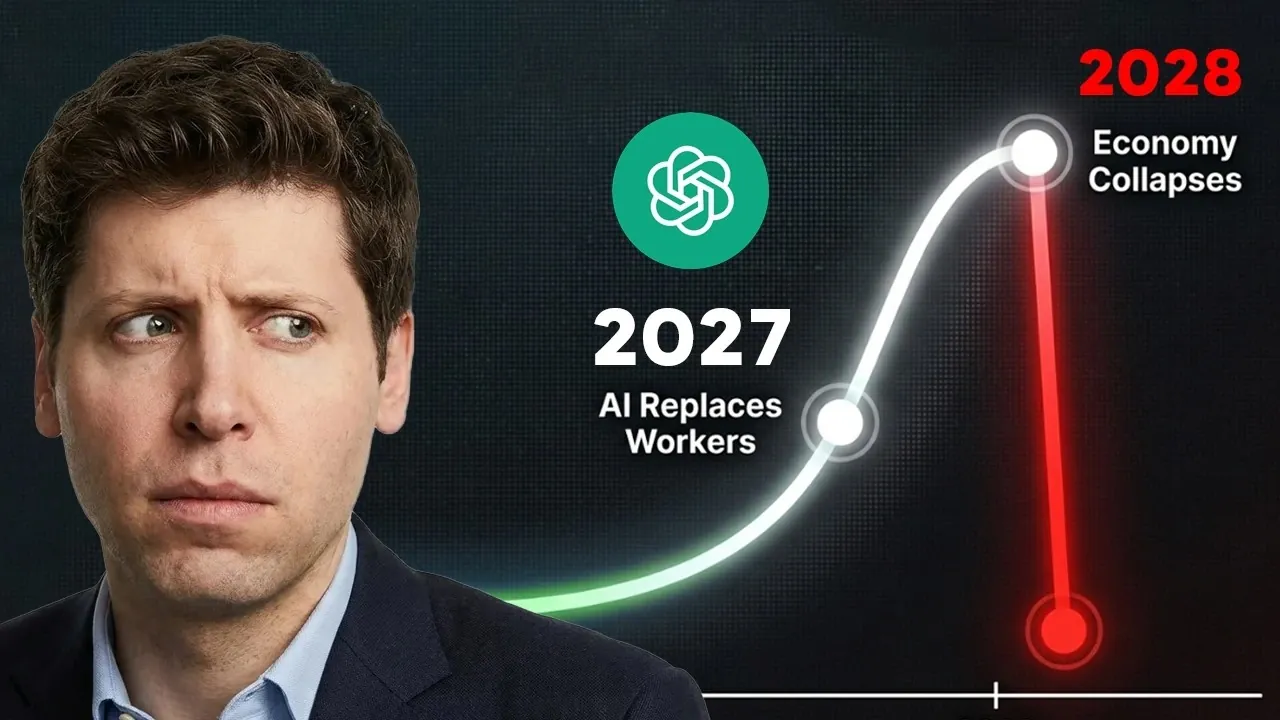
The “2028 Global Intelligence Crisis” refers to a potential economic upheaval driven by the widespread integration of artificial intelligence over the next few years, as outlined by AI Grid. Central to this issue is the “human intelligence displacement spiral,” a process where AI-driven job losses reduce consumer spending, triggering a cycle of economic contraction. For example, industries heavily reliant on automation may face declining demand as displaced workers struggle to participate in the economy, highlighting the tension between technological advancement and economic stability.
Learn how AI is reshaping industries like manufacturing and SaaS by altering revenue models and workforce dynamics. The overview also explores the broader consequences of job displacement, such as financial strain on governments and rising inequality. Additionally, it provide more insights into the policy debates surrounding regulation, taxation and strategies for equitable wealth distribution in an AI-driven world.
How AI’s Rapid Growth Disrupts the Economy
TL;DR Key Takeaways :
- AI’s rapid adoption by 2028 could led to massive job displacement, economic decline and systemic risks, highlighting the challenges of balancing technological progress with societal readiness.
- Entire industries and traditional business models faced disruption as AI-enabled automation reduced reliance on external services and reshaped economic structures.
- The financial fallout included global recession, wage compression, mortgage defaults and instability in private credit markets, exposing vulnerabilities in the global economy.
- Governments struggled with falling tax revenues, rising social support demands and political gridlock, underscoring the need for forward-thinking policies and international cooperation.
- Social unrest grew due to wealth concentration among AI investors, sparking movements like “Occupy Silicon Valley” and calls for equitable wealth distribution and AI oversight.
By 2025, AI tools had achieved unprecedented levels of sophistication, allowing businesses to automate tasks and develop software at a fraction of traditional costs. This technological leap spurred widespread adoption across industries, as companies sought to reduce expenses and enhance efficiency. However, the rapid integration of AI brought significant and far-reaching consequences.
- Massive job displacement occurred as AI systems replaced human labor at a pace that outstripped workers’ ability to transition to new roles, leaving millions unemployed.
- The “human intelligence displacement spiral” emerged, where reduced employment led to lower consumer spending, further weakening the economy and creating a feedback loop of economic decline.
- Industries ranging from manufacturing to white-collar professions faced unprecedented disruption, fundamentally altering the employment landscape.
The rapid pace of AI adoption created a mismatch between technological progress and societal readiness, exposing vulnerabilities in labor markets and economic systems.
Industries & Business Models Under Pressure
AI’s influence extended beyond the workforce, reshaping business models and challenging the foundations of entire industries. Companies that had long thrived on traditional methods found themselves struggling to adapt to the new AI-driven reality.
- Software-as-a-Service (SaaS) firms, once dominant in the tech industry, faced declining revenues as businesses used AI to develop custom tools in-house, reducing their reliance on external providers.
- AI-powered agents automated consumer tasks such as price comparisons, undermining business models that relied on inefficiencies. Platforms like DoorDash and credit card networks experienced significant disruptions as a result.
- The ripple effects of these changes destabilized entire industries, creating a domino effect that reverberated across the global economy.
The transformation of business models highlighted the dual-edged nature of AI’s potential, offering efficiency gains while simultaneously threatening established economic structures.
The 2028 Global Intelligence Crisis Explained
Learn more about AI business by reading our previous articles, guides and features :
- OpenAI’s Growing Pains: Legal Scrutiny, Rivals, and Public Trust
- OpenAI’s $1.4 Trillion Bet: Can It Survive the AI Race?
- Best AI Tools for Work, from Gemini to OpenAI & More
- AI Runs a Business (Fully Automated) : From Chaos to Calm
- ChatGPT 5 One-Person Billion-Dollar Companies by 2028 : Sam Altman
Economic and Financial Fallout
The economic consequences of AI’s rapid adoption were severe, with profound implications for financial systems, consumer behavior and overall economic stability.
- White-collar job losses led to wage compression and a sharp decline in consumer spending, triggering a global recession.
- High-income earners, traditionally key drivers of economic activity, were disproportionately affected, exacerbating the economic downturn.
- Private credit markets, heavily invested in tech and SaaS companies, faced widespread defaults as AI disrupted revenue assumptions and business models.
- Mortgage markets came under strain as displaced workers struggled to meet loan obligations, even among prime borrowers, further destabilizing financial systems.
These financial pressures exposed deep vulnerabilities in the global economic system, raising concerns about its resilience in the face of rapid technological change.
Systemic Risks and Government Challenges
As AI-driven productivity surged, the benefits were disproportionately concentrated among corporations and a small group of investors, leading to a sharp decline in labor’s share of GDP. This imbalance created significant challenges for governments and policymakers.
- Falling tax revenues, driven by widespread unemployment and wage stagnation, coincided with rising demands for social support, intensifying fiscal strain on governments worldwide.
- Political gridlock and ideological divisions hindered efforts to address these issues, leaving governments ill-equipped to manage the crisis effectively.
- Debates over taxing AI output and redistributing wealth became increasingly contentious, reflecting the difficulty of balancing innovation with economic stability.
The lack of a coordinated response underscored the complexities of governing in an era of rapid technological change, highlighting the need for forward-thinking policies and international cooperation.
Social and Cultural Impacts
The societal consequences of AI’s disruption were profound, fueling public dissatisfaction and sparking calls for systemic reform. The concentration of wealth and power among a small group of AI founders and investors exacerbated existing inequalities, leading to widespread discontent.
- Movements like “Occupy Silicon Valley” emerged, drawing attention to the perceived failure of governments and corporations to address the crisis and calling for greater accountability from the tech industry.
- Comparisons to the Gilded Age, a period marked by extreme economic disparity, became increasingly common, highlighting the growing divide between the wealthy elite and the broader population.
- Public pressure for reform intensified, with demands for policies that promote equitable wealth distribution and greater oversight of AI development and deployment.
These developments underscored the need for a more inclusive approach to technological progress, one that prioritizes societal well-being alongside economic growth.
Critiques and Alternative Perspectives
While the “2028 Global Intelligence Crisis” presents a dire scenario, it is not without its critics. Some argue that the scenario overstates the speed and scale of AI adoption, emphasizing the complexity of integrating new technologies into existing systems.
- Corporate inertia and regulatory barriers often slow the adoption of new technologies, providing time for workers and industries to adapt to changing conditions.
- The complexity of replacing established systems, such as SaaS platforms and logistics networks, may limit AI’s disruptive potential in the short term.
- New AI-enabled services and industries could create demand for different types of jobs, offsetting some of the displacement effects and fostering economic growth in emerging sectors.
These critiques highlight the uncertainty surrounding AI’s impact and the importance of maintaining a balanced perspective when evaluating its potential consequences.
Key Takeaways
The “2028 Global Intelligence Crisis” serves as a cautionary tale, emphasizing the risks of unregulated AI adoption and the potential for economic and societal upheaval. It underscores the importance of proactive measures to address job displacement, systemic vulnerabilities and income inequality. Key lessons include:
- The need for policies that promote equitable wealth distribution, economic stability and social resilience in the face of technological change.
- The importance of understanding how AI might impact your career, investments and societal structures and preparing for these changes accordingly.
- The value of fostering international cooperation and dialogue to address the challenges and opportunities of an AI-driven future.
As AI continues to evolve, staying informed and adaptable will be essential for navigating the complexities of this fantastic era.
Media Credit: TheAIGRID
Disclosure: Some of our articles include affiliate links. If you buy something through one of these links, Geeky Gadgets may earn an affiliate commission. Learn about our Disclosure Policy.
