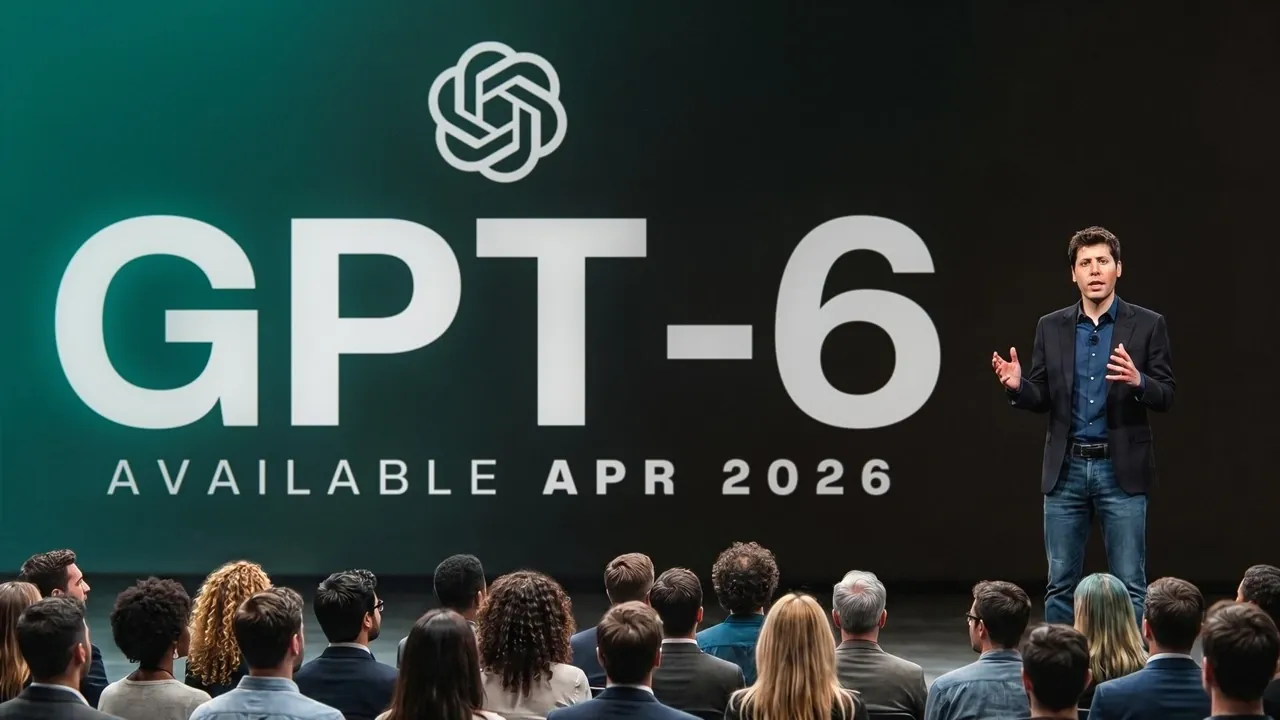
OpenAI’s upcoming ChatGPT 6 Spud model is set to introduce several advancements that could reshape the AI landscape. According to AI Master, Spud’s most notable features include its reinforcement learning-based adaptability and a 2-million-token context window, allowing it to handle complex, data-intensive tasks with unprecedented efficiency. These upgrades also extend to enhanced memory systems, allowing for more personalized and context-aware interactions. Positioned as a competitor to Anthropic’s Claude Mythos and Google’s Gemini 4, Spud reflects OpenAI’s broader push toward artificial general intelligence (AGI) and its commitment to staying ahead in a rapidly evolving industry.
Explore how Spud’s capabilities could impact both individual and enterprise use cases, from improving decision-making processes to streamlining workflows in specialized industries like healthcare and finance. Gain insight into OpenAI’s strategic decisions, such as reallocating resources from discontinued projects like Sora and how these moves align with its long-term goals. Additionally, understand the broader implications of Spud’s launch, including regulatory challenges and competitive pressures, to better navigate the opportunities and risks of this new AI milestone.
Technological Innovations Driving Spud
TL;DR Key Takeaways :
- OpenAI is set to launch its next-generation AI model, “Spud,” between April and May 2026, potentially branded as ChatGPT 6 or GPT-5.5, featuring advancements in reinforcement learning, memory systems and adaptability.
- Key innovations include enhanced memory systems for personalized responses, a 2-million-token context window for processing large datasets and dynamic adaptability through real-time learning.
- OpenAI has reallocated resources by shutting down its Sora video product and ending a Disney partnership, dedicating over 100,000 GPUs to Spud’s development and integrating its tools into a unified super app.
- Despite technological breakthroughs, OpenAI faces challenges such as regulatory scrutiny, safety concerns and competitive pressure from rivals like Anthropic’s Claude Mythos and Google’s Gemini 4.
- Spud’s launch aims to redefine AI interactions for users and businesses, with a new $100/month pro subscription tier, while raising questions about data privacy, societal impacts and ethical considerations.
Spud represents a pivotal evolution in AI training methodologies, moving beyond traditional pre-training to incorporate reinforcement learning. This shift enables the model to adapt dynamically to user interactions, enhancing its reasoning and decision-making capabilities. Key technological advancements include:
- Enhanced Memory Systems: Spud’s upgraded memory capabilities allow it to deliver personalized, context-aware responses, addressing a critical limitation in existing AI models.
- Expanded Context Window: With a rumored 2-million-token context window, Spud can process and analyze extensive datasets in a single prompt, making it an invaluable tool for complex and data-intensive tasks.
- Dynamic Adaptability: By using reinforcement learning, Spud can learn from real-time interactions, continuously improving its performance and utility.
These innovations position Spud as a versatile solution for both individual users and enterprise applications, setting a new benchmark for AI capabilities across industries.
Competitive Dynamics in the AI Sector
The release of Spud coincides with a period of intense competition in the AI market. Anthropic’s Claude Mythos has already set high standards with its advanced reasoning and cybersecurity features, while Google’s Gemini 4 is slated for release at Google I/O on May 19, 2026, promising competitive pricing and robust performance. Other players, including Meta, DeepSeek and xAI, are also gaining momentum with cost-efficient and specialized AI models. OpenAI’s decision to accelerate Spud’s launch reflects its determination to maintain a leadership position in this rapidly evolving and highly competitive industry.

Here are more detailed guides and articles that you may find helpful on ChatGPT.
- ChatGPT 5.4 Thinking vs Earlier Models : Token Savings and Stronger Self-Checks
- OpenAI Prepares ChatGPT 5.5 Release
- ChatGPT 5.3 Codex vs Claude Opus 4.6 : Best Fit for Coding, Tasks & More
- ChatGPT 5.4 Pro vs Gemini 3.1 vs Claude Opus 4.6 on Reasoning Tests
- ChatGPT 5.4 1M-Token Context, Extreme Reasoning Mode: Longer Tasks, Fewer Mistakes
- OpenAI GPT-5.4 Leak During Codex Demo Sparks Release Questions
- OpenAI ChatGPT 5.4: 1M-token Context, Tool Search & New Prices
- ChatGPT 5.3 Instant Cuts Unneeded Disclaimers
- Opus 4.6 vs ChatGPT 5.3 : Code Size, Speed & Build Tradeoffs
- ChatGPT 5.3 Upgrade Focus on Reasoning and Reliability Boost
Strategic Decisions and Resource Allocation
To ensure the successful development and deployment of Spud, OpenAI has made several strategic adjustments. These include:
- Shutting Down Sora: OpenAI discontinued its AI video product, Sora, to reallocate resources toward Spud’s development.
- Ending Disney Partnership: A billion-dollar collaboration with Disney was terminated to free up critical compute capacity for Spud.
- Massive Compute Investment: Over 100,000 GPUs were dedicated to Spud’s pre-training, which was completed on March 24, 2026.
- Unified Super App: OpenAI is integrating ChatGPT, Codex and the Atlas browser into a single platform to streamline user experiences and enhance functionality.
Additionally, OpenAI is expanding its focus to include industry-specific AI solutions for sectors such as healthcare, finance and software development. This shift highlights the company’s broader strategy to address vertical markets and diversify its offerings.
Economic and Regulatory Considerations
Despite its technological advancements, OpenAI faces significant economic and regulatory challenges. The company projects substantial revenue growth but remains unprofitable, with plans to go public through an IPO in late 2026. Regulatory scrutiny is intensifying, driven by frameworks such as the EU AI Act and California’s SB 53, which aim to address safety, security and ethical concerns. Spud’s persistent memory systems, while a technological breakthrough, have raised questions about data privacy and long-term societal impacts. These challenges could influence both the adoption and future development of AI technologies.
Implications for Users and Businesses
The launch of Spud has the potential to redefine how users interact with AI, offering more personalized and adaptive experiences. OpenAI has introduced a new $100/month pro subscription tier to cater to advanced users and businesses. For business leaders, adopting current models like GPT-5.4 now could serve as a stepping stone to prepare for the transition to GPT-6. Understanding AI methodologies and integrating these tools into workflows will be crucial for maintaining a competitive edge in an increasingly AI-driven economy.
Risks and Challenges Ahead
While Spud’s potential is significant, it is not without risks. Key challenges include:
- Safety Concerns: Security vulnerabilities and potential lawsuits remain critical issues for OpenAI and the broader AI industry.
- Competitive Pressure: Rival models offering advanced features at lower costs could impact Spud’s market adoption and success.
- Public and Regulatory Scrutiny: Growing concerns over AI’s societal and economic impacts may shape future regulations and influence public perception.
Staying informed about these challenges will be essential for users and stakeholders to navigate the evolving AI landscape effectively.
Shaping the Future of AI
OpenAI’s ChatGPT 6 Spud represents a significant step forward in AI development, combining innovative technology with strategic foresight. Its advancements in reinforcement learning, memory systems and adaptability could redefine industry standards, challenging competitors like Anthropic and Google. However, economic, regulatory and ethical challenges remain substantial hurdles. Whether you are an individual user or a business leader, understanding the implications of Spud’s launch will be critical as AI continues to transform the technological and economic landscape.
Media Credit: AI Master
Disclosure: Some of our articles include affiliate links. If you buy something through one of these links, Geeky Gadgets may earn an affiliate commission. Learn about our Disclosure Policy.
