What if the programming language you rely on most is on the brink of a transformation? For millions of developers worldwide, Python is not just a tool, it’s a cornerstone of their craft, powering everything from innovative AI models to dynamic web applications. But as the tech landscape evolves, so does Python, adapting to new challenges and opportunities. Recent insights from the 2025 Python Developers Survey reveal a language that’s not standing still but surging forward, shaped by emerging tools, shifting developer preferences, and new innovations. Whether you’re a seasoned coder or a curious beginner, understanding these changes is no longer optional, it’s essential to staying relevant in a field where the only constant is change.
Below Tech With Tim explains how Python is evolving to meet the demands of a rapidly advancing world. From the rise of modern frameworks like FastAPI and Streamlit to the growing influence of AI-powered tools such as Hugging Face Transformers, Python’s ecosystem is expanding in ways that promise both opportunity and complexity. You’ll uncover how developers are using Python for everything from data science breakthroughs to seamless API development, and why tools like PyTorch and Rust are becoming indispensable for high-performance solutions. By the end, you’ll not only grasp the trends shaping Python’s future but also gain actionable insights to elevate your own development journey. After all, staying ahead in tech isn’t just about keeping up, it’s about anticipating what’s next.
2025 Python Trends Overview
TL;DR Key Takeaways :
- Python remains a top choice for developers, with 86% using it as their primary language, particularly for web development, data science, and machine learning.
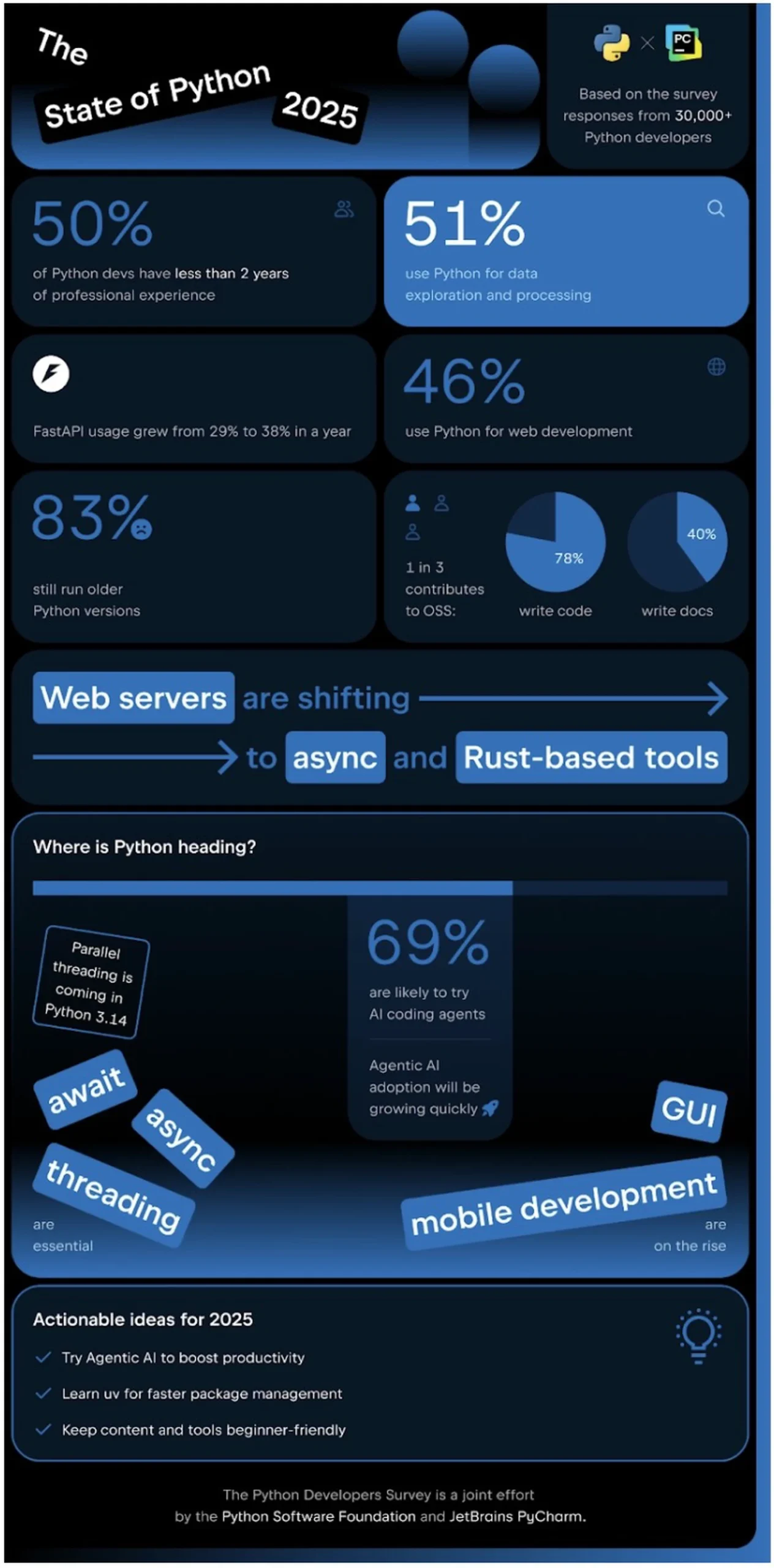
- Half of professional Python developers have less than two years of experience, highlighting its accessibility and appeal to newcomers.
- Fast-growing frameworks like FastAPI, Streamlit, and PyTorch are driving innovation in web development, data visualization, and machine learning.
- Linux is the most popular operating system among Python developers, with Visual Studio Code and PyCharm leading as preferred IDEs.
- AI and machine learning are central to Python’s future, with tools like Hugging Face Transformers and AI-powered assistants like ChatGPT shaping workflows.
Python Usage: Who’s Using It and Why?
Python’s simplicity and adaptability make it a top choice for developers across industries. According to the survey, an impressive 86% of respondents use Python as their primary programming language, underscoring its widespread adoption. It is particularly favored for applications such as web development, data science, and machine learning. For beginners, Python often serves as the gateway to programming, frequently paired with JavaScript, SQL, HTML, and CSS to build full-stack solutions.
Interestingly, Python’s appeal extends to newcomers in the field. Half of professional Python developers have less than two years of experience, reflecting its accessibility and ease of learning. Many developers also report 3–5 years of non-professional experience, often gained through academic projects, personal initiatives, or open source contributions. The majority of Python developers fall within the 21 to 39 age range, with 89% identifying as male, highlighting ongoing diversity challenges within the tech industry.
What Are Developers Using Python For?
Python’s adaptability allows it to thrive in a variety of domains, making it a go-to language for numerous applications. Its primary use cases include:
- Data Science and Machine Learning: Python is indispensable in data-driven fields, with libraries like Pandas, NumPy, and Scikit-learn forming the backbone of data manipulation and analysis. PyTorch is gaining momentum for deep learning, while TensorFlow remains a key player in AI development.
- Web Development: Frameworks such as Django, Flask, and FastAPI dominate this space. FastAPI, in particular, is experiencing rapid growth due to its speed, modern features, and suitability for API development.
- Web Scraping: Tools like Beautiful Soup and Scrapy simplify the extraction of data from websites, making Python a popular choice for web scraping tasks.
- Other Applications: Python is also widely used in academic research, MLOps (Machine Learning Operations), and even game development, showcasing its broad utility across diverse fields.
If you are working in any of these areas, Python’s extensive library ecosystem ensures you have the tools and resources needed to succeed.
Python is Changing
Discover other guides from our vast content that could be of interest on AI coding.
- ChatGPT 5 vs Claude Opus 4.1: AI Coding Assistant Comparison
- ChatGPT 5 vs Claude Sonnet: Real-World AI Coding Comparison
- Google Jules 2.0 : Free AI Coding Assistant & Tools for Everyone
- SpecKit Review: GitHub’s New Tool for Reliable AI Coding
- New Deepmind Gemini Coder : Free Powerful AI Coding Agent
- Best AI Coding Tools for Developers in 2025
- Correct Your Vibe Coding Errors with Shotgun Code
- Codex vs Claude Code: A Detailed Comparison of AI Coding CLIs
- How the Claude SANDBOX Method Makes AI Coding 90% Faster
- 36 Claude Code Tips for Smarter, Faster AI Coding Workflows
Frameworks and Libraries Driving Python’s Growth
Python’s strength lies in its vast ecosystem of frameworks and libraries, which continue to evolve and expand. These tools are instrumental in driving innovation and enhancing productivity:
- Machine Learning: Scikit-learn remains the most widely used library for machine learning, but PyTorch is quickly gaining traction for deep learning tasks. Hugging Face Transformers is emerging as a leading tool for natural language processing and AI development, allowing developers to build innovative solutions.
- Data Visualization: Streamlit is transforming the creation of interactive dashboards, while Plotly remains a reliable choice for graphing and visualization. These tools are invaluable for presenting data insights in a clear and engaging manner.
- Web Development: FastAPI is outpacing older frameworks like Django and Flask in growth, thanks to its modern features, high performance, and ease of use for API development.
Exploring these frameworks and libraries can help you stay ahead of industry trends and enhance your development capabilities.
Development Tools and Emerging Trends
The tools and technologies you use can significantly impact your efficiency and productivity as a Python developer. Key trends in Python development include:
- Operating Systems: Linux remains the most popular operating system among Python developers, followed by Windows and macOS. Its stability and compatibility with development tools make it a preferred choice.
- IDEs: Visual Studio Code and PyCharm dominate the landscape, offering robust features tailored to Python workflows. These integrated development environments streamline coding, debugging, and project management.
- Continuous Integration and Deployment: GitHub Actions and GitLab CI are the preferred tools for automating development pipelines, allowing seamless integration and deployment processes.
- Dependency Management: Pip continues to be the standard for managing Python packages, while Venv is the most commonly used virtual environment tool. UV, a newer option, is gaining traction for managing isolated environments more efficiently.
- Rust Integration: Rust is emerging as a valuable tool for building Python binary modules, offering significant performance and safety benefits.
By adopting these tools and practices, you can optimize your development workflow and stay competitive in the rapidly evolving Python ecosystem.
The Role of AI in Python’s Future
Artificial intelligence and machine learning are at the forefront of Python’s growth. Over half of Python developers are involved in data science-related work, using tools like Scikit-learn, PyTorch, and TensorFlow to build innovative solutions. AI-powered tools such as ChatGPT and GitHub Copilot are also becoming integral to Python workflows, assisting with tasks like code generation, debugging, and even learning new concepts.
For developers working in AI, frameworks like Hugging Face Transformers are worth exploring. These tools are shaping the future of Python, allowing developers to create more efficient and advanced solutions in areas such as natural language processing, computer vision, and predictive analytics.
Key Takeaways for Staying Ahead
To remain competitive and maximize your potential in the Python ecosystem, consider the following strategies:
- Adopt modern frameworks like FastAPI, Streamlit, and UV to align with industry trends and enhance your productivity.
- Use established libraries such as Pandas and NumPy for data science and analysis, making sure efficient workflows.
- Explore emerging tools like PyTorch and Hugging Face Transformers to stay at the forefront of AI and machine learning development.
- Stay updated on development tools like Visual Studio Code, GitHub Actions, and Rust to optimize your coding and deployment processes.
Python’s versatility and extensive ecosystem ensure it will remain a cornerstone of software development for years to come. By understanding these trends and using the right tools, you can position yourself for success in a rapidly evolving tech landscape. Whether you are building APIs, analyzing data, or exploring machine learning, Python offers the resources and opportunities you need to thrive.
Media Credit: Tech With Tim
Disclosure: Some of our articles include affiliate links. If you buy something through one of these links, Geeky Gadgets may earn an affiliate commission. Learn about our Disclosure Policy.
