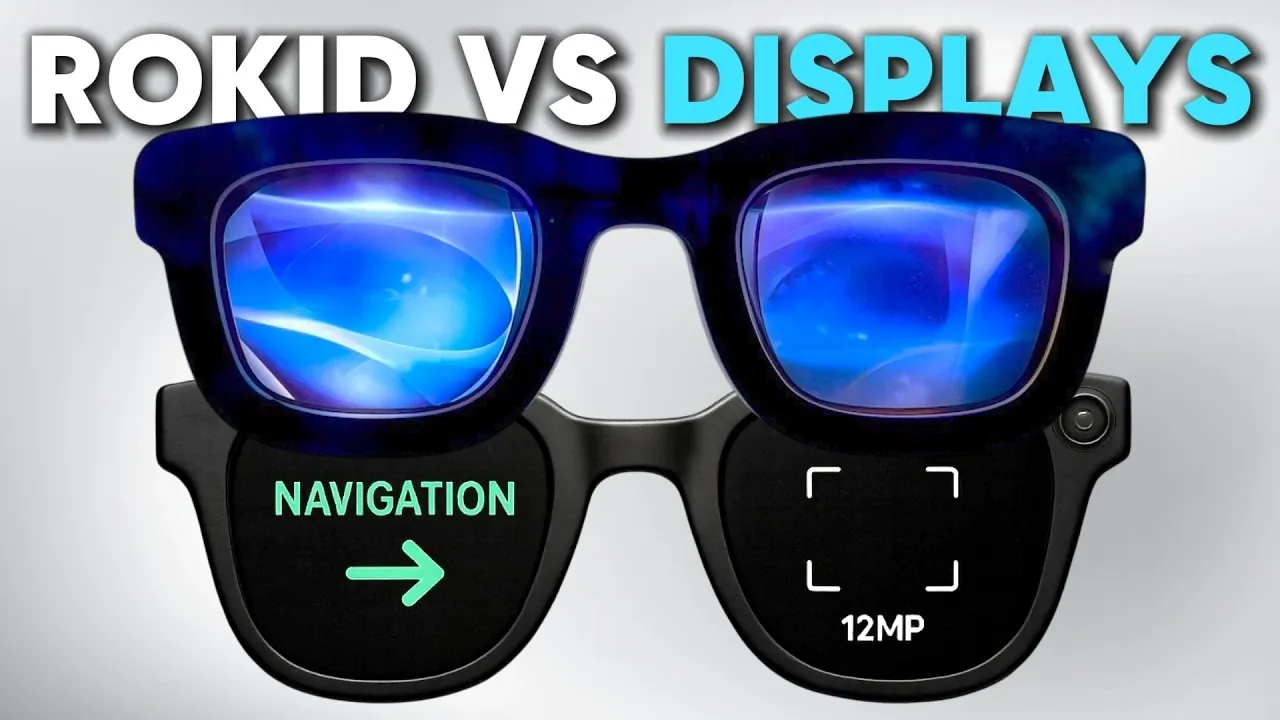
Have you ever wondered if the future of wearable tech is already here? With the rise of smart glasses, the competition is heating up between innovative devices like the Meta Ray-Band Display Glasses and the Rokid Glasses. These aren’t just gadgets, they’re gateways to immersive experiences, productivity tools, and even creative powerhouses. But here’s the catch: while Meta dazzles with its ultra-bright display and futuristic hand gesture navigation, Rokid counters with practical design, superior accessibility, and features tailored for content creators. Choosing between them isn’t just about specs; it’s about finding the one that fits your lifestyle and ambitions.
In this feature, Steven Sullivan breaks down the strengths and trade-offs of these two contenders, from display technology and design to AI integration and camera capabilities. Whether you’re an outdoor adventurer needing a 5,000-nit display or a professional seeking real-time translation in 89 languages, this guide will help you uncover which device aligns with your priorities. The choice isn’t just about tech, it’s about how these glasses can transform the way you work, create, and connect. So, which vision of the future will you choose? Let’s explore.
Meta Display vs Rokid Comparison
TL;DR Key Takeaways :
- Meta Ray-Ban Display Glasses prioritize multimedia experiences with a single-eye display offering 5,000 nits brightness, while Rokid Glasses focus on comfort with a dual-eye display at 1,500 nits, reducing eye strain for prolonged use.
- Meta’s design includes a 70-gram frame and a custom wristband for hand gesture navigation, whereas Rokid emphasizes lightweight construction and compatibility with prescription lenses for enhanced wearability.
- Rokid excels in accessibility with real-time translation in 89 languages and features like live voice narration, while Meta supports translation in only four languages.
- Rokid’s camera is tailored for professional content creation with a 12MP Sony sensor and planned 60fps recording, while Meta’s ultrawide lens is optimized for social media content.
- Rokid offers a more affordable price point at $479 (pre-order) with added perks, compared to Meta’s $799 price, making it a budget-friendly option for users prioritizing functionality and accessibility.
Display Technology: Brightness or Comfort?
The display is a crucial aspect of any smart glasses, directly affecting usability and comfort. Meta’s single-eye full-color display delivers an impressive 5,000 nits of brightness, making sure excellent visibility even under direct sunlight. This makes it ideal for outdoor use. However, the single-eye design can lead to eye fatigue during extended sessions, which may be a concern for some users.
Rokid adopts a dual-eye display with a brightness of 1,500 nits, which, while less bright than Meta, offers better clarity and significantly reduces eye strain. The dual-eye configuration is particularly advantageous for prolonged use, making Rokid a more comfortable option for users who prioritize long-term wearability.
Design and Comfort: Functionality Meets Wearability
Smart glasses must balance functionality with comfort to ensure a seamless user experience. Meta’s glasses weigh 70 grams and come with a custom-fitted wristband for hand gesture navigation. While the wristband adds a futuristic touch, the overall design may feel bulky for some users, especially during extended wear.
Rokid, on the other hand, focuses on lightweight construction and user-friendly features. The glasses are compatible with prescription clip-in lenses that accommodate up to -16 diopters, making them practical for users with significant vision correction needs. Their lightweight design enhances comfort, allowing users to wear them for longer periods without discomfort.
Meta Display VS Rokid Glasses: Watch This Before You Buy

Stay informed about the latest in smart glasses by exploring our other resources and articles.
- Xiaomi AI Smart Glasses Review: Features, Price & Performance
- Xiaomi AI Smart Glasses : Honest Review After 3 Weeks of Use
- Samsung’s Smart Glasses Will Transform Wearable Technology
- Meta Ray-Ban Smart Glasses: Features, Price, and Performance
- Meta Ray-Ban Display AI Glasses : The Future of Smart Eyewear?
- Meta Display Smart Glasses Review: Are They Worth the $800 Price
- Meta Display Dual Screen Smart Glasses : Set to Launch in 2026
- Olympus EyeTrek El-10 Open Source Smart Glasses
- Xiaomi AI Smart Glasses Hands On First Impressions Review 2025
- Top 5 Smart Glasses Transforming Wearable Technology in 2025
Camera Capabilities: Social Media or Professional Content?
Both devices are equipped with 12MP cameras, but their intended use cases differ significantly. Meta’s camera features an ultrawide lens with a 1440×1920 resolution in a 3×4 vertical format, making it ideal for social media content like Instagram Stories or TikTok videos.
Rokid’s camera, however, integrates a 12MP Sony sensor with a higher resolution of 1680p. It supports multiple aspect ratios and is designed for professional-grade content creation. Additionally, Rokid plans to introduce 60fps video recording, further enhancing its appeal to creators. If you’re a professional or someone focused on producing high-quality content, Rokid’s camera capabilities are more aligned with your needs.
Translation and Accessibility: Expanding Inclusivity
Accessibility is a key consideration for many users, and Rokid takes the lead in this area. Meta supports translation in four languages, which may suffice for basic needs but lacks the depth required for diverse audiences.
Rokid offers real-time translation in 89 languages, including six offline options, making it a versatile tool for global communication. Additional features such as live voice narration and a loud mode for hearing assistance further enhance its inclusivity. These features make Rokid glasses a standout choice for users who prioritize accessibility and language support.
AI Integration: Advanced Versatility
Artificial intelligence is a defining feature of modern smart glasses, and both Meta and Rokid incorporate AI to enhance user experience. Meta’s proprietary Meta AI provides basic assistance with shorter, concise responses, catering to users who prefer simplicity.
Rokid, however, supports multiple AI models, including ChatGPT and Alibaba’s AI, offering more versatile and detailed interactions. This flexibility allows users to choose the AI model that best suits their needs, making Rokid a compelling option for tech-savvy individuals seeking advanced functionality.
Content Creation and Navigation: Tailored for Creators
Rokid excels in content creation, offering features like a teleprompter and offline navigation, which are particularly useful for professionals and creators. These tools make it easier to produce polished content and navigate efficiently without relying on constant internet connectivity.
Meta, by contrast, focuses on multimedia consumption, allowing features like video calls and social media interactions. The inclusion of hand gesture navigation adds a futuristic element, but it requires the use of a custom wristband, which may limit convenience for some users. For those prioritizing content creation tools, Rokid provides greater value.
Pricing and Availability: Cost vs. Features
Price is often a decisive factor when choosing between smart glasses. Meta glasses are priced at $799 and require an in-store demo for wristband fitting, which may add an extra layer of inconvenience for some buyers.
Rokid offers a more affordable option at $479 during pre-orders, which includes perks like a free charging case. The simpler ordering process and added value make Rokid a more budget-friendly choice, especially for users looking to maximize functionality without exceeding their budget.
Making the Right Choice
The decision between the Meta Ray-Band Display Glasses and Rokid Glasses ultimately depends on your individual needs and priorities. If you’re drawn to futuristic features like hand gesture navigation and a focus on multimedia consumption, Meta may be the better fit. However, if you value practicality, accessibility, and tools tailored for content creation, Rokid offers superior functionality at a more affordable price point.
Carefully evaluate your lifestyle, preferences, and intended use cases to select the smart glasses that best align with your goals.
Media Credit: Steven Sullivan
Disclosure: Some of our articles include affiliate links. If you buy something through one of these links, Geeky Gadgets may earn an affiliate commission. Learn about our Disclosure Policy.
