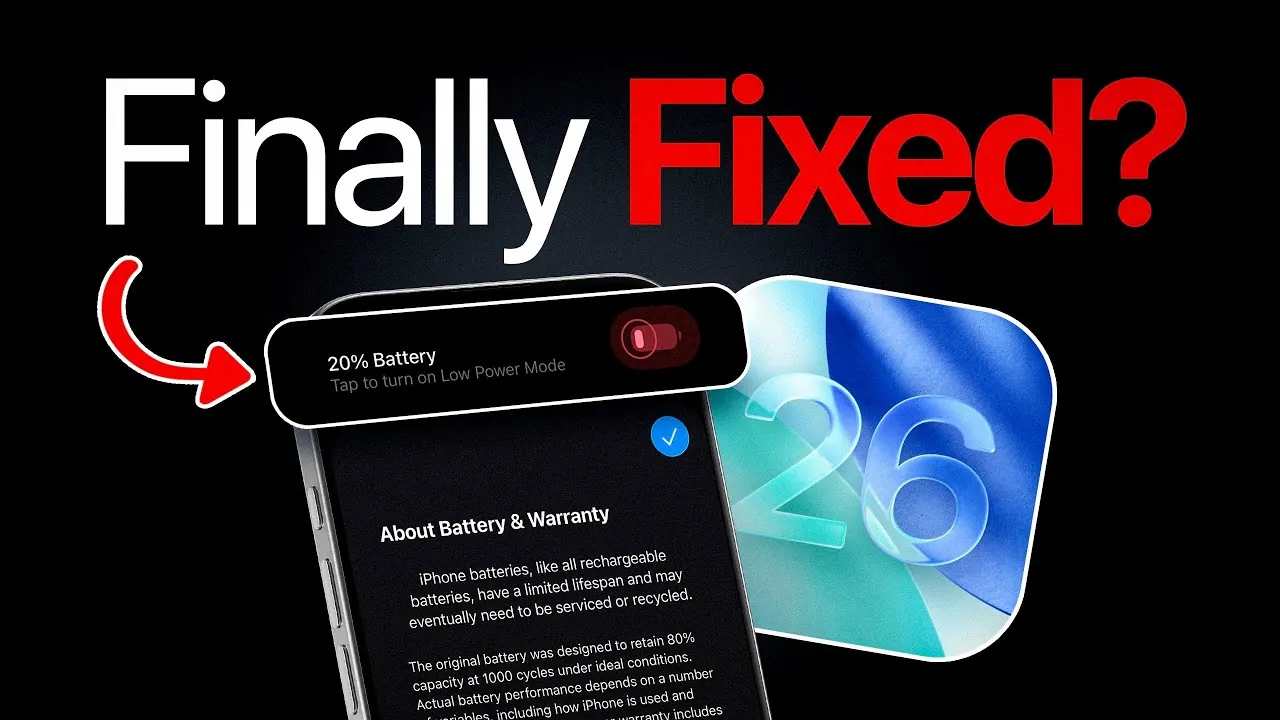
The release of the iPhone 16 Pro Max has ignited widespread discussion, particularly regarding its notable improvements in battery health compared to its predecessor, the iPhone 15 Pro Max. After a year of use, many users report significantly better battery retention, suggesting that Apple may have addressed long-standing concerns about battery longevity. This article explores the factors contributing to this improvement, including charging habits, battery cycle management, and software optimization, and examines how these advancements could shape the future of iPhone battery performance. The video below from iDeviceHelp gives us more details.

iPhone 15 Pro Max vs. iPhone 16 Pro Max: A Battery Health Comparison
The iPhone 16 Pro Max demonstrates a clear advantage in battery health retention over the iPhone 15 Pro Max. After one year of typical use, the iPhone 16 Pro Max retains 96% of its original battery capacity, while the iPhone 15 Pro Max drops to 86% within the same timeframe. This significant difference highlights advancements in battery technology, improved user practices, and enhanced software integration.
Several factors contribute to this disparity. The iPhone 16 Pro Max benefits from refined battery chemistry and more efficient energy management systems, which reduce wear and tear on the battery. Additionally, users of the newer model appear to adopt better charging habits, further supporting the device’s longevity. These combined improvements suggest that Apple has taken meaningful steps to address user concerns about battery degradation.
How Charging Habits Impact Battery Longevity
Your charging habits play a crucial role in determining battery health over time. Data from iPhone 16 Pro Max users indicates that those who consistently limited their charge to 90% experienced better battery retention. In contrast, iPhone 15 Pro Max users who charged to 90% less frequently saw faster degradation. This difference underscores the importance of adopting mindful charging practices.
Charging to 100% can place chemical stress on the battery, accelerating its wear. By capping the charge at 90%, you reduce this stress, helping the battery maintain its capacity over a longer period. This simple adjustment can significantly extend your device’s lifespan, making it a practical and effective strategy for preserving battery health.
Understanding Battery Cycle Management
Battery cycle count is another key factor influencing battery health. A charge cycle is completed when the battery is fully discharged and recharged, regardless of whether this occurs in one session or over multiple partial charges. After one year, the iPhone 16 Pro Max recorded 416 charge cycles, compared to 520 cycles for the iPhone 15 Pro Max. This reduction in cycles indicates that the newer model is more efficient in energy management.
The lower cycle count of the iPhone 16 Pro Max can be attributed to hardware and software improvements that optimize energy usage. By reducing the number of full charge cycles, the battery experiences less wear, which directly contributes to its longevity. This efficiency not only benefits users by extending the device’s lifespan but also aligns with Apple’s broader commitment to sustainability by reducing electronic waste.
The Role of Software Optimization
Apple’s software updates play a pivotal role in enhancing battery performance. The iPhone 16 Pro Max benefits from the battery optimization features introduced in iOS 18, which work in tandem with the device’s hardware to maintain higher battery health over time. These features include adaptive charging, which learns your daily charging routine to minimize battery stress, and improved energy allocation algorithms that reduce unnecessary power consumption.
While the iOS 26 beta has received mixed feedback regarding battery life, the iPhone 16 Pro Max showcases how software and hardware synergy can lead to tangible improvements. This integration not only enhances the user experience but also sets a precedent for future advancements in battery technology.
The 90% Charge Limit: A Practical Strategy
The consistent use of a 90% charge limit has emerged as a simple yet effective strategy for preserving battery health. Charging to 100% can cause chemical stress on the battery, leading to faster degradation. By stopping at 90%, you minimize this stress, allowing the battery to maintain its capacity over a longer period.
This practice, when combined with Apple’s advancements in battery technology, has contributed to the impressive performance of the iPhone 16 Pro Max. For users, adopting this habit is an easy and practical way to extend the life of their devices. It also reflects a growing awareness of how small changes in daily routines can have a significant impact on technology’s longevity.
Looking Ahead: What to Expect from the iPhone 17 Pro Max
As Apple continues to refine its battery technology and software, the iPhone 17 Pro Max is highly anticipated. Building on the lessons learned from the iPhone 16 Pro Max, Apple is expected to introduce further enhancements in battery health retention and overall performance. These advancements may include improved battery materials, more sophisticated energy management systems, and additional software features designed to optimize charging and usage patterns.
For users, this progress signals a future where battery longevity becomes less of a concern, allowing you to focus on enjoying your device without worrying about rapid degradation. As Apple pushes the boundaries of innovation, the iPhone 17 Pro Max could set a new benchmark for smartphone battery performance, offering even greater reliability and efficiency.
Take a look at other insightful guides from our broad collection that might capture your interest in iPhone battery health.
- iPhone 15 Pro Max Battery Health After 12 Months
- What Does iPhone Battery Health Percentage Really Mean
- 15 Practical Ways to Improve Your iPhone Battery Health
- How to check iPhone battery health
- Uncover the Hidden Truth About Your iPhone Battery’s Health
Source & Image Credit: iDeviceHelp
Disclosure: Some of our articles include affiliate links. If you buy something through one of these links, Geeky Gadgets may earn an affiliate commission. Learn about our Disclosure Policy.
