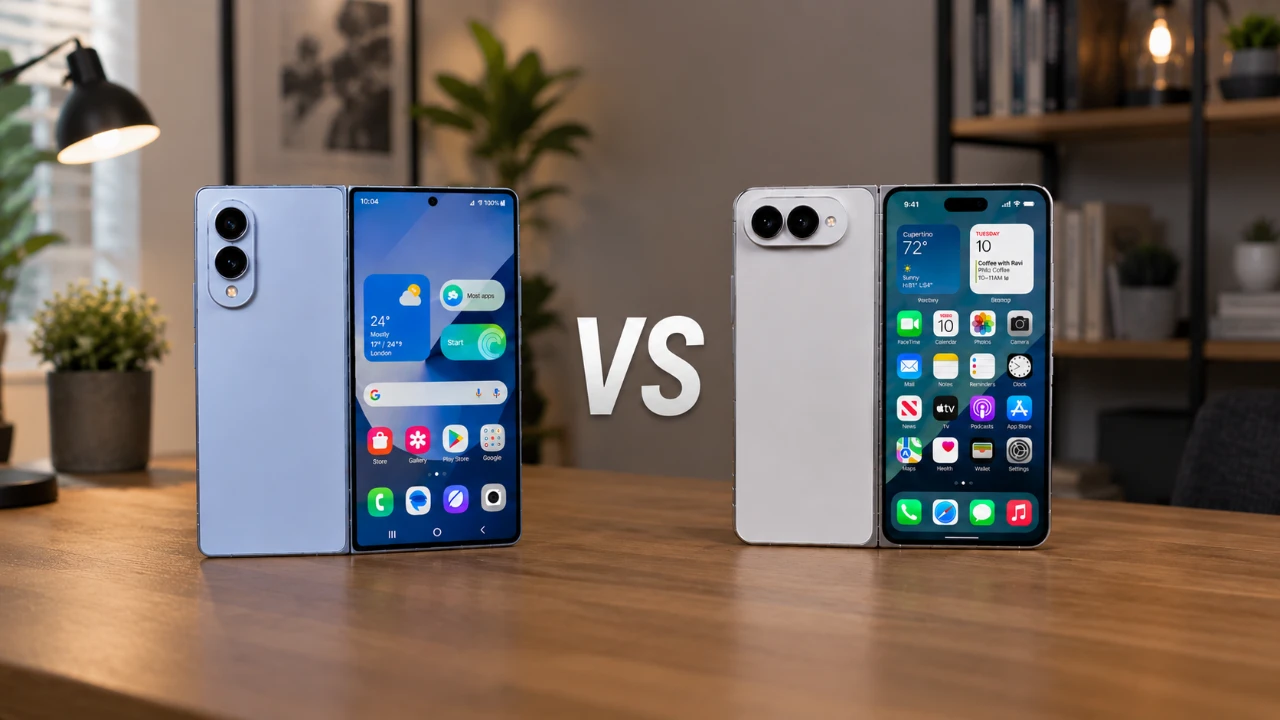
The foldable smartphone market is evolving rapidly, with Samsung and Apple poised to introduce their latest innovations. The Galaxy Z Fold 8 Wide and the iPhone Fold Ultra, both rumored to launch soon, are set to redefine the foldable landscape. These devices adopt a “short and wide” form factor, sparking discussions about usability, aesthetics, and the future of foldable smartphones. Here’s an in-depth comparison of these two highly anticipated devices. The video below from GregglesTV compares the two handsets.

Design and Dimensions: Compact Yet Expansive
The defining feature of both the Galaxy Z Fold 8 Wide and the iPhone Fold Ultra is their unconventional “short and wide” display ratio, a departure from the elongated “candy bar” design of traditional smartphones. This approach offers a more compact yet expansive screen experience, catering to users who prioritize multitasking and portability.
– Galaxy Z Fold 8 Wide: Slightly taller when unfolded, this device provides a balanced feel, making sure a seamless transition between folded and unfolded modes. Its design reflects Samsung’s commitment to refining the foldable experience.
– iPhone Fold Ultra: With a broader and shorter design, Apple’s foldable leans toward a tablet-like experience, appealing to users who value a larger, more immersive display in a compact form.
Camera placement further differentiates the two. Samsung retains its vertical camera alignment, consistent with its previous models, while Apple opts for a horizontal camera arrangement, a bold departure from its traditional design language. This choice may influence ergonomics, particularly for photography and video recording.
Camera Systems and Magnetic Features
Both devices are expected to feature advanced dual-camera systems, catering to users who demand high-quality photography. However, their approach to additional features highlights distinct priorities:
– Galaxy Z Fold 8 Wide: Notably, this device lacks built-in magnets, likely due to internal design constraints and the placement of its camera system.
– iPhone Fold Ultra: Includes magnets, aligning with Apple’s ecosystem of MagSafe-enabled accessories. This feature enhances compatibility with accessories like chargers and cases, though speculation suggests Apple may phase out magnets in future models, signaling a potential shift in its design philosophy.
These differences underscore each company’s unique approach to balancing functionality, aesthetics and ecosystem integration. While Samsung focuses on refining its foldable technology, Apple emphasizes seamless integration with its broader product lineup.
User Reactions: Divided Opinions
The “short and wide” form factor has elicited mixed reactions from potential users. Some appreciate the compact design and enhanced multitasking capabilities, while others remain skeptical, favoring the familiarity of traditional smartphone shapes. However, foldable phones have a history of overcoming initial skepticism. Once users experience the versatility of folding devices, satisfaction rates tend to rise, suggesting that hands-on use may alleviate initial concerns.
For multitaskers, the wider display offers a significant advantage, allowing users to run multiple apps side by side or enjoy a more immersive viewing experience. On the other hand, those accustomed to narrower devices may find the transition challenging. Ultimately, user preferences will play a critical role in determining the success of these devices.
Market Dynamics and Expectations
Apple’s iPhone Fold Ultra represents the company’s first foray into the foldable smartphone market, generating significant anticipation. As a newcomer, Apple faces the challenge of meeting high expectations while competing with Samsung, a seasoned player in the foldable space. Samsung’s Galaxy Z Fold 8 Wide builds on the success of its predecessors, offering incremental improvements and a polished user experience.
Both devices are expected to perform well, driven by the growing acceptance of foldable technology. The market for foldable smartphones has expanded significantly in recent years, with consumers increasingly drawn to their versatility and innovative designs. The Galaxy Z Fold 8 Wide and iPhone Fold Ultra are poised to capitalize on this trend, offering unique features that cater to different user preferences.
Release Timelines: A Staggered Launch
The Galaxy Z Fold 8 Wide is expected to launch in approximately two months, giving Samsung an early lead in the market. The iPhone Fold Ultra, on the other hand, is rumored to debut three to four months later. This staggered release schedule could influence consumer decisions, as early adopters weigh the benefits of Samsung’s established expertise against the allure of Apple’s highly anticipated debut.
For Samsung, the earlier release provides an opportunity to solidify its position as a leader in the foldable market. For Apple, the delayed launch allows time to refine its product and build anticipation among its loyal customer base. The timing of these releases will likely play a significant role in shaping consumer preferences and market dynamics.
Rumored Specifications
| Feature | Apple iPhone Fold Ultra (Rumored) | Samsung Galaxy Z Fold 8 Wide (Rumored) |
| Form Factor | Wide, “Passport” style squatter design | Squat, wider tablet-style footprint (versus standard Fold 8) |
| Internal Display | 7.8-inch Crease-less OLED | 7.6-inch to 8.0-inch Dynamic AMOLED 2X |
| Cover Display | 5.5-inch OLED (Wider aspect ratio) | 5.4-inch to 6.5-inch Dynamic AMOLED 120Hz |
| Crease Tech | Liquid metal alloy hinge + stress-dispersion plate (Nearly invisible) | Dual-layer Ultra Thin Glass (UTG) + laser-drilled support plate |
| Processor | Apple A20 / A20 Pro (2nm) | Snapdragon 8 Elite Gen 5 / Exynos 2600 |
| RAM | 12GB | 12GB / 16GB |
| Storage Options | 256GB / 512GB / 1TB | 256GB / 512GB / 1TB |
| Rear Cameras |
Dual System:
• 48MP Main
• 48MP Ultrawide |
Dual or Triple System (Leans Dual for thinness):
• 50MP Main
• 50MP Ultrawide (May omit telephoto to reduce width/weight) |
| Front Cameras | 18MP (Cover & Internal Under-Display) | 10MP Cover / Under-display internal camera |
| Battery Capacity | ~4,700 mAh to 5,500 mAh | ~4,800 mAh to 5,000 mAh |
| Charging Speed | ~20W Wired, MagSafe / Qi2 | 45W Wired, 15W Wireless |
| Operating System | iOS 27 (FoldOS variants) | Android 16 with One UI 8.5 |
| Expected Price | $1,999 – $2,399 | ~$1,899 – $1,999 |
A New Era for Foldable Smartphones
The Galaxy Z Fold 8 Wide and iPhone Fold Ultra represent two distinct approaches to foldable smartphone design. Their “short and wide” form factors challenge traditional expectations, offering a glimpse into the potential of folding technology to reshape the smartphone experience.
Samsung’s Z Fold 8 Wide continues a legacy of innovation, refining a proven formula to deliver a polished and reliable product. Apple’s iPhone Fold Ultra, meanwhile, marks a bold entry into the foldable market, showcasing the company’s ability to innovate in new categories. As these devices prepare to launch, their reception will provide valuable insights into user preferences and the future trajectory of foldable smartphones.
Ultimately, the choice between these two devices will depend on individual priorities. Whether you value Samsung’s established expertise or Apple’s fresh perspective, both devices promise to deliver a compelling and versatile smartphone experience. The next generation of foldable smartphones is set to redefine how we interact with technology, offering exciting possibilities for users worldwide.
Source & Image Credit: GregglesTV
Disclosure: Some of our articles include affiliate links. If you buy something through one of these links, Geeky Gadgets may earn an affiliate commission. Learn about our Disclosure Policy.
