
I didn’t think I’d ever get emotional about window shades—until Bringnox basically turned my living room into a climate-controlled comfort zone that quietly pays for itself.
Let’s be honest. Window shades are rarely something people think to upgrade—until a room starts getting harder to live in during the afternoon heat or the AC begins working more than it should.
After installation, the change isn’t visually dramatic. It shows up in how the space behaves. Temperatures feel more stable throughout the day, and the air conditioning doesn’t seem to cycle as aggressively during similar weather conditions.
When Your Windows Start Working Smarter Than You Do
The first thing I noticed wasn’t the motor, but how quietly everything runs and how consistent the room temperature feels throughout the day.
These shades use a hexagonal honeycomb air-pocket structure that traps air within each cell, creating an insulation layer between the window glass and the room. In daily use, it acts as a passive buffer, helping reduce heat gain during strong sunlight and slowing heat loss when temperatures drop.
When connected to a smart home setup through Matter over Thread or Zigbee, the system can respond to daylight and temperature conditions using timers or climate sensors. The shades adjust automatically based on changing sunlight, lowering during peak heat periods to reduce solar gain before it builds up indoors.
Over time, this combination of insulation and automation reduces how hard the HVAC system needs to work, which may translate into lower energy use across the season.
Where the Energy Savings Actually Show Up
What becomes noticeable over time is simple: the HVAC system doesn’t run as often under similar conditions.
On hot afternoons, the air conditioning no longer feels like it’s constantly cycling in the background. While exact savings are difficult to measure in daily use, overall energy demand feels lower, showing up gradually in how frequently the system needs to operate rather than as an immediate change.
Part of this comes from how the shades respond to sunlight. By lowering during peak heat hours and reducing direct solar gain, they help slow indoor temperature rise, which reduces the need for frequent HVAC cycling.
This creates a year-round energy management effect, with reduced HVAC workload that can reach up to 20%+ in some cases, eventually reflected in lower utility bills over time.
A Quieter, Safer Everyday Space
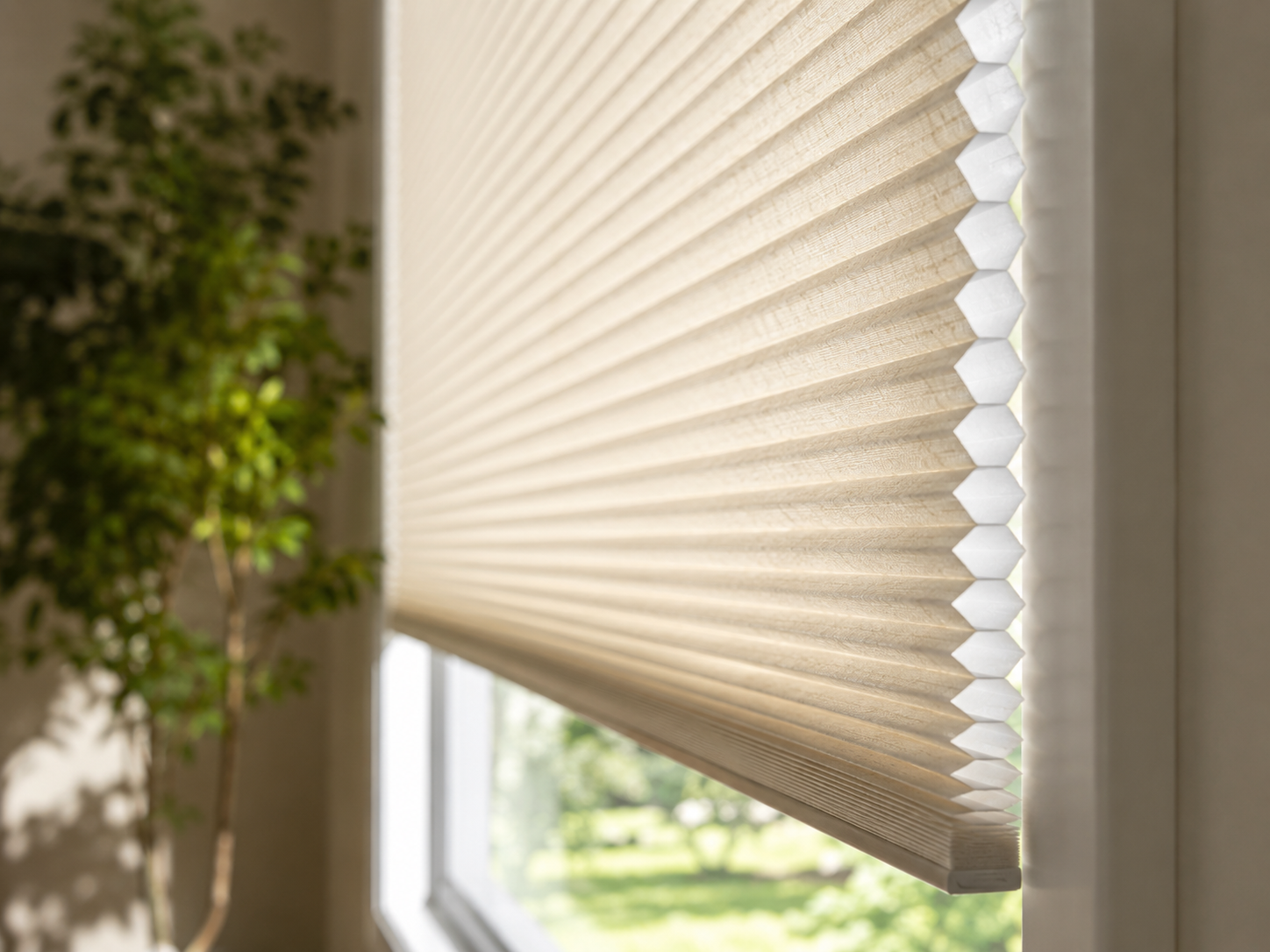
Beyond thermal performance and energy efficiency, the shades also change how the room feels in more subtle ways.
The fabric is OEKO-TEX® Standard 100 certified, ensuring low-emission and non-toxic performance even under prolonged heat exposure. The cordless design also meets Best for Kids safety standards, making it a practical fit for homes with children or pets.
There’s also a subtle acoustic benefit. The honeycomb structure helps soften outside noise, especially in street-facing rooms. Traffic, late afternoon activity, and neighborhood sounds feel slightly reduced, which becomes more noticeable during work-from-home hours or quiet evenings.
Where It Fits Best
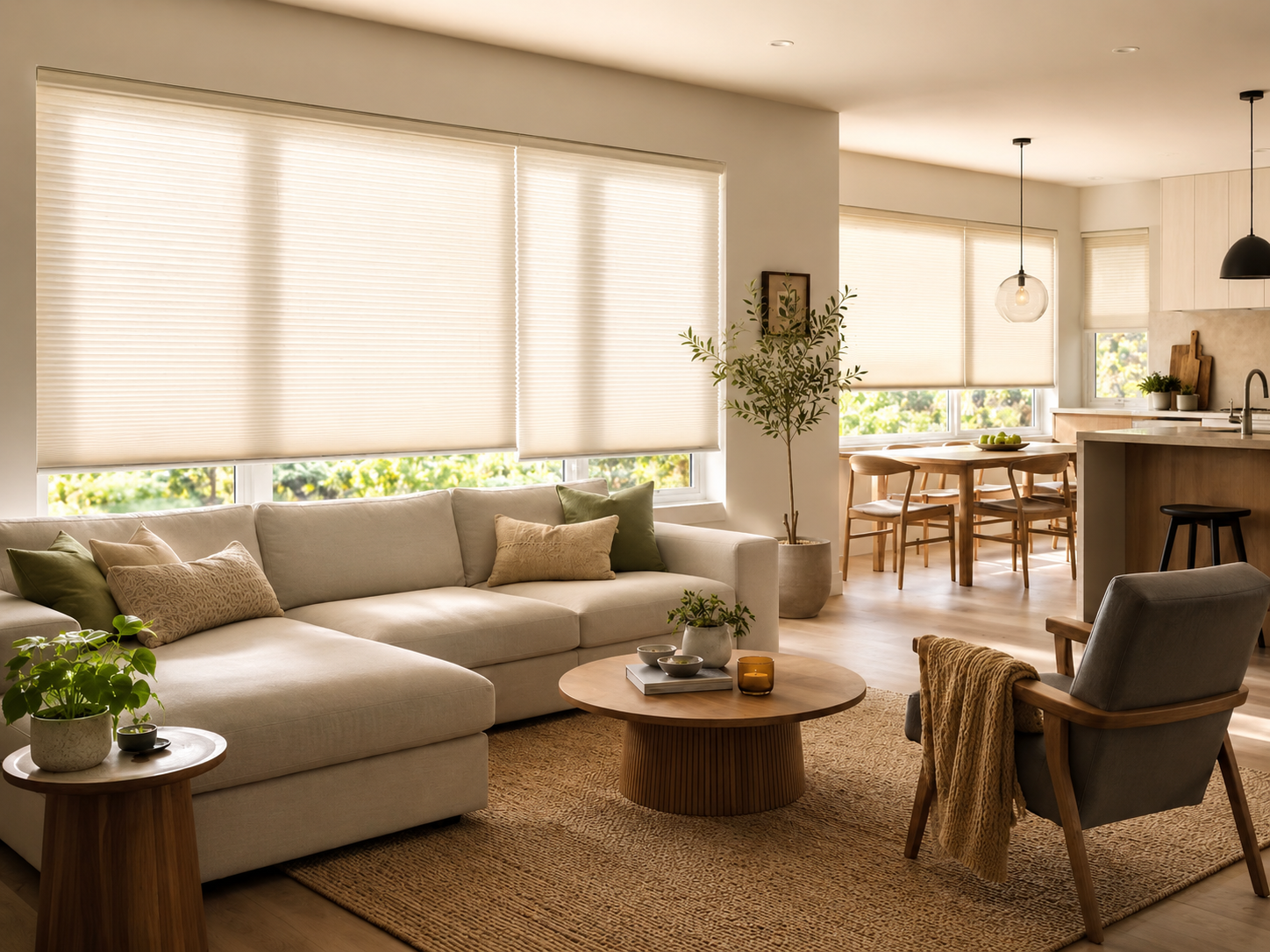
These shades make the most sense in shared living spaces where light and temperature naturally shape daily routines. In living rooms, they help maintain a more stable environment for work, relaxation, or screen time. In kitchens and dining areas, they soften strong sunlight without making the space feel closed off.
They’re also well-suited for open-concept homes where multiple activities happen throughout the day. Instead of constantly adjusting blinds or thermostats, the environment feels more stable and self-managed.
For users with smart home systems—or anyone trying to reduce manual adjustments—this setup feels less like a visual upgrade and more like a background layer of environmental control.
Final Take
The Bringnox Motorized Cellular Shades don’t feel like a dramatic upgrade at first, but their impact builds over time. The combination of honeycomb insulation and smart automation gradually improves temperature stability, reduces HVAC usage, and adds a consistent layer of comfort that requires little attention once installed.
It’s less about changing how a home looks and more about how steadily it manages light, heat, and energy in the background.
Disclosure: Some of our articles include affiliate links. If you buy something through one of these links, Geeky Gadgets may earn an affiliate commission. Learn about our Disclosure Policy.
