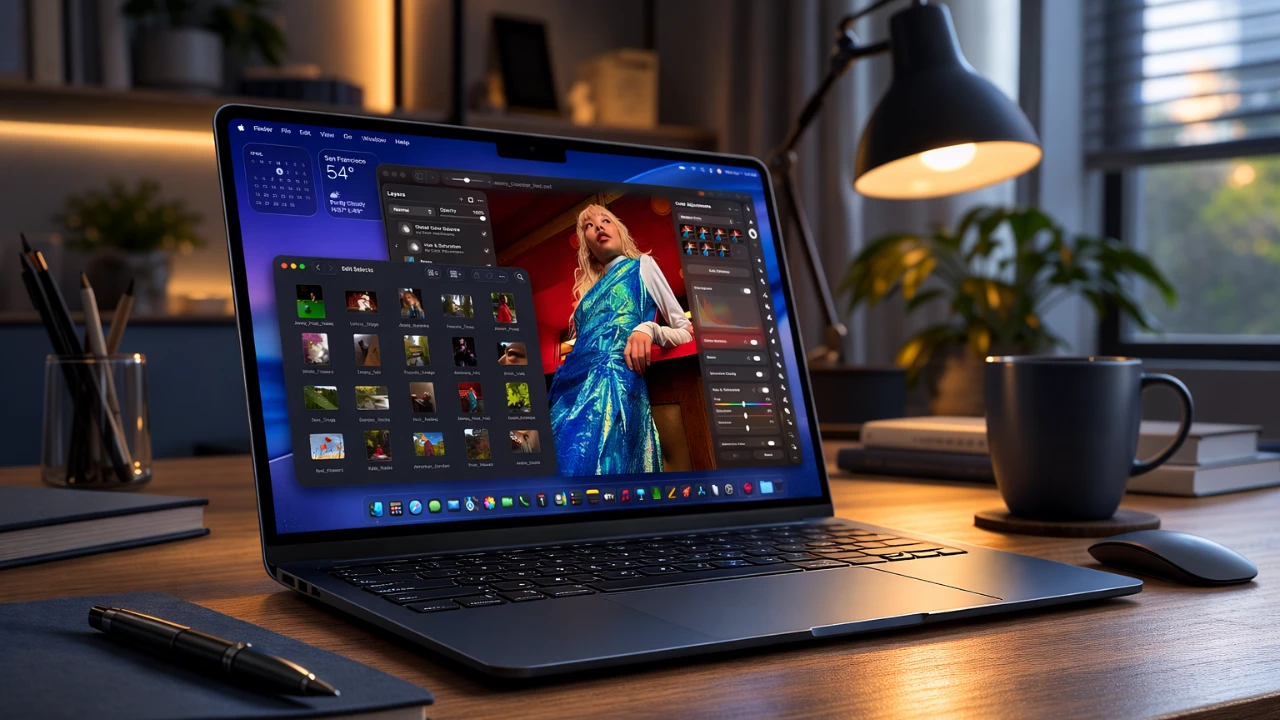
The MacBook Air, once synonymous with lightweight portability and affordability, now finds itself in a challenging position within Apple’s increasingly diverse MacBook lineup. With the introduction of the budget-friendly MacBook Neo and the high-performance MacBook Pro, the Air’s role has become less defined. Overlapping pricing and performance tiers have muddled its target audience, leaving potential buyers questioning its relevance and value in Apple’s portfolio. The video below from 9 to 5 Mac gives us a look at the new M5 MacBook Air.

Apple’s Current MacBook Lineup
Apple’s MacBook lineup now caters to a wide range of users, segmented into three distinct tiers:
- MacBook Neo: Positioned as the entry-level option, priced between $600 and $700, it is designed for basic tasks such as web browsing, email and light productivity. Its affordability makes it an attractive choice for students and casual users.
- MacBook Air: Sitting in the mid-tier category, the Air starts at $1,100 and features Apple’s latest M5 chip. It offers more power and advanced features than the Neo, but its price places it closer to the high-end MacBook Pro.
- MacBook Pro: Starting at $1,700, the Pro is tailored for professionals who require robust performance for demanding tasks like video editing, 3D rendering and intensive multitasking.
While the Neo and Pro have clearly defined roles, the Air’s position between these two extremes is less obvious. This lack of clarity creates confusion for buyers trying to determine whether the Air is worth its price or if they should opt for the Neo or Pro instead.
Challenges Facing the MacBook Air
The MacBook Air has historically been the go-to recommendation for entry-level and intermediate users, offering a balance of performance, portability and price. However, its current role is less distinct. For users with basic needs, the Neo provides a more affordable alternative, while the Pro caters to professionals with demanding workflows. The Air, priced closer to the Pro, struggles to justify its value for budget-conscious buyers or those seeking maximum performance.
The Air’s pricing is a significant factor in its identity crisis. With a starting price of $1,100, it is nearly double the cost of the Neo, yet only $600 less than the Pro. This narrow pricing gap diminishes its appeal as a middle-ground option, leaving potential buyers questioning whether the Air offers enough value to warrant its price.
Performance: Where the Air Stands
Equipped with Apple’s M5 chip, the MacBook Air delivers a noticeable performance boost over the Neo, which uses the A18 Pro chip. This performance advantage positions the Air as a capable device for users with moderate computing needs. Key performance benefits of the Air include:
- Improved GPU performance: Ideal for graphics-intensive tasks such as photo editing and light gaming.
- Faster multi-core processing: Enables smoother multitasking and light video editing workflows.
- Better support for professional applications: Handles software like coding environments and design tools more efficiently than the Neo.
While the Neo is sufficient for casual users, it falls short for those requiring more power. The Air bridges the gap between the Neo and Pro in terms of performance, but its higher price may deter users who prioritize affordability over advanced capabilities.
Hardware and Features: What Sets the Air Apart
The MacBook Air distinguishes itself from the Neo with several hardware and feature upgrades, making it a more premium option. These include:
- MagSafe: A secure and convenient charging solution that reduces wear and tear on the charging port.
- Touch ID: Provides enhanced security and quick access to the device.
- Larger Display: Offers more screen real estate, improving productivity and user experience.
- Better Webcam: Delivers superior video quality for virtual meetings and online communication.
- Premium Build Quality: Features a more durable and refined design, contributing to its longevity.
These features add value to the Air, but they may not be compelling enough for users who prioritize cost savings over additional functionality. For many, the Neo’s lower price point may outweigh the Air’s hardware advantages.
Pricing: A Key Pain Point
The pricing structure of Apple’s MacBook lineup complicates the decision-making process for potential buyers. At $600-$700, the Neo is an appealing choice for budget-conscious users, offering sufficient performance for everyday tasks. In contrast, the Air’s $1,100 starting price places it uncomfortably close to the Pro, which starts at $1,700. This narrow pricing gap undermines the Air’s position as a mid-tier option, making it harder for buyers to justify the additional cost over the Neo or the smaller leap to the Pro.
What Lies Ahead for the MacBook Air?
The future of the MacBook Air depends on Apple’s ability to redefine its role within the MacBook lineup. The anticipated release of the M6 MacBook Pro, expected to feature redesigned hardware and enhanced performance, may further clarify the distinctions between the Pro and Air. However, for the Air to regain its relevance, it must carve out a distinct niche that emphasizes its balance of performance, features, and price.
Apple could reposition the Air as the ideal choice for mid-level users by focusing on its strengths, such as portability, premium build quality, and moderate performance capabilities. By addressing the current pricing disparity and enhancing its value proposition, the Air could re-establish itself as a compelling option for users who need more than the Neo offers but do not require the Pro’s advanced capabilities.
Who Should Consider the MacBook Air?
Despite its challenges, the MacBook Air remains a viable option for a specific audience. It is best suited for:
- Professionals: Those who need moderate power for multitasking, light creative work, and professional applications.
- Users seeking longevity: Individuals who prioritize better hardware, build quality, and features compared to the Neo but do not require the Pro’s high-end performance.
For these users, the Air offers a balanced mix of performance and features, making it a practical choice for those who fall between casual and professional use cases. However, its price may still be a barrier for those on a tight budget, limiting its appeal in the broader market.
Source: 9to5Mac
Disclosure: Some of our articles include affiliate links. If you buy something through one of these links, Geeky Gadgets may earn an affiliate commission. Learn about our Disclosure Policy.
