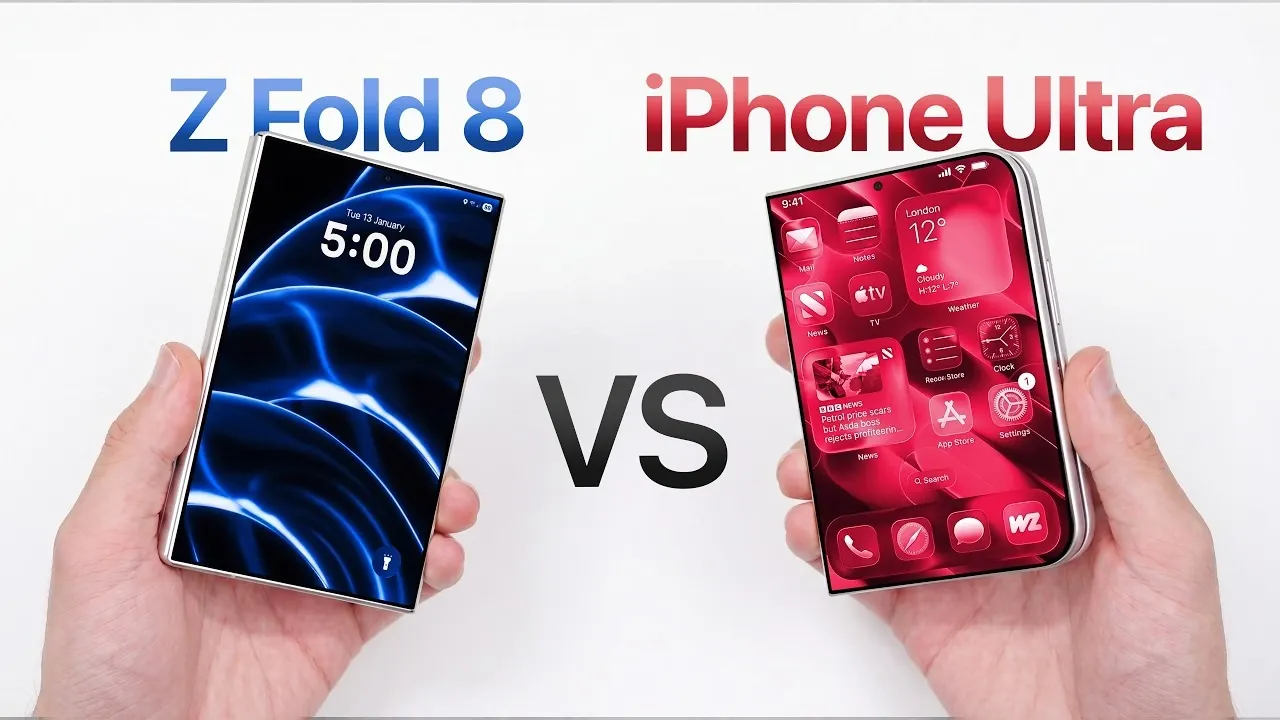
The foldable smartphone market is poised for a fantastic leap in 2024 with the highly anticipated launches of the iPhone Ultra and Samsung Galaxy Z Fold 8. These devices promise to redefine the foldable category, offering innovative technology and innovative designs. Early insights from case models and dummy units reveal two distinct approaches to foldable smartphones, with each device targeting different user needs. From design and display to performance and pricing, these devices highlight the diversity of innovation in the foldable space. Here’s a detailed comparison to help you understand what each device brings to the table in a great new video from ZONEofTECH.
Design: Rounded Comfort or Squared Precision?
The design philosophies of the iPhone Ultra and Galaxy Z Fold 8 reflect their distinct priorities, catering to different user preferences. The iPhone Ultra focuses on comfort, featuring a rounded frame that ensures ease of use during extended periods. In contrast, the Galaxy Z Fold 8 adopts a squared-off design, prioritizing grip and stability for users who value a firm hold.
Key design differences include:
- Thickness and Weight: The Galaxy Z Fold 8 is thinner at 10.5 mm and lighter at 200 grams, offering a more portable option compared to the iPhone Ultra’s 11.5 mm thickness and 250 grams.
- Dimensions: Both devices share similar overall dimensions, but the Z Fold 8’s taller profile may appeal to users who prefer a larger external display for multitasking and media consumption.
- Camera Placement: The Z Fold 8 features a centrally aligned dual-camera module, while the iPhone Ultra opts for a strategically positioned layout to enhance usability and aesthetics.
These design choices highlight the contrasting priorities of the two brands, with Samsung focusing on practicality and Apple emphasizing ergonomic comfort.
Display: Smooth Refresh Rates and Brightness
Both devices promise to deliver exceptional display technology, making sure a premium viewing experience. With 120Hz refresh rates and peak brightness levels of 2500-2600 nits, these foldables are designed to perform well in various lighting conditions, including direct sunlight.
Here’s how the displays compare:
- External Screen: The Galaxy Z Fold 8 features a taller external screen with thinner bezels, maximizing screen real estate for productivity and entertainment.
- Design Features: The iPhone Ultra’s rounded bezels and optimized camera placement create a seamless viewing experience, particularly for video playback and gaming.
- Crease-Free Displays: Both devices are rumored to address the common issue of visible creases in foldable screens, offering smoother and more durable displays.
These advancements in display technology aim to enhance usability, making foldable devices more appealing to a broader audience.
Camera Systems: Simplicity Meets Versatility
The camera systems on the iPhone Ultra and Galaxy Z Fold 8 focus on simplicity without compromising functionality. Both devices feature dual-lens setups, balancing practicality with performance.
Here’s what to expect:
- Galaxy Z Fold 8: Equipped with dual 50MP cameras, including a main and ultrawide lens, the Z Fold 8’s central placement is optimized for video calls and multitasking.
- iPhone Ultra: Featuring dual 48MP sensors, the iPhone Ultra’s camera layout is tailored for photography enthusiasts, offering high-quality images and videos.
- Telephoto Lens: Neither device includes a telephoto lens, which may be a drawback for users seeking advanced zoom capabilities.
While both devices prioritize simplicity, their camera systems are designed to meet the needs of different user groups, from casual photographers to video call enthusiasts.
Performance: Power Meets Efficiency
Performance is a critical aspect of any smartphone and both the iPhone Ultra and Galaxy Z Fold 8 are equipped with innovative hardware to deliver exceptional speed and efficiency.
- Galaxy Z Fold 8: Powered by the Snapdragon 8 Elite Gen 5 processor, the Z Fold 8 is built for multitasking, gaming and demanding applications.
- iPhone Ultra: Featuring Apple’s A20 Pro chip, built on an advanced 2nm process, the iPhone Ultra emphasizes power efficiency and seamless performance.
- Battery Life: The iPhone Ultra is rumored to include a larger 5800mAh battery, potentially offering longer usage times compared to the Z Fold 8’s 4800mAh capacity.
These performance features ensure that both devices can handle the demands of modern users, whether it’s gaming, productivity, or everyday tasks.
Software: Multitasking vs Ecosystem Integration
Software plays a pivotal role in differentiating the iPhone Ultra and Galaxy Z Fold 8, with each device offering unique strengths.
- Galaxy Z Fold 8: Samsung’s software is tailored for foldables, featuring advanced multitasking capabilities and the desktop-like Dex mode for enhanced productivity.
- iPhone Ultra: Apple’s software is expected to mirror iPadOS, providing a polished interface and seamless integration with the Apple ecosystem.
- Target Audience: The Z Fold 8 appeals to productivity-focused users, while the iPhone Ultra is ideal for those already invested in Apple’s ecosystem.
These software ecosystems reflect the brands’ broader strategies, with Samsung targeting versatility and Apple focusing on user-friendly integration.
Pricing: Premium Features, Premium Costs
Pricing is a key consideration for many users and both devices reflect their premium positioning in the market.
- iPhone Ultra: Expected to be priced between $2000 and $2500, the iPhone Ultra’s cost reflects its advanced features, larger battery and ecosystem integration.
- Galaxy Z Fold 8: Rumored to be more affordable, with a price point under $2000, likely around $1800, making it a competitive option in the foldable market.
- Value Proposition: The Z Fold 8’s thinner, lighter design and larger displays may appeal to users seeking practicality at a slightly lower price.
These pricing strategies highlight the brands’ approaches to balancing innovation with accessibility, catering to different segments of the market.
Choosing Between Ecosystems and Features
The iPhone Ultra and Galaxy Z Fold 8 represent two distinct visions for the future of foldable smartphones. The Galaxy Z Fold 8 stands out as a practical, cost-effective option with a refined design, advanced multitasking features and a competitive price point. Meanwhile, the iPhone Ultra caters to users deeply integrated into Apple’s ecosystem or those prioritizing battery life and ergonomic comfort.
Both devices are expected to launch in mid to late 2024, setting the stage for a competitive year in the foldable smartphone market. Your decision will ultimately depend on your priorities, whether it’s ecosystem compatibility, design preferences, or pricing considerations.
Learn more about iPhone Ultra with other articles and guides we have written below.
- iPhone Ultra Fold First Look: Apple Finally Went WIDE to Create the Ultimate Hybrid Device
- Why Apple’s iPhone Ultra Fold Changes Everything We Know About Smartphones
- The ‘Passport’ iPhone Is Real: First Look at Apple’s Foldable ‘Ultra’ Design and its 7.8-inch Display
- See the First Hands-on Video of the iPhone Fold Ultra
- Apple Just Confirmed 6 Major Features for the iPhone Ultra Fold
- Apple’s Crease-Free iPhone Ultra Fold Arrives Later This Year
Source & Image Credit: ZONEofTECH
Disclosure: Some of our articles include affiliate links. If you buy something through one of these links, Geeky Gadgets may earn an affiliate commission. Learn about our Disclosure Policy.
