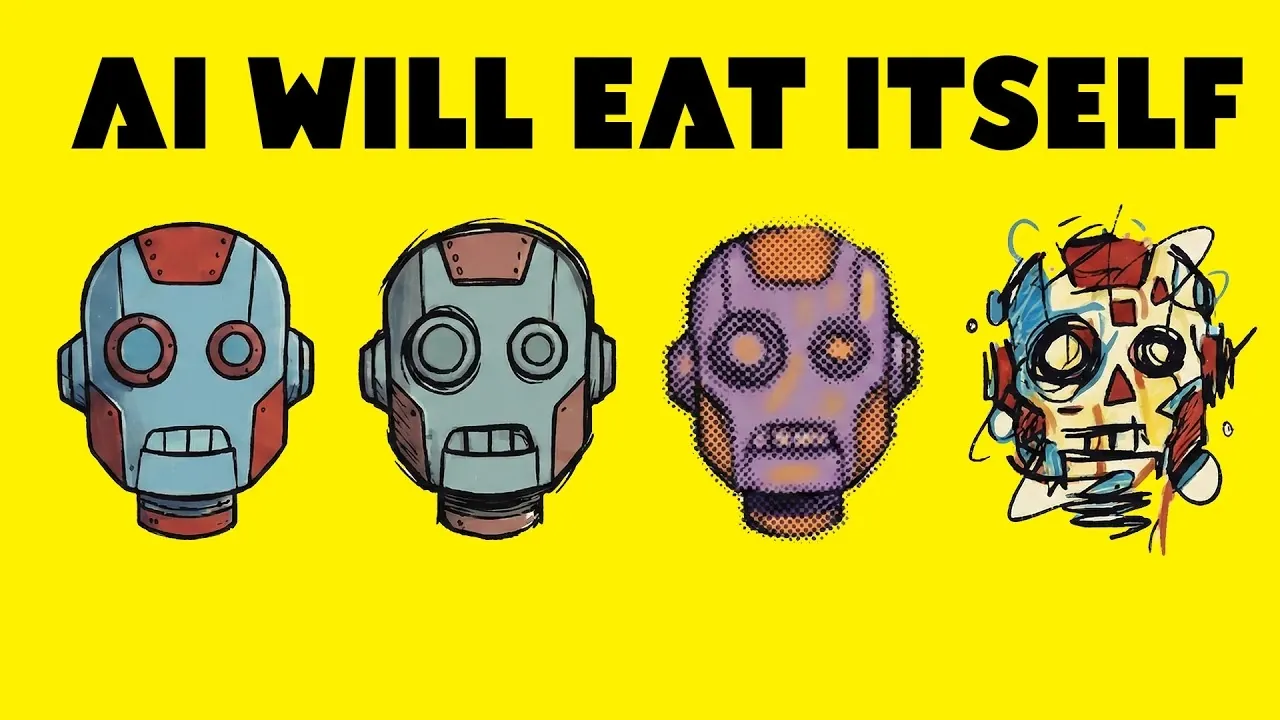
Artificial intelligence systems like ChatGPT, which are trained on vast amounts of online content, are reshaping the digital ecosystem in ways that raise serious concerns. Platforms such as Stack Overflow and Chegg, once central to knowledge sharing, are now struggling to sustain their communities and business models. Stack Overflow, for instance, has overviewed a 78% drop in question volume, prompting a shift toward enterprise services. According to Absolutely Agentic, these disruptions highlight a growing tension between the development of AI and the sustainability of the online spaces it depends on.
Discover how the rise of AI-generated content is reducing the visibility and production of human-created material, complicating the search for reliable information. The feature also examines the phenomenon of “model collapse,” where AI systems degrade when trained on synthetic data. Additionally, it explores potential solutions, including community-driven platforms and the use of synthetic datasets, to mitigate these challenges and support the future of online knowledge.
AI’s Impact on Online Knowledge
TL;DR Key Takeaways :
- AI is reshaping the internet by providing quick, efficient information but disrupting traditional knowledge platforms like Stack Overflow and Chegg, which are experiencing significant declines in user engagement and revenue.
- The rise of AI-generated content is leading to a decline in human-generated material, making it harder to access trustworthy, nuanced information and eroding the diversity of online knowledge.
- “Model collapse” poses a risk to AI systems, as training on AI-generated data leads to a degradation in content quality, creating a feedback loop that threatens the reliability of both AI outputs and internet content.
- Economic disruptions caused by AI are reducing revenue for content creators, leading to a scarcity of high-quality training data and perpetuating a cycle of declining knowledge quality and innovation.
- Emerging solutions, such as community-driven platforms, subscription-based models, synthetic data and advanced AI training methods, offer potential ways to address these challenges but raise concerns about accessibility and equity in the digital knowledge ecosystem.
The Struggles of Knowledge Platforms in an AI-Driven World
Platforms that have long relied on human-generated content are now facing unprecedented challenges due to the rise of AI. These disruptions are not isolated but systemic, affecting a wide range of industries and knowledge-sharing platforms:
- Stack Overflow: Once a cornerstone for programmers seeking technical advice, Stack Overflow has seen a dramatic 78% decline in question volume. This drop has forced the platform to downsize and shift its focus toward enterprise AI solutions, leaving its community-driven model in jeopardy.
- Chegg: A leading educational resource, Chegg has suffered a catastrophic 99% loss in stock value as students increasingly turn to AI tools for academic assistance, bypassing traditional learning platforms.
- Traditional Publishers: Many publishers have experienced a significant reduction in search traffic, up to one-third, as AI-generated summaries intercept users before they visit the original sources, undermining their revenue models.
These shifts have profound implications. As traffic and revenue dwindle, platforms struggle to sustain operations, compensate contributors and maintain the quality of their content. For you, this translates into fewer reliable sources of human-generated knowledge and an increasing dependence on AI-generated material, which may lack the depth and nuance of human expertise.
The Risk of “Model Collapse” and Its Implications
AI systems face a critical challenge known as “model collapse,” a phenomenon that occurs when AI models are trained on datasets that include outputs from other AI systems. This recursive process leads to a gradual decline in the quality of AI-generated content, akin to “photocopying a photocopy,” where each iteration loses clarity, originality and diversity.
For users like you, this degradation poses significant risks. While AI-generated content may appear polished and authoritative, it often lacks the depth, accuracy and critical analysis that human-generated content provides. Over time, this feedback loop threatens to create a digital ecosystem where both AI outputs and the underlying internet content deteriorate, compromising the reliability of the information you rely on.

Learn more about AI models with other articles and guides we have written below.
- Which Claude 3 AI model is best? All three compared and tested
- 12 Research Papers, 6 Years : The AI Industry Explained
- Nvidia Open AI Models Released at CES 2026 & Faster Platform
- Run Local AI Models on Your PC or Mac for Coding, Study & More
- Midjourney Niji 6 Anime Ai Art.Webp
- Midjourney V7 Default Style Realism Example.Webp
- AI actors advanced AI video creation and 3D AI models
- How Encord Simplifies AI Training with Fine Tuning Tools
- Stability AI unveils TripoSR AI image to 3D model generator
- Agent Zero : Private Local AI Agent with Docker & Terminal Access
The Decline of Human-Generated Content and Its Consequences
The exponential growth of AI-generated content is contributing to a noticeable decline in authentic, human-created material on the internet. This shift is making it increasingly difficult to differentiate between genuine and synthetic information. Compounding this issue, detection tools designed to identify AI-generated content are becoming less effective, further eroding the integrity of online knowledge.
For you, this trend presents a significant challenge. Accessing trustworthy, human-generated information is becoming more difficult, as the proliferation of AI-produced material dilutes the quality of available knowledge. This discourages professionals and experts from contributing original content, creating a vicious cycle that undermines the richness and diversity of the internet’s knowledge base.
Economic and Knowledge Feedback Loops
The economic disruptions caused by AI are creating a self-reinforcing feedback loop that threatens the sustainability of the internet’s knowledge ecosystem. This cycle unfolds in several stages:
- Declining traffic to original content sources reduces revenue for platforms and publishers.
- With less revenue, fewer professional content creators can be supported, leading to a decline in high-quality content.
- The scarcity of quality content limits the availability of robust training data for AI models, perpetuating the cycle of degradation.
For you, this feedback loop could result in a slowdown in the creation of new knowledge. As professional expertise becomes less accessible, the internet risks devolving into a repository of recycled information, stifling innovation and discovery.
The Threat of Epistemic Stagnation
AI systems excel at synthesizing and recombining existing knowledge but lack the capacity to generate genuinely new insights. This limitation raises concerns about “epistemic stagnation,” where the pace of meaningful knowledge creation slows. Over time, reliance on AI-generated answers could lead to a future where information appears authoritative but lacks the depth, creativity and critical thinking that human expertise brings.
For users, this stagnation could narrow your understanding of complex topics. While AI can provide quick and convenient answers, it cannot replicate the nuanced perspectives and innovative ideas that emerge from human thought and collaboration.
Emerging Trends and Potential Solutions
The challenges posed by AI are not without precedent. Historical disruptions, such as Google’s Panda update, highlight the difficulties of combating low-quality content at scale. However, new trends and potential solutions are emerging to address these challenges:
- Community-Driven Platforms: Platforms like Reddit continue to thrive as spaces for authentic, human-generated discussions, offering diverse perspectives and insights.
- Subscription-Based Models: Services like Substack prioritize high-quality, original content from professionals, creating a sustainable model for human-generated knowledge.
- Synthetic Data: The development of artificial datasets could reduce AI’s reliance on human-generated content for training, potentially alleviating some of the pressure on traditional knowledge platforms.
- Reinforcement Learning: Advanced training paradigms aim to create more robust AI systems that are less dependent on existing internet data, offering a path toward more sustainable AI development.
While these solutions offer hope, they also raise important questions about accessibility and equity. For you, the divide between free, AI-generated content and paid, human-generated knowledge could create barriers to information, challenging the principles of an open and inclusive internet.
The Future of Knowledge in an AI-Driven World
The rapid evolution of AI presents both opportunities and challenges for the internet’s knowledge ecosystem. While AI offers unparalleled efficiency and accessibility, its impact on human-generated content and the sustainability of knowledge-sharing platforms cannot be ignored.
For you, the future of information remains uncertain. The decisions made by platforms, policymakers and users today will shape the quality, accessibility and reliability of knowledge for years to come. Balancing the benefits of AI with the preservation of authentic, human-generated content is a complex but urgent task that requires collective action and innovative thinking.
Media Credit: Absolutely Agentic
Disclosure: Some of our articles include affiliate links. If you buy something through one of these links, Geeky Gadgets may earn an affiliate commission. Learn about our Disclosure Policy.
