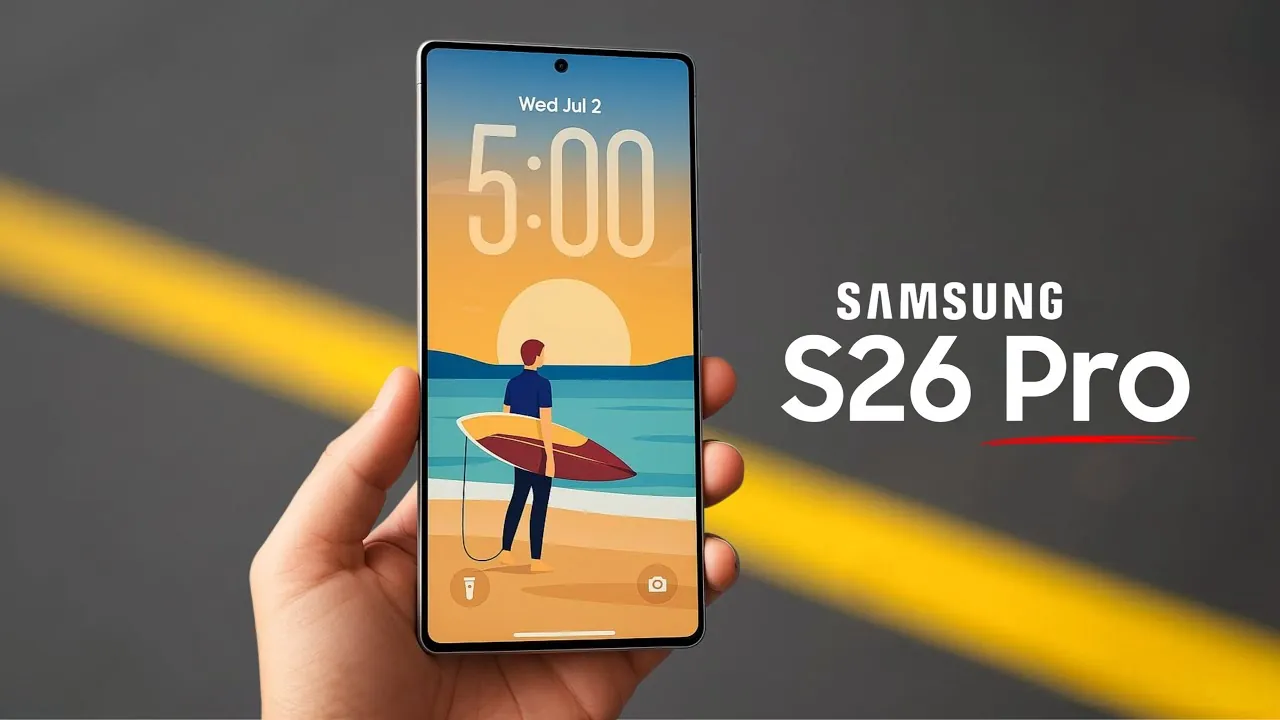
Recent leaks regarding the Samsung Galaxy S26 Pro and S26 Edge have revealed that these devices will retain the same 25-watt charging speed as their predecessors. While Samsung has long been recognized as a leader in smartphone innovation, this decision could place the company at a disadvantage in an increasingly competitive market where charging technology is advancing rapidly. As competitors continue to push the boundaries of charging speeds, Samsung’s choice to maintain this standard raises critical questions about its strategy for its non-Ultra models and whether it aligns with consumer expectations in 2026.

Why Charging Speed Matters
Charging speed has become a significant factor in the overall user experience of modern smartphones. If you’re considering the Galaxy S26 Pro or S26 Edge, it’s important to note that their charging capabilities have remained unchanged since the Galaxy S20, which launched in 2020. With a 25-watt charging capacity, these devices lag behind competitors that now offer significantly faster options. For example:
- OnePlus 13: Features 100-watt charging, capable of fully charging the device in just 43 minutes.
- Apple iPhone 17: Offers 40-watt charging, a marked improvement over its predecessor.
- Google Pixel 10 Pro: Equipped with 45-watt charging, providing a faster and more efficient experience.
These advancements highlight a growing gap in charging performance, particularly in the premium smartphone segment. Samsung’s decision to stick with 25-watt charging raises questions about whether this feature is sufficient to meet the demands of consumers in 2026, especially when faster charging has become a standard expectation.
How Samsung Compares to Competitors
The premium smartphone market has evolved into a highly competitive space, with charging speed emerging as a key differentiator. Apple’s iPhone 17, for instance, represents a significant step forward with its 40-watt charging, while OnePlus continues to lead the industry with its innovative 100-watt technology. Even Google, which has traditionally been more conservative in hardware innovation, has stepped up its game with the Pixel 10 Pro’s 45-watt charging capability.
In comparison, the Galaxy S26 Pro’s 25-watt charging feels outdated for a flagship device. This limitation could influence consumer perceptions, particularly when faster charging has become a standard feature for many premium smartphones. For Samsung, this decision may signal a missed opportunity to stay competitive in an area that directly impacts user convenience and satisfaction.
Real-World Performance: Does It Make a Difference?
Charging speed has a tangible impact on your daily smartphone experience. For example, the Galaxy S25, which also features 25-watt charging, takes:
- 30 minutes to reach 54% battery capacity.
- 1 hour and 22 minutes to achieve a full charge.
By comparison, the OnePlus 13 achieves a full charge in just 43 minutes—less than half the time required by Samsung’s device. This difference in charging speed is not merely a technical specification; it directly affects how quickly you can get back to using your device. Faster charging is particularly valuable for users with demanding schedules, as it minimizes downtime and enhances convenience. For many consumers, the ability to recharge a device quickly can be a deciding factor when choosing a smartphone.
What Should Consumers Consider?
As a consumer, you may wonder whether 25-watt charging is sufficient for a premium smartphone in 2026. While Samsung’s devices continue to excel in areas such as display quality, software integration, and camera performance, the decision to maintain slower charging speeds could diminish their overall appeal.
Competitors are offering faster and more efficient charging solutions, which could make Samsung’s non-Ultra models seem less competitive in the eyes of potential buyers. When evaluating a smartphone, it’s essential to consider how charging speed fits into your daily routine and whether it meets your expectations for a premium device. For some, Samsung’s focus on other features may compensate for this shortcoming, but for others, faster charging may be a non-negotiable requirement.
Looking Ahead: A Strategic Decision?
The leaked details surrounding the Samsung Galaxy S26 Pro and S26 Edge highlight a potential weakness in Samsung’s approach to its non-Ultra models. By retaining the same 25-watt charging speed as previous generations, Samsung risks falling behind competitors that are embracing faster and more efficient charging technologies.
This decision raises broader questions about Samsung’s strategy in the premium smartphone market. Is the company prioritizing other features, such as display innovation and software enhancements, at the expense of charging performance? Or is it underestimating the importance of faster charging in shaping consumer preferences? As the smartphone market continues to evolve, charging speed will likely remain a critical factor in influencing purchasing decisions and driving competition.
Here is a selection of other guides from our extensive library of content you may find of interest on Samsung Galaxy S26 Pro.
- Samsung Galaxy S26 Pro: Features, Pricing, and What to Expect
- Everything You Need to Know About the Samsung Galaxy S26 Pro
- Samsung Galaxy S26 Pro: Full Specs, Features, and More
- Samsung Galaxy S26 Pro: Battery Life, Chipset, and Design
- Samsung Galaxy S26 Ultra vs iPhone 17 Pro Max
Source & Image Credit: Demon’s Tech
Disclosure: Some of our articles include affiliate links. If you buy something through one of these links, Geeky Gadgets may earn an affiliate commission. Learn about our Disclosure Policy.
