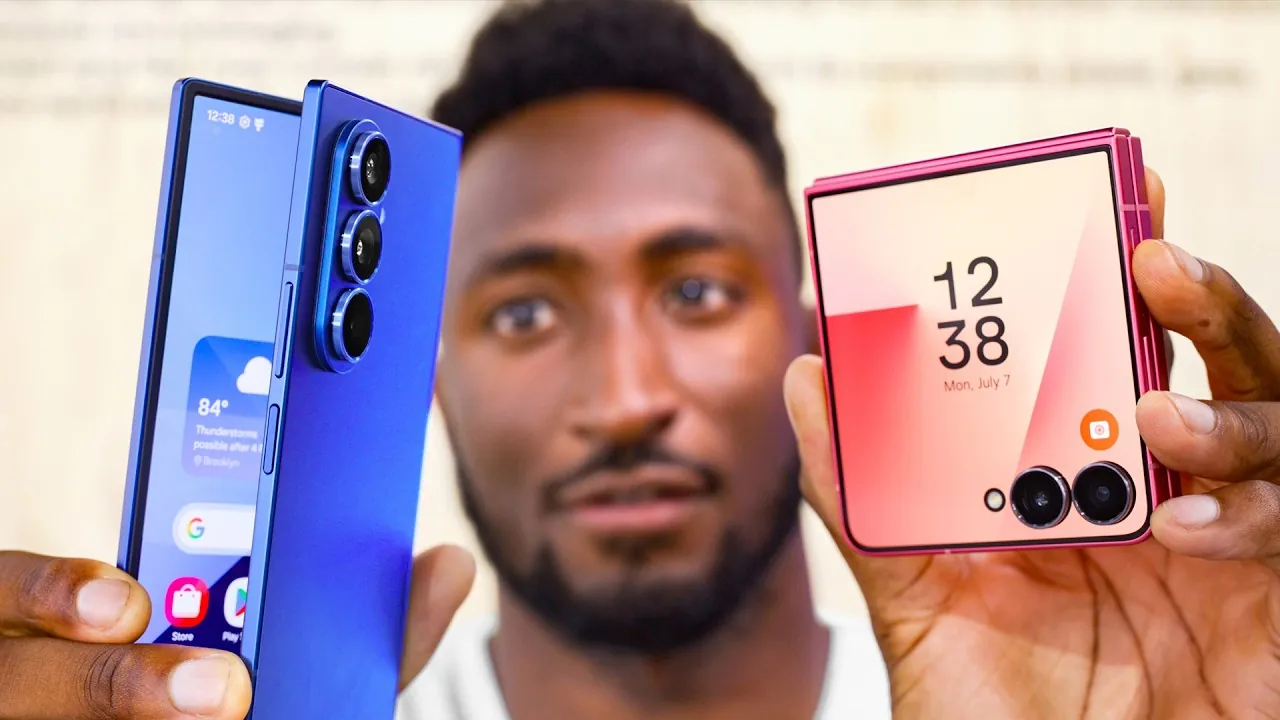
Samsung has unveiled its latest foldable smartphones, the Galaxy Z Fold 7 and Z Flip 7, marking another step forward in foldable technology. These devices bring notable advancements in design, performance, and functionality, aiming to enhance the user experience. With thinner profiles, improved displays, and upgraded hardware, they cater to a wide range of user preferences. However, certain compromises, such as the removal of S Pen support and a price increase, may influence your decision when considering these devices. The video below from Marques Brownlee gives us a detailed look at Samsung’s latest devices.

Galaxy Z Fold 7: Slimmer Design, Enhanced Performance
The Galaxy Z Fold 7 stands out with a sleeker and more portable design, making it easier to carry and use. Measuring just 8.9 mm thick when closed and weighing 215 grams, it is lighter and more compact than its predecessor. When unfolded, the device reveals an expansive 8-inch AMOLED display with a 120 Hz refresh rate, delivering smooth visuals and an immersive experience for multitasking, gaming, or media consumption.
Under the hood, the Fold 7 is powered by the Snapdragon 8 Elite for Galaxy chip, paired with 12 GB of RAM or 16 GB in the 1 TB storage variant. This combination ensures seamless multitasking and smooth performance, even with resource-intensive applications. The device also features a 200 MP main camera, borrowed from the Galaxy S25 Ultra, offering exceptional detail and clarity for photography enthusiasts.
Running on One UI 8 atop Android 16, the Fold 7 is optimized for productivity. Features like split-screen functionality and app continuity across displays make multitasking more intuitive. However, the removal of S Pen support—a feature valued by many users for note-taking and creative tasks—may be a drawback for some. Additionally, the base price has increased to $1,999, reflecting its premium positioning in the market.
Galaxy Z Flip 7: Usability Meets Style
The Galaxy Z Flip 7 focuses on combining usability with a stylish, compact design. The internal display has been expanded to 6.9 inches, while the edge-to-edge 4.1-inch cover screen offers a brighter and smoother experience with a 120 Hz refresh rate. These enhancements make it easier to interact with the device, whether you’re checking notifications, taking selfies, or browsing.
Battery life has been modestly improved, with the capacity increased to 4,300 mAh, providing slightly longer usage times. However, the switch from Snapdragon processors to the Exynos 2500 chip introduces some uncertainty regarding performance and energy efficiency. While Samsung has worked to address past criticisms of its Exynos processors, this change may still raise concerns for users who prioritize consistent performance.
Balancing Innovation with Practicality
Both the Fold 7 and Flip 7 aim to balance innovative innovation with everyday practicality. The Fold 7 is designed for productivity-focused users, offering a larger unfolded display and robust multitasking features. On the other hand, the Flip 7 caters to those seeking a compact and stylish device with enhanced usability. Despite these advancements, Samsung has taken a cautious approach to battery technology, opting for a 4,400 mAh capacity in the Fold 7 to ensure safety and longevity.
While these devices push the boundaries of foldable technology, certain trade-offs remain. The removal of S Pen support in the Fold 7 and the shift to Exynos processors in the Flip 7 may influence user preferences. These decisions reflect Samsung’s efforts to refine its foldable lineup while addressing manufacturing and design constraints.
Additional Announcements: Galaxy Watch 8 and Flip 7 FE
Alongside its foldable smartphones, Samsung introduced the Galaxy Watch 8, which brings a new antioxidant index for health tracking. This feature allows users to monitor oxidative stress levels, offering valuable insights into overall well-being. The Watch 8 also includes enhanced fitness tracking capabilities, making it a versatile companion for health-conscious individuals.
Samsung also launched the Galaxy Flip 7 FE (Fan Edition), providing a more affordable entry point into the foldable market. Powered by the Exynos 2400 chip, the FE model strikes a balance between performance and cost, making foldable technology accessible to a broader audience. While it lacks some of the premium features of the standard Flip 7, it retains the core functionality and design that define the series.
Key Takeaways
The Galaxy Z Fold 7 and Z Flip 7 demonstrate Samsung’s commitment to refining foldable technology. With thinner designs, improved displays, and upgraded hardware, these devices cater to a variety of user needs. The Fold 7 is ideal for productivity enthusiasts, offering a larger display and advanced multitasking features, while the Flip 7 appeals to those who value style and compactness.
However, potential drawbacks such as the removal of S Pen support in the Fold 7 and the shift to Exynos processors in the Flip 7 may affect your decision. Additionally, the price increase for the Fold 7 positions it firmly in the premium segment. When evaluating these devices, consider how the advancements align with your priorities and whether the trade-offs are acceptable for your use case.
Stay informed about the latest in Samsung Galaxy Z Fold 7 by exploring our other resources and articles.
- Samsung Galaxy Z Fold 7: The 6 Biggest Expected Changes
- Samsung Galaxy Z Fold 7: Features, Pricing, and Release Date
- Samsung Galaxy Z Fold 7 Launch Details, Design, and Battery
- Samsung Galaxy Z Fold 7 UNLEASHED: New Power, New Look
- Samsung Galaxy Z Fold 7 Launch Date, Features, and Design
Source & Image Credit: Marques Brownlee
Disclosure: Some of our articles include affiliate links. If you buy something through one of these links, Geeky Gadgets may earn an affiliate commission. Learn about our Disclosure Policy.
