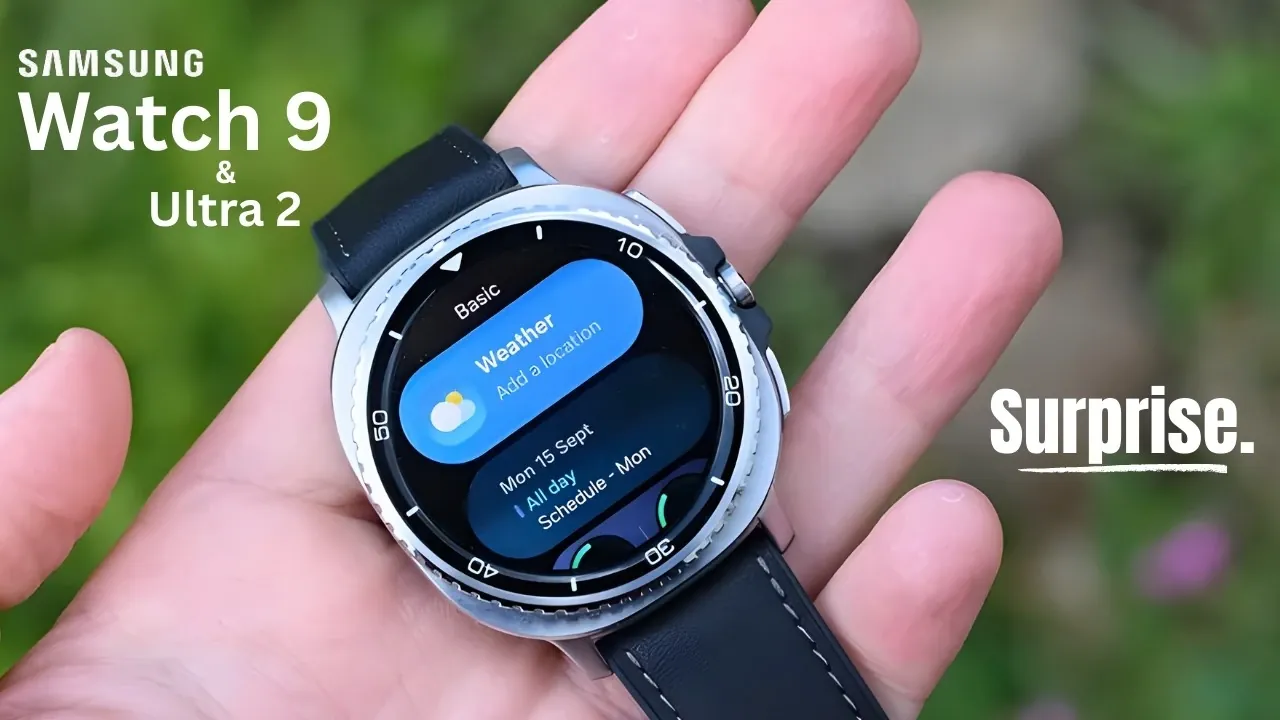
The Samsung Galaxy Watch 9 and Galaxy Watch Ultra 2 are poised to make a significant impact in the premium smartwatch market. Central to this evolution is Samsung’s critical decision regarding its choice of processor: whether to continue with its proprietary Exynos processors or transition to Qualcomm’s newly introduced Snapdragon Wear Elite chipset. This decision holds the potential to influence key aspects such as performance, battery efficiency, and connectivity, ultimately determining Samsung’s competitive stance in a rapidly advancing industry.

Qualcomm Snapdragon Wear Elite: A Leap in Smartwatch Technology
Qualcomm’s Snapdragon Wear Elite chipset represents a major advancement in wearable technology, using innovative innovations to redefine performance benchmarks. Built on a sophisticated 3nm semiconductor process, it competes directly with Samsung’s Exynos W1000 while offering distinct advantages.
Key features of the Snapdragon Wear Elite include:
- A five-core CPU that delivers up to five times better single-threaded performance and seven times stronger graphics capabilities compared to its predecessors.
- Enhanced battery efficiency, supported by silicon-carbon batteries, allowing thinner designs and up to 30% longer battery life. Additionally, fast-charging technology allows a 50% charge in just 10 minutes.
- Advanced connectivity options, including 5G RedCap, WiFi 6, Bluetooth 6.0, and satellite communication, making sure seamless performance across diverse scenarios.
- A dedicated neural processing unit (NPU) that boosts AI capabilities, allowing advanced health monitoring, offline voice commands and predictive analytics.
These features position the Snapdragon Wear Elite as a fantastic force in the smartwatch market, setting new standards for performance, efficiency and user experience.
Samsung’s Strategic Decision: Exynos vs. Snapdragon
Samsung’s reliance on its in-house Exynos processors has historically ensured tight integration within its ecosystem. However, the emergence of Qualcomm’s Snapdragon Wear Elite presents a compelling alternative, prompting Samsung to evaluate its strategy carefully. The company faces three potential paths forward:
- Continue using Exynos processors to maintain ecosystem control and brand consistency.
- Adopt the Snapdragon Wear Elite chipset to use its superior performance and connectivity features.
- Implement a hybrid approach, equipping the Galaxy Watch 9 with Exynos processors and the Galaxy Watch Ultra 2 with Snapdragon Wear Elite to differentiate product tiers.
Each option comes with distinct trade-offs. Sticking with Exynos ensures a cohesive brand identity but risks falling behind competitors in terms of performance and innovation. Transitioning to Snapdragon Wear Elite could enhance Samsung’s competitiveness but might reduce its control over hardware integration. A hybrid strategy offers flexibility but could complicate production processes and marketing efforts.
Implications for the Market and Consumer Experience
The introduction of Qualcomm’s Snapdragon Wear Elite has intensified competition in the premium smartwatch segment, compelling manufacturers to innovate at a faster pace. Samsung’s decision will not only influence its own product lineup but also reshape the broader market dynamics.
By integrating the Snapdragon Wear Elite, Samsung could enhance its offerings in areas such as battery life, AI-driven features and connectivity. However, this move could also increase production costs and blur the distinction between Samsung’s wearables and those of other manufacturers, potentially impacting its brand identity. On the other hand, sticking with Exynos processors may appeal to loyal Samsung users who value ecosystem consistency, though it risks limiting the company’s ability to compete on innovative features.
Regardless of the chipset choice, the Galaxy Watch 9 and Ultra 2 are expected to deliver significant advancements, including:
- Smarter health tracking powered by enhanced AI capabilities, offering personalized insights and offline functionality.
- Improved connectivity options, such as satellite communication, cater to outdoor enthusiasts and frequent travelers.
- Optimized battery life through silicon-carbon batteries and fast-charging technology, addressing consumer demand for longer-lasting devices.
These innovations aim to provide a seamless and reliable user experience, integrating effortlessly into daily routines while addressing modern consumer needs.
Timing and Industry Expectations
The Galaxy Watch 9 and Ultra 2 are anticipated to launch in July 2026, with models featuring the Snapdragon Wear Elite expected to arrive later in the year. This timeline underscores the urgency of Samsung’s decision, as the company must finalize its strategy to remain competitive in a rapidly evolving market. The timing is particularly critical given the growing demand for wearables that combine advanced functionality with extended battery life and robust connectivity.
As the launch date approaches, industry observers and consumers alike will be closely monitoring Samsung’s choices. The decision to stick with Exynos, adopt Snapdragon, or pursue a hybrid approach will not only define the future of the Galaxy Watch series but also signal Samsung’s broader direction in the wearable technology space.
Stay informed about the latest in Samsung Galaxy Watch 9 by exploring our other resources and articles.
- Samsung Galaxy Watch 9 Ultra: Features, Specs, and More
- What We Know So Far About the Samsung Galaxy Watch 9 Ultra 5G
- Galaxy Watch 9 Ultra: Smartwatch with Solid-State Batteries
- Samsung Galaxy Watch Ultra 2 Release Date, Features, and More
- Samsung Galaxy Tab A 8.0″ (2018) 32GB WiFi & 4G Verizon Black
Source & Image Credit: Talks Daily Tech
Disclosure: Some of our articles include affiliate links. If you buy something through one of these links, Geeky Gadgets may earn an affiliate commission. Learn about our Disclosure Policy.
