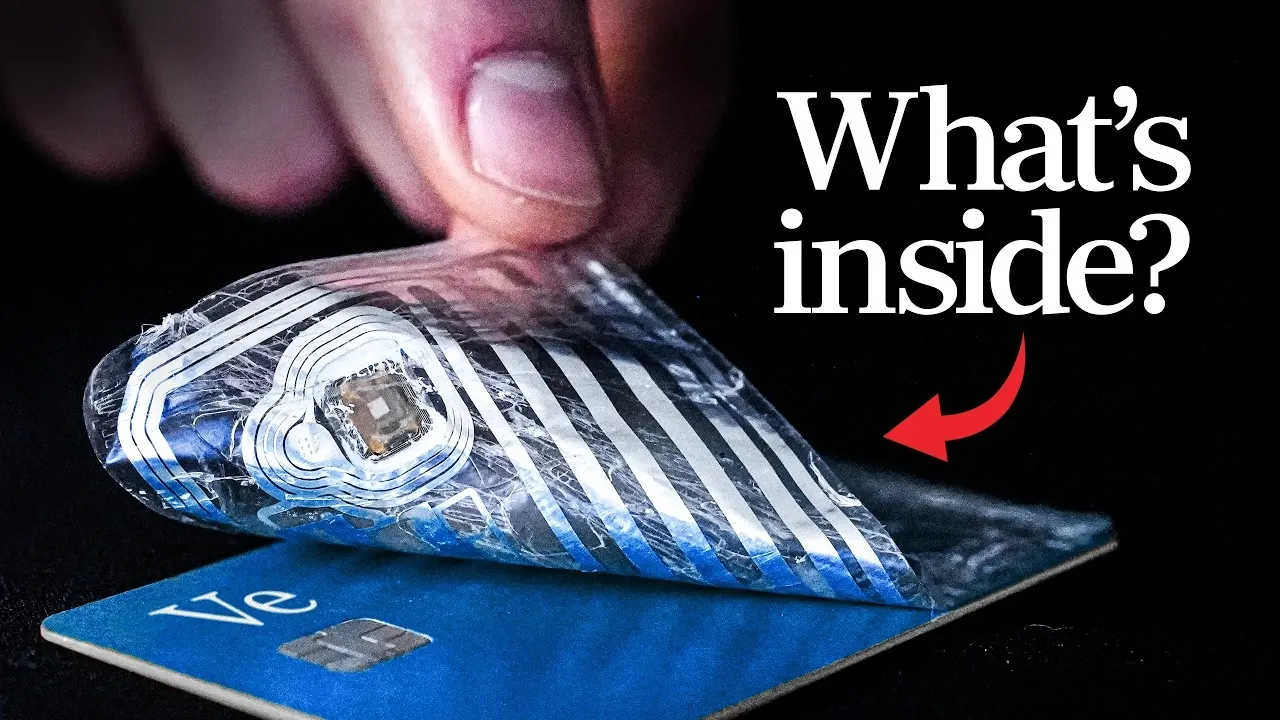
Credit cards are more than just convenient payment methods, they’re a culmination of decades of technological innovation, some of which have surprising origins. As Veritasium explores, the magnetic stripe, EMV chip and NFC systems that power modern transactions owe their existence, in part, to espionage breakthroughs during the Cold War. For instance, the Soviet-engineered listening device known as “The Thing” introduced principles of passive, battery-free communication that later influenced RFID technology. These advancements, initially designed for covert operations, now underpin the security and functionality of everyday financial systems.
In this deep dive, you’ll uncover how magnetic stripes transformed payment processing while exposing vulnerabilities like card skimming and how EMV chips addressed these risks with dynamic encryption. You’ll also explore the rise of contactless NFC payments, which balance speed with security and learn about ongoing threats such as digital pickpocketing. By understanding the evolution of credit card technology, you’ll gain insight into the delicate balance between innovation and security that shapes how we pay today.
How Espionage Shaped Payment Technology
TL;DR Key Takeaways :
- Modern payment technologies, such as magnetic stripes, EMV chips and NFC systems, have roots in Cold War espionage innovations like RFID technology inspired by Soviet listening devices.
- The evolution of credit cards includes key milestones: the introduction of BankAmericard (Visa) in 1958, magnetic stripes in the 1970s, EMV chips in the 2000s and NFC contactless payments in the 2010s.
- Magnetic stripe cards transformed payments but introduced vulnerabilities like card skimming, leading to the development of more secure alternatives like EMV chips with dynamic encryption.
- Contactless NFC payments gained popularity for their convenience and hygiene, especially during the COVID-19 pandemic, while incorporating cryptographic protections to enhance security.
- Emerging payment technologies, such as mobile wallets with biometric authentication and tokenization, promise greater convenience but require vigilance against evolving security threats.
The Cold War was a period of intense technological innovation, much of which was driven by espionage. Among the most notable breakthroughs was the creation of advanced listening devices, such as “The Thing,” developed by Soviet engineers. This passive, battery-free bug could transmit audio when remotely powered by radio waves. The principles behind this invention later inspired the development of RFID (Radio Frequency Identification) technology, which is now integral to modern credit cards.
The CIA’s reverse engineering of such devices further advanced secure communication systems. These innovations laid the foundation for today’s payment methods, allowing the creation of technologies that prioritize both security and efficiency. The influence of espionage on payment systems highlights how tools initially designed for covert operations have been repurposed to assist everyday financial transactions.
The Evolution of Credit Cards
The journey of credit card technology spans decades, marked by significant milestones that have shaped how we make payments today. Each advancement reflects a response to the evolving needs of consumers and the challenges posed by fraud and security threats.
- 1958: The BankAmericard, later rebranded as Visa, introduced the first widely used credit card. These early cards relied on embossed numbers and manual processing, which were time-consuming and prone to errors.
- 1970s: The introduction of magnetic stripe technology transformed payments by allowing machine-readable transactions. While this innovation improved speed and convenience, it also introduced new security vulnerabilities.
- 2000s: EMV chip technology emerged as a more secure alternative, offering dynamic encryption to combat fraud. Over time, chip-and-PIN cards became the global standard for secure payments.
- 2010s: Near-field communication (NFC) technology enabled contactless payments, combining speed and convenience with enhanced hygiene, a feature that gained prominence during the COVID-19 pandemic.
Each stage of this evolution reflects a balance between advancing technology and addressing the risks that come with it.
Gain further expertise in RFID by checking out these recommendations.
- Social Jukebox Uses RFID Tags To Connect Streaming Music Services (video)
- Raspberry Pi RFID Tag Jukebox Using Music Cards
- Juuke RFID card music player jukebox
- RFID123 Arduino Compatible RFID Reader And Decoder Set (video)
- ChameleonUltra programmable RFID emulator
- iCarte Turns Your iPhone Into an RFID Reader
Magnetic Stripes: A Double-Edged Sword
The introduction of magnetic stripe cards in the 1970s marked a turning point in payment processing. These cards stored static data, allowing for faster and more efficient transactions compared to manual methods. However, the static nature of the data also made magnetic stripe cards susceptible to fraud. Criminals quickly exploited this vulnerability through techniques like card skimming, where devices were used to copy card information.
By the late 1990s and early 2000s, skimming had become a widespread issue, prompting the need for more secure payment technologies. While magnetic stripes were innovative for their time, their limitations underscored the importance of continuous innovation in payment security.
EMV Chips: A Secure Alternative
To address the vulnerabilities of magnetic stripe cards, EMV (Europay, Mastercard and Visa) chip technology was introduced. Unlike magnetic stripes, EMV chips generate a unique transaction code for each payment, making them significantly harder to clone. This dynamic encryption drastically reduced counterfeit fraud, offering a more secure alternative for consumers and businesses alike.
Despite its advantages, the adoption of EMV technology was not immediate. The United States, for example, lagged behind other regions in implementing chip-and-PIN systems, delaying their widespread impact. Today, however, EMV cards are the standard, combining enhanced security with user convenience. Their success demonstrates the effectiveness of dynamic encryption in combating fraud.
Contactless Payments: The NFC Revolution
Near-field communication (NFC) technology has redefined payment convenience. With NFC, transactions can be completed by simply tapping a card or smartphone on a payment terminal. This innovation gained significant traction during the COVID-19 pandemic, as consumers sought hygienic, touch-free payment options.
NFC technology is designed with security in mind. Its short-range functionality minimizes the risk of unauthorized access, while cryptographic protections safeguard transaction data. These features make NFC payments both convenient and secure, appealing to a growing number of consumers worldwide.
Ongoing Risks and Vulnerabilities
Despite the advancements in payment technology, no system is entirely immune to risks. Some of the most notable threats include:
- Digital pickpocketing: Criminals using RFID scanners to access card information without physical contact.
- Ghost tapping: Unauthorized transactions simulated by malicious devices.
Fortunately, these risks are mitigated by several protective measures, such as transaction caps, cryptographic safeguards and the limited range of NFC technology. To further enhance security, you can enable transaction notifications, use RFID-blocking wallets and remain vigilant about monitoring your financial accounts.
The Future of Payments
The next phase of payment technology is centered on mobile wallets, which integrate digital payment methods with smartphones. These systems offer enhanced security features, including biometric authentication and tokenization. Tokenization replaces sensitive card information with unique digital tokens, reducing the risk of data breaches.
As mobile payments continue to grow in popularity, they also attract new security challenges. Staying informed about these developments and adopting best practices for digital security will be essential for maintaining trust in these systems. The future of payments promises even greater convenience, but it also demands heightened awareness and proactive measures to safeguard financial information.
Media Credit: Veritasium
Disclosure: Some of our articles include affiliate links. If you buy something through one of these links, Geeky Gadgets may earn an affiliate commission. Learn about our Disclosure Policy.
