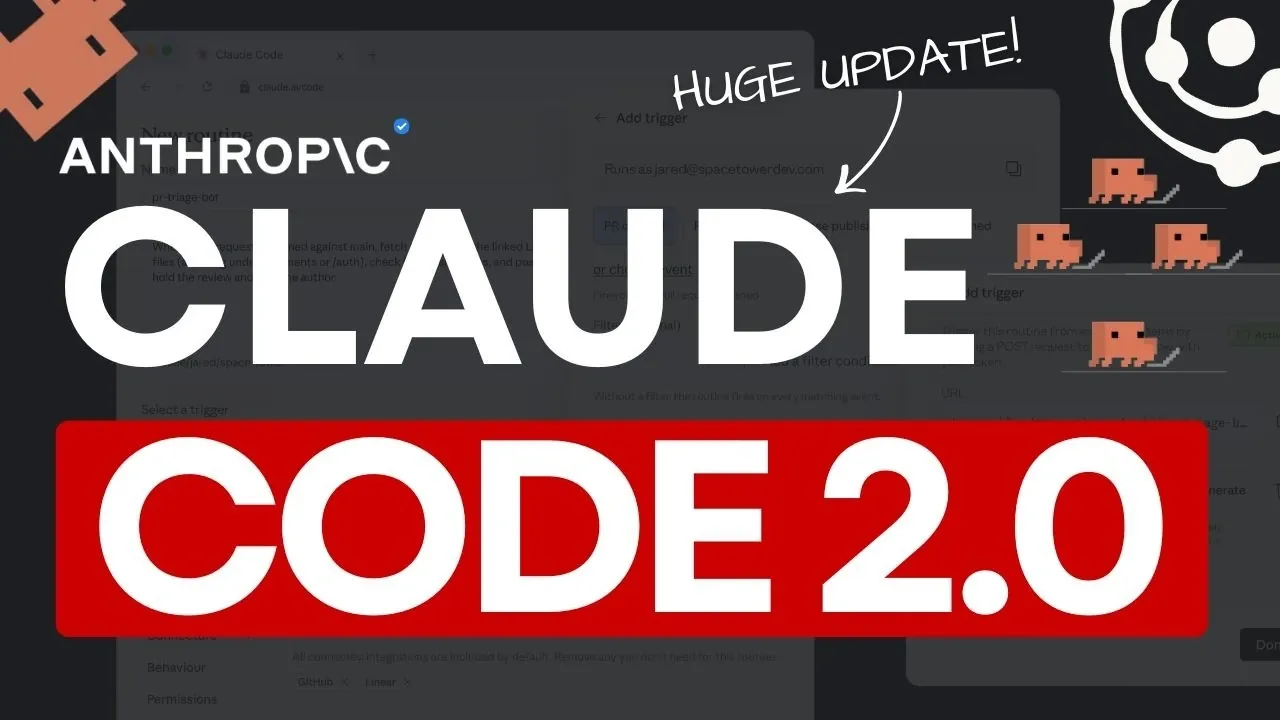
Anthropic and OpenAI continue to make waves in the AI and cybersecurity landscape, with recent developments showcasing their distinct approaches to innovation. Universe of AI explores the release of Anthropic’s Claude Code 2.0, which introduces features like a real-time task tracking sidebar and customizable layouts to streamline workflows for developers. Alongside this, OpenAI’s GPT-5.4-Cyber emerges as a specialized model for cybersecurity, offering tiered access controls and scalable functionality to support enterprise-level security teams. These updates highlight how each company is addressing critical industry needs while pushing the boundaries of AI applications.
In this overview, you’ll gain insight into how Claude Code 2.0’s integrated terminal and diff viewer aim to enhance coding efficiency, while its new “Routines” feature automates repetitive tasks like nightly bug fixes. You’ll also discover what the leaked details of Opus 4.7 suggest about Anthropic’s plans to lower the technical barrier for creative projects. Finally, explore how GPT-5.4-Cyber is designed to assist in identifying vulnerabilities and managing access controls, reflecting OpenAI’s focus on providing widespread access to cybersecurity solutions. Each development underscores the evolving priorities shaping the future of AI-driven innovation.
Claude Code 2.0: A Redesign for Efficiency
TL;DR Key Takeaways :
- Anthropic’s Claude Code 2.0 introduces significant upgrades, including enhanced session management, customizable layouts and integrated tools like a terminal and file editor, aimed at improving developer productivity and workflow efficiency.
- The new “Routines” feature from Anthropic automates repetitive tasks such as nightly bug fixes and pull request monitoring, offering scalability and flexibility for both individual developers and enterprise teams.
- Leaked details about Anthropic’s upcoming Opus 4.7 suggest a user-friendly design platform for non-technical users, allowing the creation of websites and applications through plain text descriptions.
- OpenAI’s GPT-5.4-Cyber focuses on cybersecurity, providing tools for vulnerability detection, access control management and defensive strategies, with tiered and scalable access for diverse user groups.
- The rivalry between Anthropic and OpenAI drives innovation, with Anthropic emphasizing user-centric design and gradual rollouts, while OpenAI prioritizes scalability and accessibility in AI-driven solutions.
Anthropic’s Claude Code 2.0 represents a significant upgrade, designed to optimize productivity and streamline workflows for developers and security professionals. At the heart of this update is an enhanced session management system, featuring a real-time task tracking sidebar. This addition allows you to monitor progress seamlessly without interrupting your workflow.
The platform now integrates essential tools such as a terminal, file editor and an optimized diff viewer, creating a unified environment for coding and debugging. These improvements aim to reduce friction in development processes and enhance overall usability.
Key features include:
- Customizable layouts with drag-and-drop functionality, allowing you to organize panels and switch between view modes effortlessly.
- Expanded context window indicators to better manage large-scale projects and maintain clarity in complex workflows.
- SSH support for Mac users, providing greater flexibility for remote development and collaboration.
These updates position Claude Code 2.0 as a robust tool tailored to meet the needs of modern developers, offering a more intuitive and efficient coding experience.
Automating Tasks with Routines
Anthropic has also introduced “Routines,” a feature designed to automate repetitive tasks and reduce manual intervention. Operating entirely on cloud infrastructure, Routines can be triggered through schedules, API calls, or GitHub webhooks, making it a versatile tool for developers and teams.
Examples of tasks you can automate include:
- Nightly bug fixes, making sure your codebase remains stable and up-to-date.
- Monitoring pull requests to streamline collaboration and code reviews.
- Sending Slack notifications for critical updates, improving team communication.
With tiered access based on subscription levels, Routines is scalable and adaptable, catering to both individual developers and enterprise teams. This feature underscores Anthropic’s focus on enhancing efficiency and allowing users to concentrate on higher-priority tasks.

Deep dive into the latest in Anthropic by exploring our other resources and articles.
- A Quick Guide to Claude Mythos & the Latest AI Releases
- Claude Mythos Delayed: Inside Anthropic’s Decision
- New Anthropic Ultra Plan Changes Planning in Claude Code
- Anthropic Dispatch Links Mobile & Desktop AI for Remote Control
- AutoDream : Claude Code’s New Trick for Memory Management
- Claude Opus 4.7 Leaks & Anthropic’s Full-Stack AI Studio
- Why Claude Mythos is Setting a New Benchmark for AI
- The Claude Code Leak Explained: Kyros, Ultra Plan & New Models
- Anthropic Leaks Reveal New Claude Builder and Metis Benchmarks
- Anthropic Claude Mythos Revealed in CMS Leak, Risks Rise
Opus 4.7 Leak: A Glimpse into the Future
Leaked details about Anthropic’s upcoming Opus 4.7 suggest a potentially fantastic tool for non-technical users. This design platform reportedly enables the creation of websites, presentations and applications using plain text descriptions, significantly lowering the barrier to entry for creative tasks. Positioned as a competitor to Google Stitch, Opus 4.7 aims to simplify design workflows for users with limited technical expertise.
While official specifications remain under wraps, the leak highlights Anthropic’s commitment to innovation and accessibility. If the tool delivers on its promises, it could redefine how non-technical professionals approach creative and design-oriented projects.
GPT-5.4-Cyber: OpenAI’s Cybersecurity Solution
OpenAI has responded to Anthropic’s advancements with the launch of GPT-5.4-Cyber, a model specifically designed to address cybersecurity challenges. This tool is tailored to assist security teams in identifying vulnerabilities, managing access controls and implementing defensive strategies, making it a valuable asset in the fight against cyber threats.
Key features include:
- A tiered access system that grants permissions based on user expertise and research needs, reducing the risk of misuse.
- Scalable access for thousands of users, including enterprise security teams, making sure broad applicability across organizations.
By balancing accessibility with ethical safeguards, OpenAI ensures that GPT-5.4-Cyber is both practical and secure. This model reflects OpenAI’s broader strategy to provide widespread access to AI-driven cybersecurity solutions, making advanced tools available to a wide range of users while minimizing potential risks.
Anthropic vs. OpenAI: Competing Philosophies
The rivalry between Anthropic and OpenAI highlights their differing approaches to AI and cybersecurity innovation. Anthropic emphasizes controlled previews and targeted feature rollouts, focusing on user-centric design and gradual adoption. This strategy prioritizes refinement and usability, making sure that tools meet the specific needs of their users.
In contrast, OpenAI adopts a broader approach, emphasizing scalability and accessibility. By providing widespread access to advanced tools like GPT-5.4-Cyber, OpenAI aims to empower a wider audience, from technical experts to non-technical professionals, with innovative solutions.
Both companies address the growing demand for AI-driven tools, catering to diverse user bases while navigating the ethical considerations that come with AI integration. Their competition drives innovation, pushing the boundaries of what AI can achieve in both development and cybersecurity contexts.
The Road Ahead for AI and Cybersecurity
The latest advancements from Anthropic and OpenAI signal a pivotal moment in the evolution of AI and cybersecurity. With Claude Code 2.0 and the leaked Opus 4.7, Anthropic demonstrates its focus on user-friendly design and task automation, catering to developers and non-technical users alike. Meanwhile, OpenAI’s GPT-5.4-Cyber underscores its commitment to defensive cybersecurity, providing tools that empower security teams to address emerging threats effectively.
As the competition between these two companies intensifies, the industry stands to benefit from a wave of innovative solutions. These advancements promise to reshape how AI and cybersecurity intersect, offering tools that not only enhance productivity but also address critical challenges in an increasingly digital world.
Media Credit: Universe of AI
Disclosure: Some of our articles include affiliate links. If you buy something through one of these links, Geeky Gadgets may earn an affiliate commission. Learn about our Disclosure Policy.
