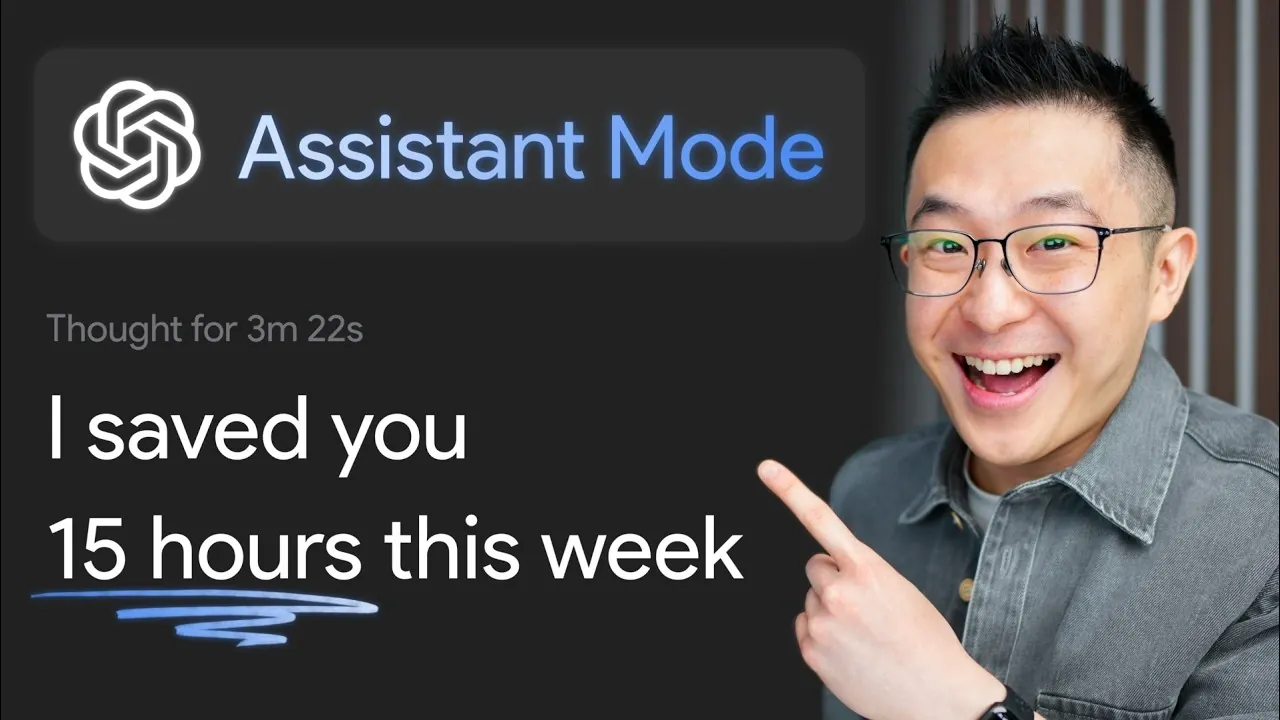
What if you could reclaim over 15 hours of your week without sacrificing quality or creativity? Imagine transforming tedious tasks into streamlined, high-impact workflows with just a few tweaks to how you use ChatGPT. For many, AI tools feel like a black box, powerful but unpredictable. Yet, with the right strategies, you can turn this uncertainty into a productivity superpower. By mastering a few next-level techniques, you’ll not only save time but also elevate the precision and value of every interaction you have with ChatGPT. Whether you’re a busy professional, a content creator, or a team leader, these methods promise to redefine how you approach your work.
Below Jeff Su takes you through four advanced ChatGPT strategies that go beyond the basics. From the Prompt Reversal Technique, which flips traditional prompt-writing on its head, to Blueprint Scaffolding, a structured approach for tackling complex projects, these methods are designed to help you work smarter, not harder. You’ll also learn how to amplify your content’s reach and refine AI-generated outputs with critical precision. Each technique is packed with actionable insights that can transform how you use ChatGPT in your daily workflow. Ready to rethink how you use AI? Let’s explore the possibilities.
Advanced ChatGPT Productivity Tips
TL;DR Key Takeaways :
- Prompt Reversal Technique: Reverse-engineer your desired outcome into a single, optimized prompt to save time and improve the precision of AI-generated outputs.
- Content Amplification: Repurpose high-quality content into multiple formats to maximize its value and reach broader audiences efficiently.
- Red Team Technique: Critically evaluate AI outputs by adopting the perspective of a hypothetical critic to identify weaknesses and refine content for specific audiences.
- Blueprint Scaffolding: Break down complex tasks into structured steps to guide AI outputs, making sure clarity, precision, and alignment with project goals.
- Pro Tips for Efficiency: Save optimized prompts, use high-quality source material, create detailed personas, and define success metrics to enhance productivity and AI interactions.
1. Prompt Reversal Technique
The Prompt Reversal Technique is a highly effective method for creating precise and impactful prompts. Instead of starting with a broad or vague request and refining it through trial and error, this approach involves reverse-engineering your desired outcome into a single, optimized prompt. By working backward from your goal, you can eliminate unnecessary iterations and achieve accurate results more efficiently.
How It Works:
– Begin by clearly defining the outcome you want. For instance, if you need a detailed project plan, outline its structure and key components in advance.
– Use this outline to craft a comprehensive prompt that incorporates all the necessary elements.
This technique not only saves time but also enhances your ability to write effective prompts. By analyzing and replicating successful structures, you’ll develop a deeper understanding of how to guide AI toward your desired results. Over time, this approach can significantly improve the precision and relevance of your interactions with ChatGPT.
2. Content Amplification (The Five-Minute Amplifier)
Content Amplification, also known as the Five-Minute Amplifier, is a strategy for repurposing existing materials into multiple formats. This technique allows you to maximize the value of your content by adapting it for different platforms and audiences while maintaining its quality and relevance.
Examples of Amplification:
– A comprehensive report can be condensed into a social media post, expanded into a webinar outline, or transformed into a training guide.
– A detailed presentation can be converted into an infographic, an email campaign, or a quiz for employee engagement.
The key to success lies in starting with high-quality source material. By making sure the original content is robust and well-researched, you can create diverse outputs that are both effective and impactful. This method is particularly useful for teams aiming to increase efficiency without duplicating efforts. It also enables professionals to reach broader audiences by tailoring content to specific formats and communication channels.
4 Next-Level ChatGPT Techniques (Save 15+ Hours Weekly)

Master ChatGPT prompting with the help of our in-depth articles and helpful guides.
- Master ChatGPT AI Prompts: The CASTLE Framework Explained
- 10 ChatGPT prompt writing styles from Beginner to Master
- The Ultimate ChatGPT Prompt Formula Revealed
- How to Master ChatGPT Prompt Writing for Exceptional Results
- Master ChatGPT 5 Prompts With This Simple Strategy
- OpenAI Quietly Releases New ChatGPT AI Prompt Generator
- ChatGPT prompt writing using PromptPerfect
- This One Prompt Turns ChatGPT 5 Into a Creative Powerhouse
- How to Write Better Prompts for ChatGPT and Improve Results
- ChatGPT prompt engineering for beginners in 2024 – Full Guide
3. Red Team Technique
The Red Team Technique is a critical evaluation method designed to improve the quality of AI-generated outputs. By adopting the perspective of a hypothetical critic, such as a hiring manager, CFO, or target audience, you can identify weaknesses, anticipate challenges, and refine your content before finalizing it.
How to Apply It:
– Define detailed personas for your critique process. For example, if you’re drafting a business proposal, imagine reviewing it as a skeptical investor.
– Look for gaps, such as unclear value propositions, weak financial projections, or insufficient supporting data, and address them proactively.
The more specific your personas, the more insightful your feedback will be. This technique encourages thorough evaluation, making sure your outputs are polished, professional, and tailored to their intended audience. By incorporating this method into your workflow, you can consistently produce high-quality content that meets the expectations of even the most critical stakeholders.
4. Blueprint Scaffolding
Blueprint Scaffolding is a structured approach to managing complex tasks. By breaking down a project into manageable steps, you can create a clear framework that guides the AI’s output and aligns with your objectives.
Steps to Implement:
– Start by outlining the key components of your project. For example, if you’re developing a marketing strategy, identify elements such as target audience, messaging, and distribution channels.
– Use ChatGPT to expand on each section of the outline, making sure that the final output is comprehensive and cohesive.
– Incorporate success metrics into your blueprint to track progress and measure outcomes effectively.
This method is particularly useful for large-scale projects where clarity, precision, and accountability are essential. By providing ChatGPT with a well-defined structure, you can ensure that the generated content aligns with your goals and maintains a high standard of quality.
Pro Tips for Maximizing Efficiency
To fully use these advanced techniques, consider the following best practices:
- Save optimized prompts in a centralized database for quick access and future use.
- Choose high-quality source material to ensure effective content amplification and maintain consistency across formats.
- Create detailed personas for critiques to uncover deeper insights and refine outputs for specific audiences.
- Define success metrics at the outset to guide AI-generated content toward measurable goals and outcomes.
By integrating these strategies into your workflow, you can significantly enhance your productivity and the quality of your AI interactions. Whether you’re refining prompts, repurposing content, critiquing outputs, or structuring complex tasks, these techniques provide actionable solutions to save time and achieve better results. Start applying them today to unlock the full potential of ChatGPT in your professional endeavors.
Media Credit: Jeff Su
Disclosure: Some of our articles include affiliate links. If you buy something through one of these links, Geeky Gadgets may earn an affiliate commission. Learn about our Disclosure Policy.
