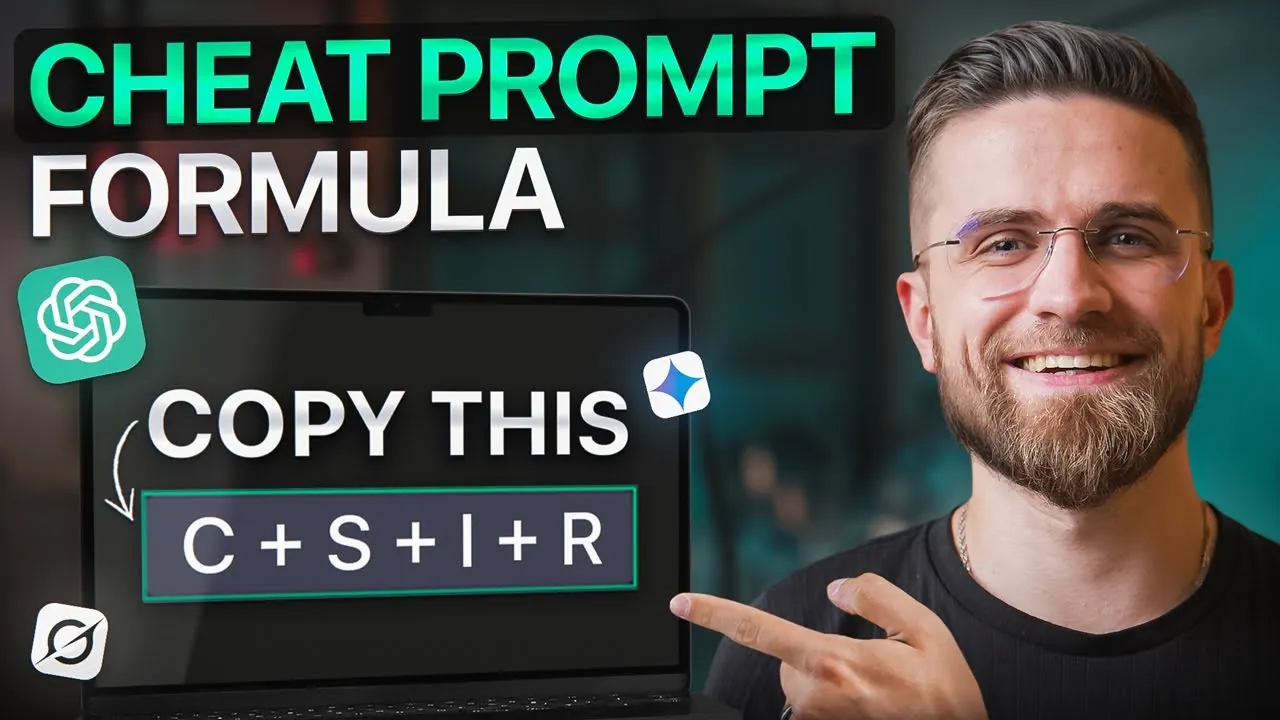
Have you ever wondered if you’re truly unlocking the full potential of ChatGPT, or are you just scratching the surface? While millions use AI daily, few realize that the difference between mediocre and exceptional results often boils down to one thing: how you prompt it. Imagine transforming your AI interactions from frustratingly vague responses to razor-sharp, tailored outputs, all in just 20 minutes. Bold claim? Maybe. But this walkthrough, crafted by AI Master, is here to prove it’s not only possible but surprisingly simple with the right strategies in hand.
In this guide, AI Master takes you through the secrets to mastering ChatGPT’s hidden capabilities through practical techniques and advanced strategies. From avoiding common pitfalls like vague prompts to using powerful frameworks like the Five-Box Method, this walkthrough will equip you with tools to elevate your AI game. Whether you’re drafting professional emails, brainstorming creative projects, or streamlining workflows, these methods will help you achieve precision and clarity like never before. Ready to rethink what’s possible with AI? Let’s explore how a few small changes can unlock a whole new level of productivity and creativity.
Mastering Effective AI Prompting
TL;DR Key Takeaways :
- Avoid Common Prompting Mistakes: Steer clear of vague prompts, search engine mentality, unnecessary fluff, and one-shot requests to improve AI interactions.
- Master Core Prompting Techniques: Use methods like First Principles Thinking, the Five-Box Framework, Prompt Chaining, and Meta-Prompting for clear and effective instructions.
- Use Advanced Strategies: Combine techniques, debug prompts, and use specialized AI models to handle complex tasks with precision.
- Apply Prompting in Practical Scenarios: Enhance professional communication, creative projects, and workflow optimization by crafting detailed and tailored prompts.
- Adopt an Iterative and Collaborative Mindset: Refine outputs through iterative feedback, use efficiency tools, and treat AI as a collaborative partner for better results.
Common Prompting Mistakes to Avoid
Many users encounter suboptimal results due to avoidable errors in their approach. Recognizing and addressing these mistakes is the first step toward improving your interactions with AI:
- Vague Prompts: Broad or unclear instructions often lead to generic or irrelevant outputs. For example, asking “Tell me about history” is too open-ended and lacks focus.
- Search Engine Mentality: Treating ChatGPT like a search engine limits its ability to provide nuanced, creative, and context-aware responses. AI thrives on detailed instructions rather than simple keyword queries.
- Unnecessary Fluff: Including filler words or overly polite language can dilute the clarity of your instructions. For instance, “Could you please kindly explain…” is less effective than a direct “Explain this concept clearly.”
- One-Shot Requests: Relying on a single prompt without iteration prevents refinement. Iterative feedback is essential for achieving high-quality results.
By avoiding these pitfalls, you can set a strong foundation for more productive and efficient interactions with ChatGPT.
Core Techniques for Effective Prompting
To achieve better results, applying foundational techniques ensures clarity and precision in your prompts. These methods help you communicate effectively with the AI:
- First Principles Thinking: Break tasks into their simplest components. Instead of saying, “Write a report,” specify the topic, structure, tone, and any key points you want to include.
- Five-Box Framework: Structure your prompts using five key elements: role (e.g., “Act as a marketing strategist”), task, context, constraints, and output format. This framework ensures your instructions are focused and actionable.
- Prompt Chaining: For complex tasks, break them into smaller steps by linking multiple prompts. For example, start by asking for an outline, then expand each section iteratively.
- Meta-Prompting: Use ChatGPT itself to refine your prompts. Ask questions like, “How can I improve this instruction for better results?” to enhance clarity and effectiveness.
These techniques form the backbone of effective prompting, allowing you to achieve more precise and tailored outputs.
ChatGPT Easy Prompt Guide 2025

Learn more about AI Prompting with the help of our in-depth articles and helpful guides.
- Write better ChatGPT AI prompts Using the CRAFT framework
- How to Write Excellent AI Prompts for Amazing Results
- Google AI Prompt Engineering Course : Master AI Prompts
- The Ultimate Beginners Guide to Effective AI Prompting Techniques
- Veo 3 Advanced AI Prompting Techniques for Stunning AI Videos
- Harnessing the Power of the RICE Framework for Perfect ChatGPT
- ChatGPT 5 Prompt Writing Techniques for Better AI Responses
- The Art of Power Prompting: Unlocking AI’s True Potential
- New emotional AI prompting method generates improved results
- Master ChatGPT AI Prompts: The CASTLE Framework Explained
Advanced Strategies for Enhanced Results
Once you’ve mastered the basics, advanced strategies can help you refine your approach and achieve even better outcomes. These methods are designed to handle more sophisticated tasks:
- Combine Techniques: Merge strategies like chaining and meta-prompting to create adaptive workflows. For instance, use chaining to outline a project and meta-prompting to refine each step.
- Debug Your Prompts: Identify and fix vague instructions by adding constraints or examples. For example, instead of “Explain quantum mechanics,” specify, “Explain quantum mechanics to a high school student using simple analogies.”
- Use Specialized Models: Use AI models tailored for specific tasks, such as coding, creative writing, or data analysis. This ensures you’re maximizing the strengths of the tool for your specific needs.
These advanced strategies allow you to fine-tune your approach, allowing you to tackle more complex and nuanced tasks with confidence.
Practical Applications of Effective Prompting
Mastering prompting techniques can significantly enhance your ability to complete a variety of tasks efficiently and effectively. Here are some practical applications:
- Professional Communication: Draft polished emails, detailed reports, or tailored content for specific audiences. For example, you can instruct ChatGPT to “Write a formal email to a potential client introducing our services.”
- Creative Projects: Use detailed prompts to generate ideas for stories, scripts, or AI-generated images. Specify stylistic preferences, themes, and constraints to achieve your desired outcome.
- Workflow Optimization: Streamline repetitive tasks by using AI to draft initial content, which you can then refine through iterative feedback. This saves time and improves efficiency.
These applications demonstrate the versatility of effective prompting, making it a valuable skill for both creative and professional endeavors.
Iterative Refinement: The Key to Better Outputs
AI-generated outputs should be viewed as drafts rather than final products. Iterative refinement is essential for improving results and tailoring them to your needs. Here’s how you can incorporate this process:
- Expand on Initial Responses: If the AI’s initial response lacks depth, ask follow-up questions or request additional examples to enrich the output.
- Seek Feedback from the AI: Use ChatGPT to critique and improve your prompts. For instance, ask, “How can I make this instruction clearer or more specific?”
This iterative approach ensures continuous improvement, allowing you to achieve more accurate and high-quality results over time.
Efficiency Tools to Streamline Your Workflow
Incorporating efficiency tools into your process can further optimize your interactions with AI. These tools help you save time and maintain consistency:
- AI Platforms: Tools like Skyworks AI agents enable you to generate multiple content types from a single prompt, reducing the need for repetitive tasks.
- Structured Workflows: Develop workflows that guide your prompting process, making sure clarity and consistency in your outputs.
By using these tools, you can enhance productivity and make the most of your AI-powered workflows.
Adopting an AI Collaboration Mindset
To fully harness the potential of AI, it’s essential to view it as a collaborative partner rather than just a tool. This mindset fosters more effective interactions and better results:
- Clear Communication: Provide detailed, intentional instructions to guide the AI effectively.
- Iterative Improvement: Embrace a process of continuous refinement to achieve the best possible outcomes.
- Adaptability: Stay prepared for the evolving landscape of AI-driven workflows by remaining flexible and open to new techniques.
By adopting this collaborative approach, you position yourself to thrive in an AI-enhanced future, where effective prompting is a critical skill for success.
Media Credit: AI Master
Disclosure: Some of our articles include affiliate links. If you buy something through one of these links, Geeky Gadgets may earn an affiliate commission. Learn about our Disclosure Policy.
