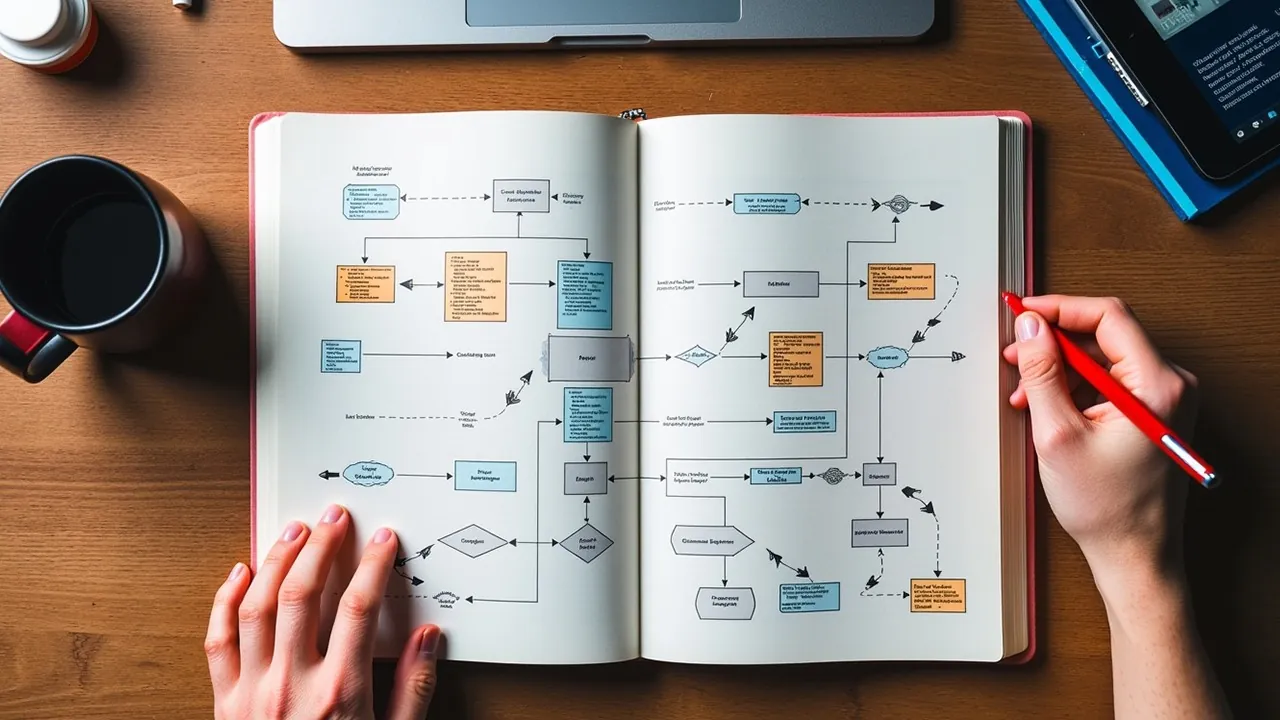
Have you ever felt like your business would collapse if you took a day off? Many entrepreneurs find themselves trapped in the grind, constantly putting out fires and micromanaging every detail just to keep things afloat. But what if your business could thrive without you? Imagine a world where your team operates like a well-oiled machine, your processes run seamlessly, and you have the freedom to focus on growth—or even take a vacation. Building a business that runs itself isn’t just a pipe dream; it’s a deliberate, achievable strategy. In this hands-on breakdown, Ross Harkness will show you how to create a self-sustaining enterprise that doesn’t rely on your constant oversight, giving you the freedom to lead on your terms.
Ross Harkness walks you through the essential steps to transform your business into an autonomous powerhouse. You’ll discover how to design systems that ensure consistency, document processes for seamless delegation, and empower your team to take ownership of their roles. Along the way, you’ll learn how to eliminate inefficiencies, scale with confidence, and achieve the elusive balance between professional success and personal freedom. Whether you’re a seasoned entrepreneur or just starting out, this approach will challenge the way you think about leadership and growth. After all, isn’t the ultimate goal of entrepreneurship to build something that works for you, not the other way around?
Building a Self-Sustaining Business
TL;DR Key Takeaways :
- Effective systems are essential for creating a self-sustaining business, making sure consistency, reducing inefficiencies, and allowing scalability.
- Organize business tasks into core functions (Marketing, Sales, Operations, Finance) and streamline operations by eliminating redundant or low-value tasks.
- Document processes through Standard Operating Procedures (SOPs) to maintain consistency, simplify training, and support delegation.
- Assign ownership and establish accountability by defining clear roles, reporting structures, and Key Performance Indicators (KPIs).
- Strategic delegation enables your team, builds autonomy, and allows you to focus on long-term goals, achieving both scalability and operational freedom.
The Importance of Systems in Business Operations
Systems are the backbone of any self-sustaining business. Without them, your business relies entirely on your direct involvement, creating inefficiencies and limiting growth potential. Systems are structured frameworks that define how tasks are executed, making sure consistency and predictable outcomes. They enable your business to function seamlessly, even in your absence.
For example, a system for customer onboarding might include a series of steps such as welcoming new clients, collecting essential information, and setting clear expectations. By documenting this process, you ensure that every client receives the same high-quality experience, regardless of who manages the task. Systems reduce dependency on individuals and create a foundation for scalability.
Breaking Down and Organizing Business Functions
To build effective systems, start by analyzing your business’s core functions and the tasks within them. Most businesses revolve around four primary areas:
- Marketing: Activities focused on generating leads and attracting potential customers.
- Sales: Converting leads into paying customers through effective communication and negotiation.
- Operations: Delivering products or services in a way that meets or exceeds customer expectations.
- Finance: Managing cash flow, tracking expenses, and making sure profitability.
List every task performed in your business and categorize them under these functions. For instance, creating email campaigns aligns with marketing, while invoicing clients falls under finance. Once categorized, evaluate each task’s relevance to your business goals. Eliminate redundant or low-value tasks to streamline operations and improve efficiency.
How to Build A Business That Runs Itself

Learn more about business systems with the help of our in-depth articles and helpful guides.
- These 4 Systems Are the Secret to A Business That Runs Without You
- ChatGPT vs Copilot : AI Tools for Business Compared
- Samsung Unveils SmartThings Pro for Business
- How AI Agents Are Transforming Business Operations and SaaS
- Microsoft CEO Predicts AI Agents Will Replace Traditional Software
- How Claude AI Built a Business with $1,000: Success or Failure
- How to Build and Monetize Your Business with mCP Technology
- How to build an AI Agent run virtual business
- Google releases new no-code custom AI Agent maker
- How AI Agents Are Transforming Business Automation
Documenting Processes for Consistency
After identifying and organizing tasks, the next step is to document the processes required to complete them. This involves creating Standard Operating Procedures (SOPs), which serve as detailed guides for performing specific tasks. SOPs are essential for maintaining consistency and allowing delegation.
For instance, an SOP for handling customer complaints might include steps such as acknowledging the issue, investigating the cause, and providing a resolution. By documenting these steps, you ensure that every team member follows the same approach, resulting in a consistent customer experience. SOPs also simplify training for new employees, reducing the time and effort required to bring them up to speed.
Assigning Ownership and Establishing Accountability
Assigning ownership is a critical component of creating a self-sustaining business. Every system and process should have a designated owner responsible for its execution and outcomes. This ensures that no task is overlooked and that every aspect of your business is managed effectively.
To foster accountability, establish clear reporting structures and define Key Performance Indicators (KPIs) for each role. For example, the owner of the marketing function might track metrics such as lead generation, while the sales owner focuses on conversion rates. This clarity not only enhances accountability but also aligns your team’s efforts with your business objectives.
Delegation: Empowering Your Team for Success
Delegation is more than just assigning tasks—it involves transferring responsibility for outcomes. To delegate effectively, provide your team with clear instructions, the necessary resources, and the authority to make decisions. This approach builds trust and fosters a sense of autonomy within your team.
Begin by delegating routine tasks, such as scheduling appointments or managing inventory. Gradually transition to higher-level responsibilities, such as overseeing client accounts or leading projects. Over time, your team will develop the skills and confidence needed to operate independently. This not only frees you to focus on strategic priorities but also strengthens your business’s overall resilience.
The Role of SOPs in Streamlining Delegation
SOPs play a pivotal role in effective delegation. By documenting your knowledge and processes, you create a resource that ensures tasks are performed consistently, regardless of who is responsible. This minimizes disruptions and maintains operational efficiency, even during transitions.
For example, if a team member leaves your organization, their replacement can quickly adapt by following the relevant SOPs. This reduces downtime and ensures that your business continues to operate smoothly. SOPs are a key tool for maintaining stability and consistency as your business grows.
Achieving Scalability and Operational Freedom
A business that runs itself offers two significant advantages: scalability and freedom. By implementing systems, documenting processes, and delegating responsibilities, you create a structure that supports growth without compromising efficiency. This allows you to expand your operations, enter new markets, or develop innovative products while maintaining control over quality and performance.
Additionally, a self-sustaining business frees you from being tied to daily tasks, giving you the flexibility to focus on long-term goals or pursue personal interests. This balance between professional success and personal freedom is the hallmark of a well-structured enterprise.
Media Credit: Ross Harkness
Disclosure: Some of our articles include affiliate links. If you buy something through one of these links, Geeky Gadgets may earn an affiliate commission. Learn about our Disclosure Policy.
