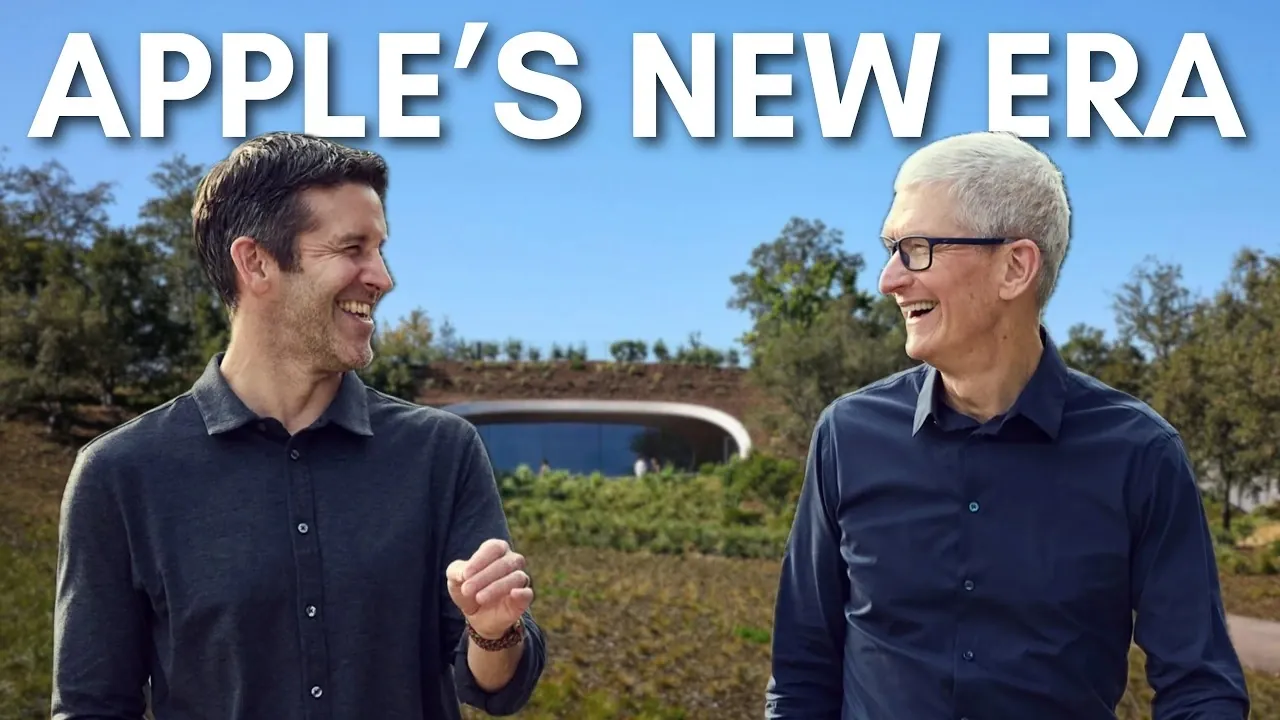
Apple has announced a significant leadership transition: Tim Cook will step down as CEO, with John Ternus assuming the role in September. This change represents a critical moment for the tech giant, as it transitions from Cook’s operationally driven leadership to Ternus’s hardware-centric vision. The shift underscores Apple’s commitment to maintaining its dominance in hardware innovation while addressing emerging challenges in software quality and artificial intelligence (AI) development.
This leadership change comes at a time when Apple faces increasing competition in both hardware and software markets. With Ternus at the helm, the company is expected to focus on strengthening its core product lines while exploring new opportunities in AI and connected technologies. The transition signals a recalibration of priorities, making sure Apple remains at the forefront of technological innovation. The video below from SaranByte gives us more details on the new CEO.

Tim Cook’s Legacy: A Decade of Operational Excellence
Tim Cook, who has led Apple since 2011, will continue to play a role in the company as chairman of the board, focusing on government relations and strategic partnerships. Under his leadership, Apple achieved unprecedented growth, becoming the first publicly traded company to reach a $3 trillion market valuation. Cook’s tenure was defined by his ability to optimize Apple’s supply chain, scale global operations and expand the company’s ecosystem.
Cook’s leadership also saw the rise of Apple’s services division, which includes the App Store, iCloud and Apple Music. These services have become critical revenue streams, complementing the company’s hardware offerings. Additionally, Cook championed sustainability initiatives, committing Apple to achieve carbon neutrality across its supply chain by 2030. These efforts have positioned Apple as a leader in corporate responsibility.
However, Cook’s focus on operational efficiency has drawn criticism for overshadowing software quality and innovation. Recent software updates have faced scrutiny for bugs and inconsistencies, raising concerns about Apple’s ability to maintain its reputation for seamless user experiences. These challenges will now fall to John Ternus, who must address them while building on Cook’s legacy of operational excellence.
John Ternus: A Hardware Visionary with a Strategic Focus
John Ternus, Apple’s Senior Vice President of Hardware Engineering, has been a driving force behind some of the company’s most new innovations. He played a pivotal role in the development of Apple silicon, which has redefined performance standards for Macs and iPads. His promotion to CEO signals Apple’s intent to double down on its hardware expertise, using its strengths in product design and engineering.
Ternus’s vision for Apple is expected to emphasize advancements in AI wearables, smart home devices and other connected technologies. These areas present significant growth opportunities as consumer demand for integrated, intelligent devices continues to rise. For example, the Apple Watch has already set industry benchmarks for health monitoring and fitness tracking and Ternus is likely to expand these capabilities further. By focusing on creating more personalized and intuitive user experiences, Ternus aims to solidify Apple’s leadership in the wearables market.
Beyond wearables, Ternus is expected to prioritize the development of smart home technologies. Apple’s HomeKit platform has laid the groundwork for a connected home ecosystem, but it has yet to achieve the same level of adoption as competitors like Amazon’s Alexa and Google Home. Strengthening this ecosystem will be a key focus under Ternus’s leadership, as Apple seeks to deliver seamless integration across its product lineup.
Addressing Challenges: Software Quality and AI Innovation
While Apple’s hardware remains a cornerstone of its success, the company faces growing criticism over software quality. Recent product launches have been plagued by bugs and inconsistencies, undermining the seamless experience that Apple users have come to expect. Improving software reliability and performance will be a top priority for Ternus, as software plays a crucial role in enhancing the functionality of Apple’s hardware ecosystem.
In addition to software quality, Apple must address its lagging position in AI innovation. Competitors like Google and Microsoft have made significant strides in AI-driven technologies, leaving Apple playing catch-up. While Apple has integrated AI into features like Siri and on-device processing, it has yet to deliver fantastic advancements in this space. Ternus will need to accelerate AI development while maintaining Apple’s commitment to user privacy, a core tenet of the company’s brand identity.
Strategic Realignment: Focusing on Practical Innovations
Ternus is reportedly taking a cautious approach to Apple’s more ambitious projects, such as Vision Pro and the Apple car. Vision Pro, Apple’s mixed-reality headset, has faced skepticism regarding its practicality and market potential. Similarly, the Apple car project remains shrouded in uncertainty, with questions about its feasibility and alignment with Apple’s core competencies.
Rather than pursuing these high-risk ventures, Ternus is expected to focus on practical, everyday technologies that align with Apple’s product-first philosophy. This includes enhancing AI wearables, expanding the smart home ecosystem and refining existing product lines. By concentrating on areas where Apple can deliver tangible value to consumers, Ternus aims to ensure the company’s continued success in an increasingly competitive market.
The Road Ahead: Balancing Innovation and Stability
Apple’s strong financial position and loyal customer base provide a solid foundation for Ternus to implement his vision. However, his success will depend on striking the right balance between hardware innovation and software excellence. By addressing software quality issues and accelerating AI development, Ternus has the opportunity to redefine Apple’s approach to innovation.
As Apple embarks on this new chapter, the company’s focus will remain on delivering products that seamlessly integrate into users’ lives. With Ternus at the helm, Apple is well-positioned to build on its legacy of innovation while adapting to the evolving needs of its customers. The coming years will be critical in shaping Apple’s future, as the company seeks to maintain its leadership in both hardware and software markets.
Source & Image Credit: SaranByte
Disclosure: Some of our articles include affiliate links. If you buy something through one of these links, Geeky Gadgets may earn an affiliate commission. Learn about our Disclosure Policy.
