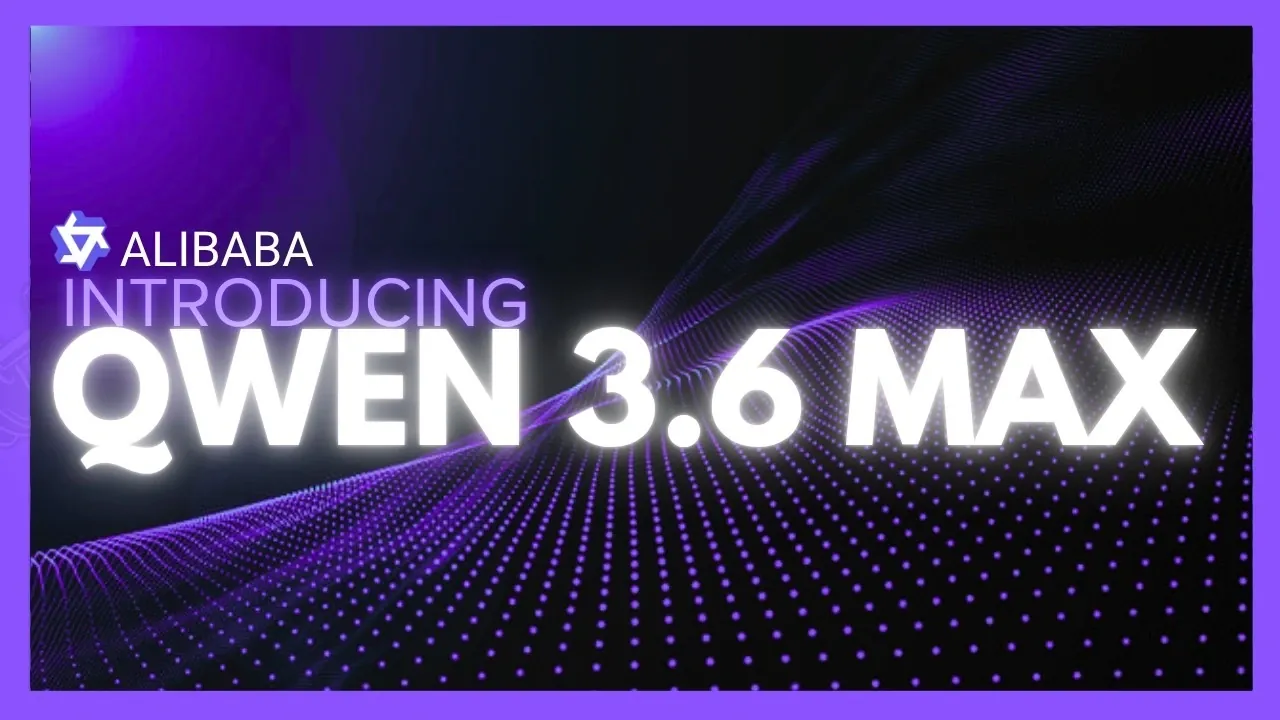
Alibaba’s Qwen 3.6 Max has emerged as a standout AI model, offering significant advancements in areas like instruction following, agentic coding, and multimodal processing. Building on the capabilities of Qwen 3.6 Plus, this updated version demonstrates improved contextual understanding and enhanced precision in tasks such as visual reasoning and document analysis. As highlighted by World of AI, Qwen 3.6 Max not only excels in handling complex workflows but also outperforms competitors like Claude 4.5 Opus and GLM 5.1, solidifying its position as a versatile option for developers and businesses alike.
Explore how Qwen 3.6 Max integrates advanced OCR capabilities for efficient data extraction, automates intricate workflows with its agentic coding features and supports the creation of dynamic, responsive front-end designs. You’ll also gain insight into its applications in generating 3D scenes, browser-based games and interactive UIs, as well as its current limitations, such as challenges in terrain generation and pricing considerations. This breakdown offers a comprehensive look at how Qwen 3.6 Max is shaping the future of AI-driven development.
What Sets Qwen 3.6 Max Apart?
TL;DR Key Takeaways :
- Qwen 3.6 Max introduces advanced capabilities in world knowledge, instruction following, agentic coding and multimodal processing, surpassing competitors like Claude 4.5 Opus and GLM 5.1.
- Key features include improved contextual understanding, advanced OCR for efficient data extraction and enhanced agentic coding for automating complex workflows.
- The model excels in visual reasoning, web development and creating interactive elements such as dynamic UIs, 3D scenes and browser-based games.
- Real-world applications span diverse industries, offering solutions for developers, designers and businesses, while bridging creativity and functionality.
- Limitations include challenges in terrain generation and game physics, as well as pricing concerns, but future updates are expected to address these issues and expand accessibility.
Qwen 3.6 Max distinguishes itself through its ability to process and apply world knowledge with remarkable precision. Its enhanced instruction-following capabilities make it particularly effective in tool-based and agentic coding tasks, which are critical for real-world development. Additionally, its multimodal functionality enables seamless integration of text, images and other data types, unlocking sophisticated applications such as visual reasoning and document analysis. Key advancements include:
- Improved contextual understanding, allowing the model to tackle nuanced and complex tasks with greater accuracy.
- Advanced Optical Character Recognition (OCR) for extracting and processing data from images and documents efficiently.
- Enhanced agentic coding capabilities, allowing for the automation of intricate workflows with minimal human intervention.
These features make Qwen 3.6 Max a versatile and reliable tool for professionals across various industries, offering solutions that are both practical and innovative.
Performance That Stands Out
Qwen 3.6 Max consistently delivers exceptional performance across a variety of domains, setting a new standard for precision and adaptability in AI models. Its visual reasoning capabilities are particularly noteworthy, excelling in tasks such as OCR, contextual analysis and document processing. Beyond these, the model demonstrates remarkable proficiency in web development, making it an invaluable asset for creating interactive user interfaces (UIs), 3D scenes and browser-based games.
Notable performance highlights include:
- Efficient handling of dynamic front-end designs, producing clean and optimized code that enhances user experience.
- Seamless generation of simulations and SVG-based visuals, catering to diverse use cases in design and development.
- Robust API integration, making sure smooth incorporation into existing workflows and systems.
These capabilities position Qwen 3.6 Max as a leader in AI-driven development, offering tools that streamline processes while maintaining high-quality outputs.
Check out more relevant guides from our extensive collection on Qwen that you might find useful.
- Qwen 3.5 35B vs Sonnet 4.5 : Benchmarks vs Reality Results Across Three Tasks
- Qwen 3.5 Small Expands On-Device AI to Phones and IoT with Offline Support
- Qwen3-TTS vs ElevenLabs : Multilingual TTS with Tone & Emotion Control
- New Qwen 3.5 AI Model Beats Opus 4.5 & Gemini 3 : Fully Tested
- The Qwen 3 Family : A Multilingual, Customizable Future for Artificial Intelligence
- Google Drops Gemma 4 for Consumer Hardware
- Qwen 3 : The Open Source AI That Outperforms the Competition Beats GPT-4.1
- Inside Qwen 3.6 Plus : 1-Million-Token AI Designed for Advanced Reasoning
- Qwen TTS Ships Local TTS Under Apache 2.0 : Voice Cloning in 3 Seconds
- Alibaba Qwen 3.5 Small Models: 0.8B & 2B Benchmarks and Edge Tests
Real-World Applications
Qwen 3.6 Max is designed to meet the diverse needs of developers, designers and businesses across various sectors. Its advanced coding assistant capabilities simplify development workflows, while its ability to produce visually appealing and functional front-end designs ensures high-quality results. The model also excels in creating simulations, browser-based games and other interactive elements, making it a versatile tool for both creative and technical projects.
Examples of its applications include:
- Developing interactive UIs with dynamic, responsive elements tailored to user needs.
- Creating browser-based games featuring advanced game physics and realistic simulations for immersive experiences.
- Generating detailed 3D scenes and terrain, allowing the creation of visually stunning and engaging environments.
These applications highlight the model’s ability to bridge the gap between creativity and functionality, offering solutions that cater to both technical and aesthetic requirements.
Limitations to Consider
Despite its impressive capabilities, Qwen 3.6 Max is not without its limitations. Certain challenges have been observed in tasks such as terrain generation and game physics, which may require further refinement in future updates. Additionally, its pricing—$1.30 per 1 million input tokens and $7.80 per 1 million output tokens—might pose a challenge for users with limited budgets, particularly for large-scale projects.
These limitations, while notable, do not overshadow the model’s overall performance and utility. However, they serve as areas for potential improvement in subsequent iterations.
Access and Availability
Qwen 3.6 Max is accessible through an API and a free chatbot interface, making it relatively easy to integrate into various workflows. However, it is not yet available on platforms like Kilo or Open Router, which could limit its accessibility for some users. As the model is currently in preview, additional access options and platform integrations may be introduced in the future, further expanding its reach and usability.
Looking Ahead: The Future of Qwen 3.6 Max
Qwen 3.6 Max is poised to become a cornerstone solution for high-quality AI tasks. While it already outperforms many of its competitors, its preview status suggests that further enhancements are on the horizon. Future updates are expected to address current limitations, refine its capabilities and expand its range of applications, making sure that it remains at the forefront of AI innovation.
With its advanced features, superior performance and wide-ranging applications, Qwen 3.6 Max is well-equipped to meet the demands of modern workflows. It represents a significant step forward in artificial intelligence, paving the way for future advancements and setting a new benchmark for excellence in the field.
Media Credit: WorldofAI
Disclosure: Some of our articles include affiliate links. If you buy something through one of these links, Geeky Gadgets may earn an affiliate commission. Learn about our Disclosure Policy.
