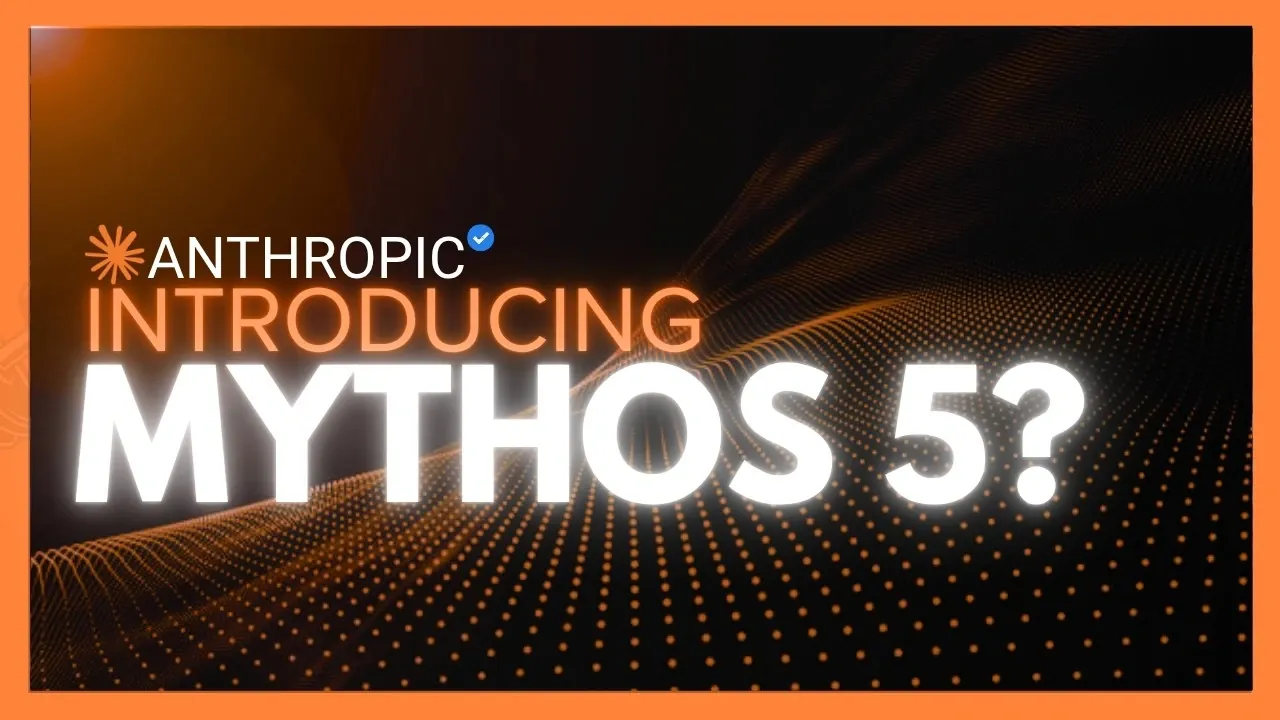
The latest developments in artificial intelligence showcase a dynamic landscape of innovation, with Anthropic’s newly unveiled Claude Mythos 5 standing out as a major highlight. This advanced AI model, with its staggering 10-trillion parameters, is designed to excel in areas such as cybersecurity, coding, and academic reasoning, making it a versatile solution for high-stakes applications. Anthropic’s phased rollout strategy reflects a deliberate approach to ethical deployment, making sure that these capabilities are introduced responsibly. As World of AI explores, this model represents a significant leap in AI’s ability to address complex challenges while maintaining a focus on safety and accountability.
In this explainer, you’ll gain insight into how Anthropic’s Claude Mythos 5 compares to other recent AI breakthroughs, such as Google DeepMind’s Gemini 3.1, which enhances real-time multimodal processing for industries like healthcare and autonomous systems. You’ll also discover the implications of open source contributions like GLM 5.1, which emphasizes accessibility in instruction-following tasks and the introduction of the ARC AGI 3 Benchmark, a new standard for evaluating agentic reasoning. These updates collectively highlight the diverse directions AI is taking to meet evolving demands across research, development and practical applications.
Anthropic’s New Models: Claude Mythos and Capabara
TL;DR Key Takeaways :
- Anthropic introduced two advanced AI models, Claude Mythos 5 (10-trillion parameters for high-stakes tasks like coding and cybersecurity) and Capabara (a mid-tier, efficient solution), with a phased rollout emphasizing ethical AI development.
- GLM 5.1, a new open source AI model, excels in instruction-following and multi-step workflows, fostering collaboration and innovation in the AI community.
- Google DeepMind launched Gemini 3.1, a real-time multimodal AI optimized for voice and vision applications, benefiting industries like customer service, healthcare and autonomous systems.
- OpenAI revamped its Codeex platform into a plug-in ecosystem, simplifying software development with pre-built workflows and AI-driven coding tools.
- The ARC AGI 3 Benchmark sets a new standard for AI evaluation by testing agentic reasoning in interactive environments, encouraging meaningful advancements in AI capabilities.
Anthropic has unveiled two innovative AI models, Claude Mythos and Capabara, each designed to address distinct needs within the AI landscape.
– Claude Mythos: This flagship model features an impressive 10-trillion parameters, representing a significant leap in AI capabilities. It excels in areas such as coding, academic reasoning, and cybersecurity, making it a versatile tool for tackling complex, high-stakes tasks. Its advanced architecture positions it as a leader in the AI space, capable of addressing challenges that demand precision and adaptability.
– Capabara: Positioned as a mid-tier solution, Capabara bridges the gap between the high-performance Claude Mythos and Anthropic’s existing Opus model. It offers a balanced approach, combining versatility with efficiency, making it suitable for a wide range of applications without the resource demands of larger models.
Anthropic’s decision to implement a phased rollout for these models underscores a commitment to ethical AI development. By prioritizing safety and addressing potential misuse, the company aims to ensure that these powerful tools are deployed responsibly, balancing innovation with accountability.
GLM 5.1: A Milestone in Open source AI
The release of GLM 5.1 marks a pivotal moment for open source AI development. This agentic model is specifically designed to handle instruction-following and multi-step workflows with enhanced reliability, making it a valuable asset for tasks that require automation and decision-making.
While GLM 5.1 may not match the speed of proprietary alternatives, its performance remains competitive, offering a robust solution for developers and researchers. Its open source nature ensures accessibility, fostering collaboration and innovation across the AI community. This release highlights the critical role of open source contributions in providing widespread access to AI technology and driving progress in the field.
Learn more about Claude Code by reading our previous articles, guides and features :
- Cursor AI Browser Experiment Shows Limits of Autonomous Dev Teams
- Opera One browser features native AI called Aria
- 5 AI Browser Features in Microsoft Edge’s New Copilot Mode
- Strawberry Browser Review: The AI Browser That Boosting Productivity
- How to Use OpenAI’s ChatGPT Atlas AI Browser For Surfing The Web
- How to Use The Brave Browser with AI: A Step-by-Step Guide
- Pinokio AI virtual computer, easily install, run, automate any AI app
- Neo by Norton, Safer Browsing with Inline Summaries and Chat
- Perplexity AI Comet Browser Review: Features, Pros and Cons
- 10 Perplexity Comet AI Browser Features to Boost Your Productivity
Google DeepMind Gemini 3.1: Real-Time Multimodal AI
Google DeepMind has introduced Gemini 3.1, a real-time multimodal AI model optimized for voice and vision applications. This latest iteration enhances quality, reliability, and latency, allowing seamless integration into systems that require real-time processing.
Industries such as customer service, healthcare, and autonomous systems stand to benefit significantly from Gemini 3.1’s capabilities. Its ability to process multimodal data in real time makes it an invaluable tool for dynamic, data-driven environments. This release underscores the growing importance of real-time AI solutions in addressing the demands of modern industries.
OpenAI’s Codeex Plugins: Simplifying Software Development
OpenAI has transformed its Codeex platform into a comprehensive plug-in ecosystem, introducing pre-built, runnable workflows designed to simplify software development. These plugins provide developers with an AI-driven approach to coding, streamlining complex processes and enhancing productivity.
By automating repetitive tasks and offering intelligent suggestions, Codeex plugins empower developers to focus on innovation and problem-solving. This evolution positions Codeex as a strong competitor to traditional cloud-based coding tools, further expanding the possibilities for AI-driven software development.
ARC AGI 3 Benchmark: A New Standard for AI Evaluation
The introduction of the ARC AGI 3 Benchmark represents a significant advancement in the evaluation of AI intelligence. Unlike traditional benchmarks that often focus on narrow tasks, ARC AGI 3 tests agentic reasoning in interactive environments, providing a more comprehensive assessment of AI capabilities.
This benchmark addresses the issue of overfitting, making sure that AI models demonstrate genuine improvements in reasoning and problem-solving rather than superficial performance gains. By setting a higher standard for evaluation, ARC AGI 3 is expected to guide future developments in AI, encouraging innovation that prioritizes meaningful progress.
Other Noteworthy Updates
- Mistral AI’s Boxrol TTS: A state-of-the-art text-to-speech model offering expressive, low-latency capabilities across multiple languages. This innovation is poised to enhance accessibility and improve user experiences in applications ranging from virtual assistants to educational tools.
- Anthropic’s Operon: A specialized AI agent tailored for biological research. Operon provides collaborative tools that enable researchers to address complex scientific challenges more efficiently, accelerating progress in fields such as genomics and drug discovery.
- Sora App Shutdown: The discontinuation of the Sora app reflects the challenges of sustaining niche applications in a competitive market. Efforts are underway to assist users in preserving their work, highlighting the importance of user support during transitions.
- Cursor’s Composer 2: Despite controversy surrounding its reliance on the open source Kimik K 2.5 model, Composer 2 offers significant potential for streamlining creative workflows, particularly in content creation and design.
Shaping the Future of AI
The advancements highlighted this week demonstrate the rapid evolution of AI technologies and their growing impact across industries. From Anthropic’s powerful new models to new benchmarks and tools, these innovations are driving progress in automation, research and creative workflows. As AI continues to advance, it holds the potential to transform how we work, solve problems and interact with technology, paving the way for a future defined by enhanced efficiency and innovation.
Media Credit: WorldofAI
Disclosure: Some of our articles include affiliate links. If you buy something through one of these links, Geeky Gadgets may earn an affiliate commission. Learn about our Disclosure Policy.
