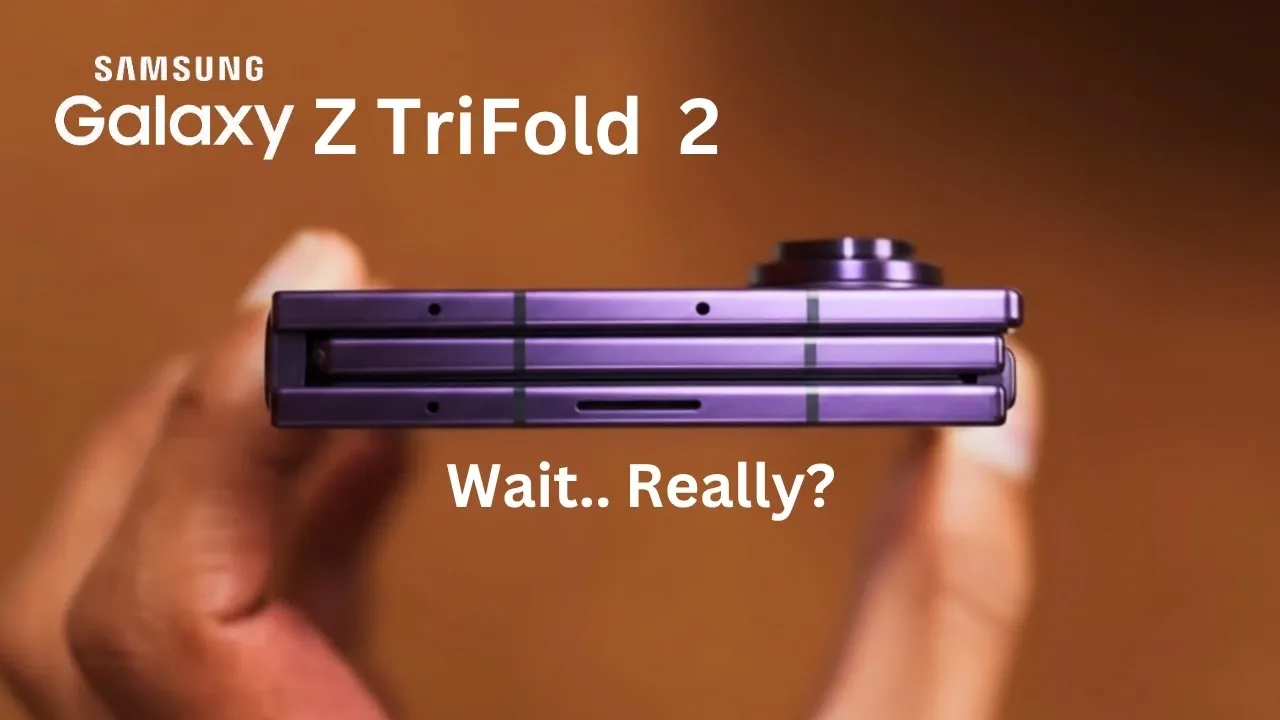
Samsung continues to push the boundaries of foldable technology with its second-generation Galaxy Z Tri-Fold. This ambitious device reflects the company’s dedication to refining multi-foldable designs, addressing the challenges of its predecessor while exploring new possibilities. By focusing on improved design, enhanced usability, and market viability, Samsung aims to solidify its position as a leader in the foldable device market. The video below from Talks Daily Tech gives us more details on the rumored Samsung Galaxy Z TriFold 2.

Refining Portability: Addressing Bulk and Weight
The first Galaxy Z Tri-Fold faced significant criticism for its bulky design, which made portability a major concern. With a thickness of 12.9 mm when folded and a weight exceeding 300 grams, the device struggled to meet the expectations of users seeking convenience. For the Galaxy Z Tri-Fold 2, Samsung is prioritizing a thinner and lighter design, incorporating an upgraded hinge system that not only reduces overall dimensions but also enhances durability. These improvements aim to make the device more practical for everyday use, making sure it appeals to a broader audience. By tackling bulk and weight, Samsung hopes to eliminate one of the most significant barriers to adoption.
Balancing Functionality with Size
Despite efforts to slim down the device, the Galaxy Z Tri-Fold 2 is expected to maintain a large form factor, potentially even wider than its predecessor. To address this, Samsung is reportedly exploring a book-like design that could make the device more intuitive and user-friendly. This approach aligns with the broader trend in foldable technology, where manufacturers strive to create devices that feel familiar while offering innovative features. However, achieving the right balance between size and usability remains a complex challenge. The device must seamlessly transition between serving as a smartphone and a tablet, catering to diverse user needs without compromising on comfort or functionality.
Unlocking Practical Applications for Tri-Fold Displays
One of the most pressing questions surrounding the Galaxy Z Tri-Fold 2 is its practical purpose. While the tri-fold display offers an impressive amount of screen real estate, its real-world applications remain uncertain. Developers have yet to fully explore how such a device could enhance productivity, entertainment, or daily workflows. Without compelling use cases, the Tri-Fold risks being perceived as a novelty rather than a fantastic tool. To address this, Samsung must collaborate closely with app developers to create software that uses the unique capabilities of the tri-fold display. Whether for multitasking, gaming, or multimedia consumption, the device must deliver tangible value to users to justify its existence.
Innovative Designs and Future Possibilities
Samsung’s ambitions for foldable technology extend far beyond the Galaxy Z Tri-Fold 2. The company is actively experimenting with advanced multi-foldable designs, including concepts that fold multiple times to achieve compact, tablet-like form factors. These innovations could redefine the possibilities of mobile devices, offering unprecedented versatility and functionality. Lightweight materials and compact engineering are also key areas of focus, as Samsung aims to make foldable devices more portable and user-friendly. By investing in these advancements, the company is laying the groundwork for a future where foldable technology becomes a mainstream feature of mobile devices.
Overcoming Cost and Market Challenges
Despite significant progress in foldable technology, cost remains a major obstacle to widespread adoption. The intricate engineering required for multi-foldable designs drives up production costs, making devices like the Galaxy Z Tri-Fold 2 prohibitively expensive for many consumers. For now, such devices may serve as showcases of innovation rather than practical, everyday tools. However, as manufacturing processes improve and economies of scale are achieved, the cost of foldable devices is expected to decrease. This could pave the way for broader adoption, making multi-foldable technology accessible to a wider audience.
Looking Ahead: A 2027 Launch Timeline
The Galaxy Z Tri-Fold 2 is rumored to launch in 2027, giving Samsung ample time to refine its design and address key challenges related to usability, cost and practicality. Whether this device will redefine the foldable market or remain a niche product depends on Samsung’s ability to balance innovation with real-world functionality. As the foldable device market continues to evolve, the Galaxy Z Tri-Fold 2 has the potential to play a pivotal role in shaping the future of mobile technology.
- Will Samsung’s efforts to reduce bulk and weight make the Tri-Fold more appealing to everyday users?
- Can developers create meaningful applications that fully use the tri-fold display’s potential?
- How will advancements in materials and manufacturing processes impact the affordability of multi-foldable devices?
The answers to these questions will determine whether the Galaxy Z Tri-Fold 2 becomes a defining moment in foldable technology or simply a stepping stone toward future innovations.
Here are more detailed guides and articles that you may find helpful on Samsung Galaxy Z Tri-Fold.
- Samsung Galaxy Z Tri-Fold: Features, Specs and Release Details
- Top Reasons to Buy the Samsung Galaxy Z TriFold
- Samsung Galaxy Z Tri-Fold: Features, Design and Release Date
Source & Image Credit: Talks Daily Tech
Disclosure: Some of our articles include affiliate links. If you buy something through one of these links, Geeky Gadgets may earn an affiliate commission. Learn about our Disclosure Policy.
