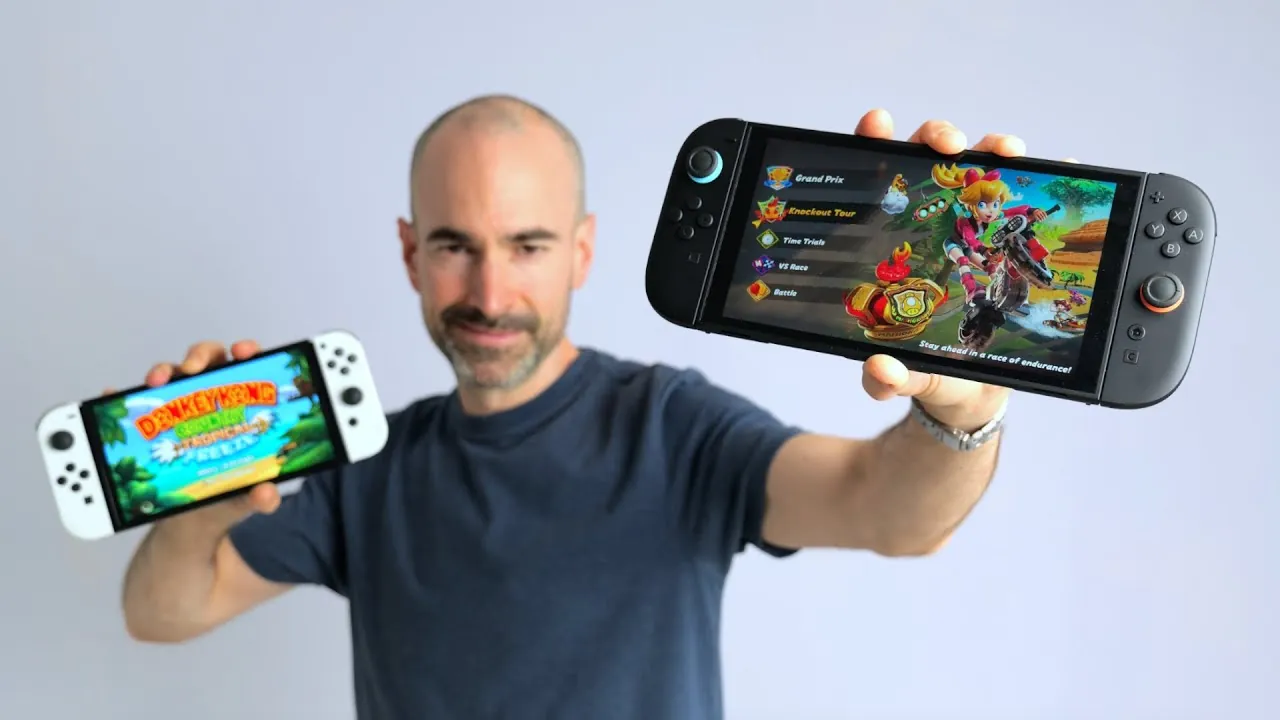
The release of the Nintendo Switch 2 has introduced a range of enhancements that cater to gamers seeking improved performance and new features. However, after a month of use, how does it compare to the OLED model? The Switch 2 brings innovative technology and future-ready capabilities for demanding games, but it also comes with compromises in size, weight, and battery life. Choosing between the two depends largely on your gaming preferences—whether you prioritize performance or portability. The video below from Tech Spurt gives us more details on the new Switch 2.

Performance: A Significant Upgrade
The Nintendo Switch 2 delivers a substantial leap in performance, offering smoother gameplay and enhanced visuals for graphically intensive titles such as *The Legend of Zelda: Breath of the Wild* and *Cyberpunk 2077*. With support for 1080p resolution and improved frame rates, the Switch 2 provides a more immersive gaming experience, particularly for players who value visual fidelity.
Key performance enhancements include:
- Faster load times for resource-intensive games, reducing wait times significantly.
- Enhanced graphics capabilities, allowing for richer textures and more detailed environments.
- Improved frame rate stability, making sure of smoother gameplay even during action-heavy sequences.
However, some of these improvements may require additional investments, such as purchasing game updates or compatible accessories, to fully use the console’s potential. For gamers focused on innovative performance, the Switch 2 is a clear step forward.
Design: Balancing Ergonomics and Portability
The design of the Switch 2 represents a shift from the sleek, travel-friendly form of the OLED model. Its larger size and increased weight make it less convenient for on-the-go gaming. However, the updated Joy-Con controllers offer improved ergonomics, making extended gaming sessions more comfortable for players.
A notable addition is the mouse control feature, which enhances compatibility with certain games and applications. While its current use is limited, this feature adds versatility to the console, hinting at potential future applications.
For gamers who prioritize comfort during long sessions, the ergonomic improvements may outweigh the loss of portability. However, those who frequently game on the move might find the OLED model’s compact design more appealing.
Display and Audio: Trade-offs Between Resolution and Quality
The Switch 2 introduces a 1080p display, a notable upgrade from the OLED model’s 720p resolution in handheld mode. This improvement enhances clarity, particularly for text-heavy or visually detailed games. However, the OLED model continues to excel in contrast and color vibrancy, delivering a visually striking experience that remains unmatched by the Switch 2.
Audio improvements on the Switch 2 include:
- Louder and clearer speakers, providing a more immersive sound experience.
- Bluetooth audio support, though some lag issues persist with wireless headphones.
For gamers who prioritize resolution and sharpness, the Switch 2 offers a clear advantage. However, those who value rich colors and superior contrast may still prefer the OLED model.
Battery Life and Storage: Practical Considerations
Despite its larger size and upgraded internals, the Switch 2 does not offer a significant improvement in battery life. In fact, it slightly underperforms compared to the OLED model when running demanding games. Charging speeds remain unchanged, requiring several hours for a full charge. For gamers who value extended playtime, this could be a critical drawback.
On the other hand, the Switch 2 addresses storage limitations by offering 256GB of internal storage, four times the capacity of the OLED model. This upgrade reduces the need for frequent storage management, especially for players with extensive digital libraries. Additionally, the console supports MicroSD Express, allowing faster and more efficient storage expansion.
Other connectivity upgrades include:
- An additional USB port for charging and connecting accessories.
- Improved flexibility in managing peripherals, enhancing overall usability.
While the storage and connectivity improvements are practical, the lack of a meaningful battery upgrade may disappoint gamers who prioritize longer play sessions without frequent recharging.
Exclusive Features and Future Potential
The Switch 2 introduces several exclusive features designed to enhance the gaming experience. Key highlights include:
- A GameCube emulator, providing access to classic Nintendo titles, though the library remains limited at launch.
- Game-sharing functionality, allowing local multiplayer with a single game copy for select titles.
Looking ahead, the Switch 2 is set to host exclusive first-party games, including new entries in the *Donkey Kong* and *Kirby* franchises. These exclusives are likely to appeal to dedicated Nintendo fans who want access to the latest titles.
While these features hint at the console’s future potential, the limited catalog of exclusive games at launch may deter some early adopters. For gamers who value access to classic titles and upcoming exclusives, the Switch 2 offers a compelling proposition.
Key Drawbacks to Consider
Despite its advancements, the Switch 2 is not without its shortcomings. Notable drawbacks include:
- A limited selection of exclusive games at launch may reduce its appeal for early buyers.
- Concerns about display response times, though these are unlikely to affect casual gameplay significantly.
- No meaningful improvement in battery life, despite the console’s larger size and upgraded hardware.
For gamers who prioritize portability, display quality, and extended playtime, these issues may outweigh the benefits of the new hardware.
Making the Right Choice
The Nintendo Switch 2 represents a solid upgrade for gamers seeking enhanced performance, expanded storage, and access to future exclusives. Its improved hardware and additional features make it an attractive option for those who prioritize innovative gaming experiences. However, the OLED model remains a strong contender, offering superior display quality, better portability, and a more affordable price point.
Ultimately, the decision between the two consoles depends on your gaming habits and priorities. If you value performance, future-proofing, and exclusive features, the Switch 2 is worth considering. On the other hand, if portability, display quality, and cost-effectiveness are more important to you, the OLED model may still be the better fit.
Enhance your knowledge on Nintendo Switch 2 performance upgrades by exploring a selection of articles and guides on the subject.
- Nintendo Switch 2 vs. Original Switch
- Nintendo Switch 2 Review: Features, Performance, and Design
- Nintendo Switch 2 Performance and Features Breakdown
- Nintendo Switch 2: 5 Upgrades That CHANGE EVERYTHING
- How the Nintendo Switch 2 Redefines Portable Gaming
Source & Image Credit: Tech Spurt
Disclosure: Some of our articles include affiliate links. If you buy something through one of these links, Geeky Gadgets may earn an affiliate commission. Learn about our Disclosure Policy.
