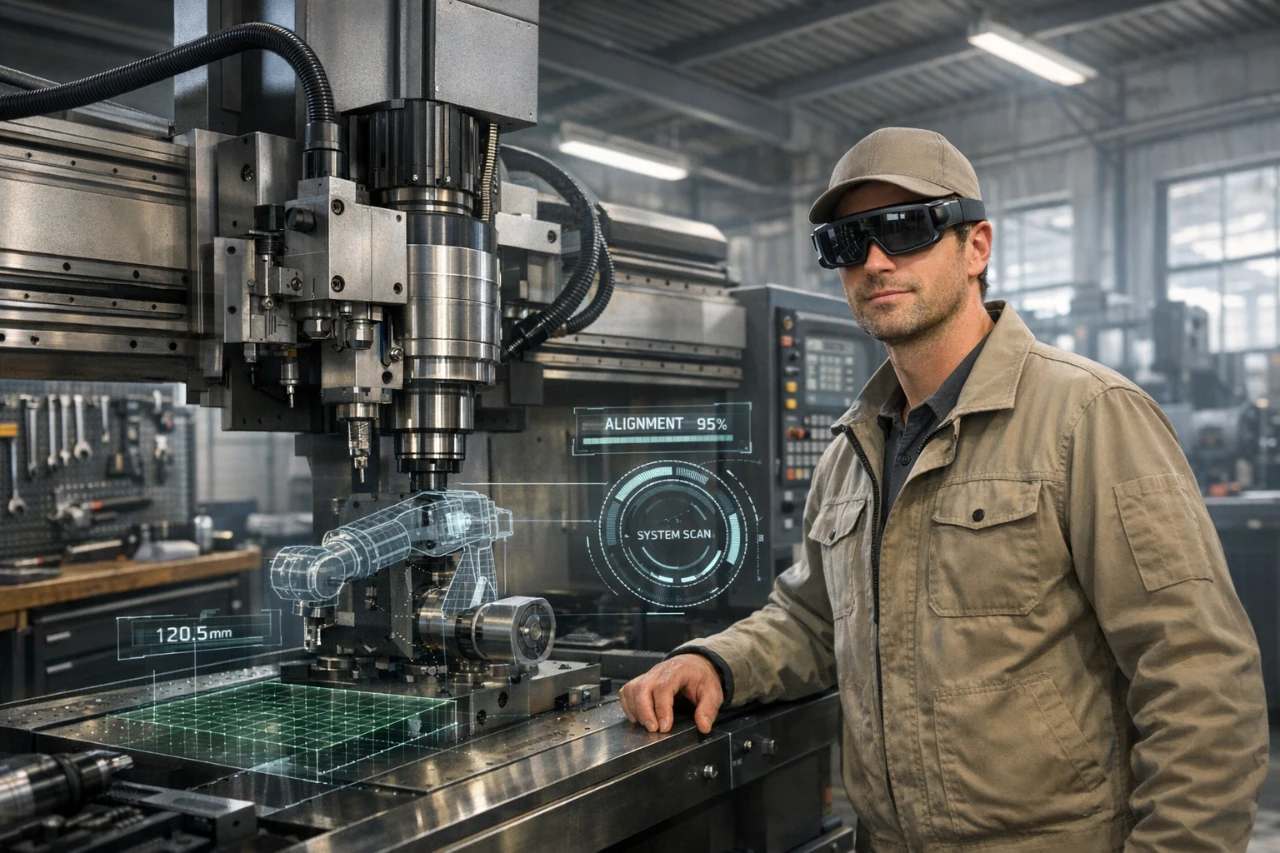
Consumer augmented reality first became familiar through phone filters, gaming effects, and virtual shopping previews. These experiences made digital overlays easy to understand, but they were designed mainly for entertainment and convenience. Industrial AR has a more demanding purpose: it must support real decisions, timed tasks, and repeatable workflows. In this context, DELMIA by Dassault Systèmes offers an augmented reality solution that connects digital guidance with work performed on the shop floor.
What separates industrial AR from consumer AR is not simply the device. Workplace systems combine cameras, depth sensors, live mapping, AI vision, and business data within the same workflow. Instead of adding decorative objects to a scene, they help workers interpret equipment, follow procedures, and respond to changing conditions. Their value is measured in practical terms: faster completion, fewer errors, and more consistent training.
Why Industrial AR Feels Different
In the workplace, an AR overlay must be stable, timely, and relevant. A graphic that shifts out of position or appears too late can create confusion rather than prevent it. Industrial systems therefore depend on accurate tracking, reliable data, and close integration with the software already used by a business.
This is particularly useful in maintenance, assembly, inspection, laboratory work, and medical environments. Workers often need instructions while keeping their hands free and their attention on the task. AR can place the next step directly within the user’s field of view, reducing the need to move repeatedly between equipment, manuals, and screens.
The technology is also becoming more context-aware. Emerging systems can combine video, audio, depth information, and body position with visual AI and enterprise knowledge. Software may then recognize a machine, identify its current state, retrieve the correct procedure, and display the most relevant instruction. The system is no longer simply showing digital content; it is using the environment to decide what the user needs to see.
Live Maps Turn Physical Space Into Data
Real-time 3D mapping is another important part of this transition. The growing industrial use of digital twins allows organizations to test layouts, study processes, and identify problems before making physical changes.
A digital twin can combine a 3D model with live information from sensors, connected equipment, and operational systems. The same model may support simulation, automation, planning, analytics, and AR guidance. For a technician, that could mean seeing a component’s condition, service history, or next maintenance step positioned over the relevant equipment.
Newer capture methods can turn camera or lidar input into detailed 3D scenes and connect them to live Internet of Things data. The challenge is scale. High-resolution mapping can generate large volumes of spatial information quickly, making storage, processing, network performance, and regular updates central to the user experience. A polished interface has limited value if its information is outdated or slow to appear.
Early Gains and Practical Limits
Warehouse picking offers one of the clearest examples of industrial AR creating measurable value. Guided workflows can direct workers to the correct location, confirm an item, and present the next action without constant reference to a handheld screen. Reported deployments have shown improvements in productivity, error reduction, and onboarding time.
Similar benefits are possible in assembly and maintenance. A new employee can follow visual instructions in sequence, while an experienced technician can receive warnings, equipment data, or confirmation that a step has been completed correctly. This can reduce variation between workers and make complex procedures easier to repeat.
However, the headset is only the visible part of the system. A successful deployment may also rely on sensors, connectivity, digital-twin software, enterprise search, data governance, and integration with existing tools. If those elements do not work together, the AR experience will not be reliable enough for daily use.
Latency is another constraint. Every stage, from capturing sensor data to processing it and rendering the result, adds delay. The real benchmark is not simply whether the graphics look smooth, but whether the system can turn an event into a stable spatial cue quickly enough to help someone act.
What the Shift Means
Industrial AR increasingly looks less like a gadget and more like a service layer over the physical workplace. The same digital model may support workers, robots, engineers, analysts, and managers, with each group using it for a different purpose.
This helps explain why industrial AR is expanding alongside improvements in sensors, AI vision, connectivity, and 3D mapping. Better displays matter, but the larger opportunity lies in turning spatial data into guidance that is accurate, relevant, and fast enough for real work.
The move from consumer AR to industrial augmented reality is therefore more than a change of audience. It is a shift from displaying information to helping people understand and act within complex environments. As these systems become more reliable and better integrated, AR is likely to play a larger role in how industrial work is learned, performed, and improved.
Disclosure: Some of our articles include affiliate links. If you buy something through one of these links, Geeky Gadgets may earn an affiliate commission. Learn about our Disclosure Policy.
