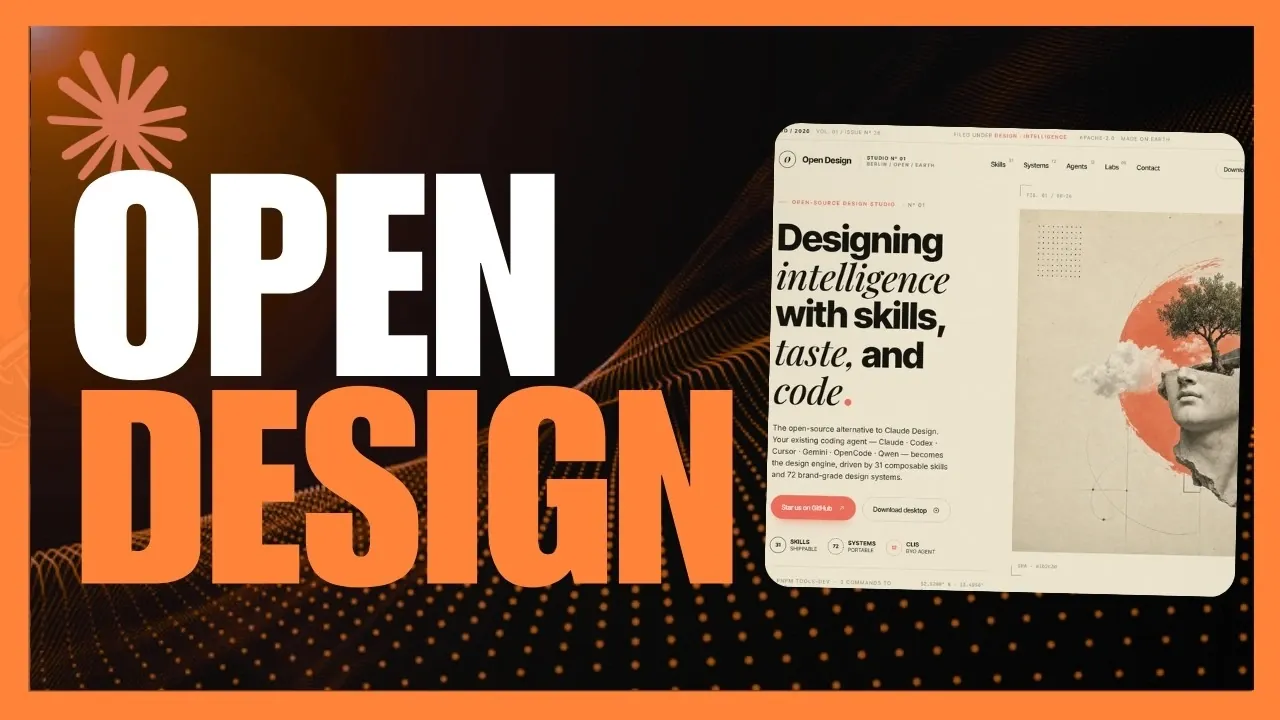
Open Design is a free, open source AI-driven design system that prioritizes user control and accessibility. As highlighted by World of AI, it supports offline workflows through local runtime functionality and SQL Lite for project persistence. The system includes export pipelines capable of generating outputs in formats like HTML, PDF and PowerPoint, making it suitable for a variety of project requirements. Additionally, its compatibility with coding agent CLIs such as Codex and Gemini CLI allows for integration into diverse development environments.
Dive into how Open Design supports customization, including configuring coding agents and integrating API keys. Learn about its 31 modular skills and 72 pre-built design systems, designed for tasks like prototyping, wireframing and interface design. Gain insight into its collaborative features, such as annotations and comments, which assist teamwork and ensure alignment across project contributors.
Key Features That Define Open Design
TL;DR Key Takeaways :
- Open Design is a free, open source AI-powered design system offering a cost-effective and flexible alternative to proprietary platforms like Claude Design.
- Key features include local runtime support, SQL Lite project persistence and export pipelines for multiple formats (HTML, PDF, PowerPoint).
- The platform supports local-first deployment, multi-model compatibility and up to 15 coding agent CLIs, making sure unmatched flexibility and integration.
- Open Design is easy to set up with NodeJS and CLI agents, offering extensive customization options to fit diverse workflows and project scales.
- As a collaborative open source ecosystem, it enables users with professional-grade tools, fostering inclusivity, accessibility and long-term sustainability.
Open Design is equipped with a comprehensive suite of features designed to rival and even surpass proprietary systems. Whether you’re crafting user interfaces, building prototypes, or creating wireframes, the platform ensures you have the tools necessary to achieve exceptional outcomes.
Some of its standout features include:
- Local runtime support: Operate offline with direct access to your file system, making sure uninterrupted workflows.
- SQL Lite project persistence: Efficiently store, manage and retrieve project data for seamless continuity.
- Export pipelines: Generate outputs in multiple formats, including HTML, PDF and PowerPoint, to suit diverse project needs.
With 31 composable skills and 72 complete design systems, Open Design is built to handle a wide array of design challenges. This ensures that users can maintain full control over their projects while achieving high-quality, professional results.
Unmatched Flexibility and Integration
One of Open Design’s most compelling advantages is its unparalleled flexibility. The platform supports local-first deployment, allowing you to work offline and integrate your own API keys for enhanced functionality. This ensures that your workflows remain uninterrupted and adaptable to your specific needs.
Additionally, Open Design supports up to 15 coding agent CLIs, including Codex, Kilo Code and Gemini CLI, allowing you to customize the system to align with your workflow. Its compatibility with both open source and proprietary models further enhances its adaptability, giving you the freedom to integrate the platform into your existing ecosystem without being locked into a single framework.
Gain further expertise in Claude Design by checking out these recommendations.
- Claude Design Tutorial: Create Presentations and Assets with AI
- Claude Design Guide: Building Interactive UIs and Slide Decks
- Claude Design: Features, Exports, and How It Impacts Figma
- Claude Design vs Traditional Wireframing : A 2026 Guide
- Claude Design: Anthropic’s New AI Platform Powered by Opus 4.7
- How to Fix NotebookLM Limitations With Claude Design
- Opus 4.7 Leak: Anthropic’s Answer to Google Stitch
- The Pros and Cons of AI Video Editing With Claude
- A Complete Guide to Claude Design
- How Claude Designer 3.0 Speeds Up UI Prototyping and Workflow
Why Open Design Outshines Claude Design
Open Design offers several distinct advantages over proprietary systems like Claude Design, making it a highly attractive option for developers and designers:
- Completely free: Eliminate subscription fees and reduce long-term costs.
- Local configuration: Avoid cloud-based restrictions and maintain full control over your projects.
- Multi-model compatibility: Seamlessly integrate with a variety of tools and technologies to enhance your workflow.
These benefits not only make Open Design a cost-effective solution but also empower users with greater autonomy, efficiency and flexibility in their design processes.
Streamlined Setup and Customization
Getting started with Open Design is straightforward and user-friendly. The platform requires NodeJS (version 24 or higher) and CLI agents for installation. A detailed quick-start guide is available on GitHub, providing clear, step-by-step instructions to help you set up the system with ease.
Once installed, the platform offers extensive customization options. You can configure CLI agents, media providers and runtime environments to tailor the system to your specific needs. This adaptability ensures that Open Design integrates seamlessly into your existing workflows, regardless of the complexity or scale of your projects.
Versatile Applications Across Industries
Open Design is designed to cater to a wide range of professional use cases, making it a versatile tool for individuals and teams alike. Whether you’re working on:
- Landing pages
- Slide decks
- Comprehensive design systems
The platform provides the tools and workflows necessary to meet your objectives efficiently.
Its collaborative features, such as annotations and comments, further enhance its utility, making it an excellent choice for team-based projects. These features allow for seamless communication and feedback, making sure that all stakeholders remain aligned throughout the design process.
A Collaborative Open source Ecosystem
As an open source initiative, Open Design thrives on the contributions of a global community of developers and designers. This collaborative approach ensures that the platform remains at the forefront of design and technology advancements.
By using open source models and tools, Open Design fosters inclusivity and accessibility, empowering users from diverse backgrounds to harness its capabilities. The continuous input from the community not only enhances the platform’s functionality but also ensures its long-term sustainability and relevance.
Empowering Designers and Developers
Open Design redefines the possibilities of AI-powered design systems by offering a free, adaptable and feature-rich alternative to proprietary solutions. Its local-first deployment, extensive capabilities and open source foundation provide unparalleled flexibility and control for developers and designers alike.
Whether you’re an independent creator seeking a cost-effective solution or part of a larger team aiming to streamline workflows, Open Design equips you with the tools to produce high-quality designs while maintaining full ownership of your projects. Its commitment to accessibility, customization and collaboration makes it a standout choice in the evolving landscape of design systems.
Media Credit: WorldofAI
Disclosure: Some of our articles include affiliate links. If you buy something through one of these links, Geeky Gadgets may earn an affiliate commission. Learn about our Disclosure Policy.
