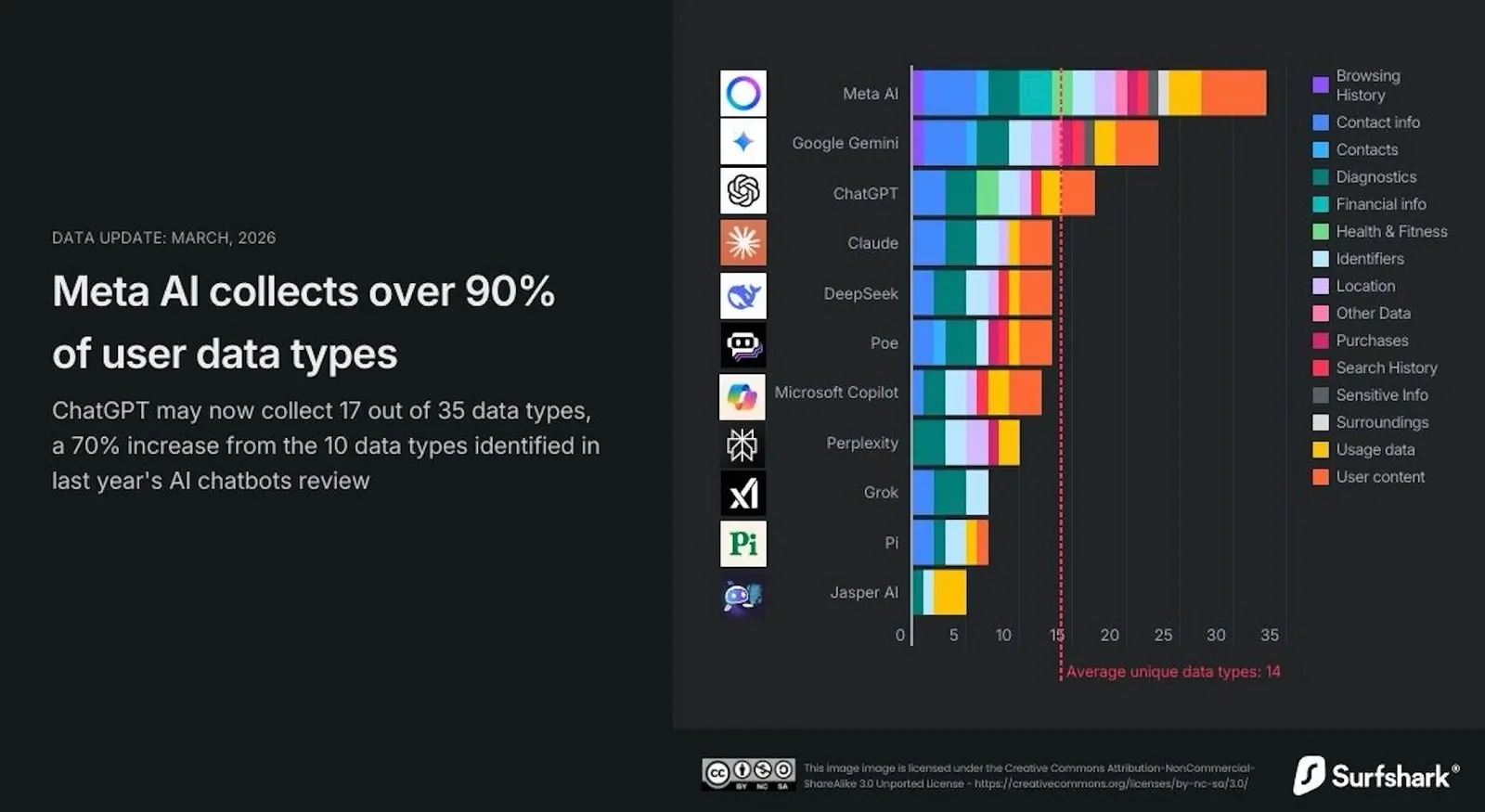
A recent analysis by Surfshark highlights a striking 70% increase in data collection practices among AI chatbots, including ChatGPT, over the past year. Notably, ChatGPT now gathers 17 out of 35 possible data types, ranging from search history to health metrics, marking a significant expansion from prior years. This shift reflects a broader industry trend, with 70% of AI chatbots now collecting user location data compared to just 40% a year ago. While these practices are often justified as essential for improving functionality and personalization, they also raise critical questions about privacy and the potential misuse of sensitive information.
Explore how this growing reliance on data impacts users and the broader AI landscape. This overview will examine key findings from the study, including which platforms collect the most data and how these practices vary across the industry. Gain insight into the ethical concerns surrounding data storage and regulatory compliance, particularly for platforms like DeepSeek that operate outside established privacy frameworks. By understanding these dynamics, you can better navigate the evolving relationship between AI technologies and personal privacy.
AI Chatbots and Privacy
TL;DR Key Takeaways :
- Data collection by AI chatbots has surged, with 70% now gathering user location data, up from 40% last year, raising significant privacy concerns.
- ChatGPT collects 17 out of 35 possible data types, including health metrics and search history, reflecting a broader trend of increased data reliance in the AI industry.
- Meta AI leads in data collection, gathering 33 out of 35 data types, while platforms like DeepSeek face criticism for non-compliance with GDPR and other privacy regulations.
- Privacy concerns include the potential misuse of sensitive data, such as medical and financial information, for purposes like targeted advertising, highlighting ethical and transparency issues.
- Users can protect their privacy by limiting shared information, reviewing privacy settings, understanding platform policies and using privacy-focused tools like VPNs and ad blockers.
A recent study conducted by Surfshark reveals a significant increase in data collection practices among AI chatbots, including ChatGPT. The analysis indicates that 70% of popular AI chatbots now collect user location data, a sharp rise from 40% just a year ago. This trend underscores growing privacy concerns, as these platforms gather sensitive information such as personal details, financial data and even health-related metrics. The implications of this shift extend beyond convenience, raising critical questions about how user data is handled and protected.
How AI Chatbots Are Collecting More Data
AI chatbots are increasingly reliant on user data to enhance their functionality and deliver personalized experiences. ChatGPT, for instance, has expanded its data collection practices significantly. According to the study, ChatGPT now collects 17 out of 35 possible data types, including health metrics, search history and audio data. This marks a 70% increase in its data collection efforts compared to previous years.
This trend reflects a broader movement within the AI industry, where platforms justify data collection as a means to improve user experience, refine analytics and optimize targeted advertising. Notably, 70% of AI chatbots now collect location data, a substantial increase from 40% last year. While these practices are often framed as necessary for personalization, they also amplify concerns about the potential misuse of sensitive user information.
The Most Data-Hungry AI Chatbots
Certain AI chatbots stand out for their extensive data collection practices, with some platforms gathering nearly all available data types. The study highlights the following platforms as the most data-intensive:
- Meta AI: Collects 33 out of 35 possible data types, including financial information, browsing history and sensitive personal details. This makes it the most data-hungry platform analyzed.
- Google Gemini: Gathers 23 data types, including contact information and precise location, positioning it as another major collector of user data.
- ChatGPT: Collects 17 data types, primarily for app functionality, analytics and advertising purposes. While less extensive than Meta AI, its practices still raise privacy concerns.
- Claude and DeepSeek: Each collects 13 data types. DeepSeek, in particular, has drawn criticism for storing data in China, outside the jurisdiction of GDPR and other regulatory frameworks.
Meta AI leads in data collection, while platforms like DeepSeek face additional scrutiny for operating outside established privacy regulations. This lack of compliance increases the risk of data misuse and raises accountability concerns, particularly for users in regions with stringent data protection laws.
Privacy Concerns and Ethical Questions
The growing scope of data collection by AI chatbots has sparked widespread privacy concerns. Sensitive information, such as medical records, tax documents and financial details, could potentially be shared with third parties for purposes like targeted advertising. This raises ethical questions about how such data is used and whether users are adequately informed about these practices.
DeepSeek has come under particular scrutiny due to its non-compliance with GDPR and other regulatory standards. Operating outside these frameworks leaves users vulnerable, with limited options for recourse in the event of data breaches or improper use of their information. The lack of transparency in how data is stored and shared further exacerbates these concerns, highlighting the need for stricter oversight and accountability in the AI industry.
How You Can Protect Your Privacy
While the increasing data collection practices of AI chatbots pose challenges, there are steps you can take to safeguard your personal information. Consider the following measures:
- Limit the information you share: Treat all interactions with chatbots as public records. Avoid disclosing sensitive details such as financial information, medical data, or personal identifiers.
- Review privacy settings: Regularly check and adjust your privacy settings on AI platforms. Disable features like chat history where possible to minimize data retention.
- Understand privacy policies: Familiarize yourself with the terms and conditions of the platforms you use. Knowing how your data is collected, stored and shared can help you make informed decisions.
- Use privacy-focused tools: Consider using VPNs, ad blockers, or other tools designed to enhance online privacy and reduce data tracking.
By adopting these proactive measures, you can reduce the risks associated with data collection and maintain greater control over your personal information. Staying informed and vigilant is key to navigating the evolving landscape of AI technologies.
Study Methodology
The findings presented in this overview are based on a detailed analysis of privacy policies and data collection practices across 10 popular AI chatbots. Researchers examined the types of data collected, the extent of data linkage and the involvement of third parties in advertising. This comprehensive approach provides a clear and factual overview of the current data collection landscape in AI technologies, offering valuable insights into how these platforms operate.
The Need for Transparency and Regulation
The rapid expansion of data collection practices by AI chatbots, including ChatGPT, underscores the urgent need for greater transparency and stricter regulations. As these platforms continue to evolve, prioritizing user privacy must remain a central focus. Developers and regulators alike bear the responsibility of making sure ethical data practices, fostering trust and protecting users from potential misuse of their information.
By staying informed and adopting best practices, you can navigate this complex landscape while safeguarding your personal data. At the same time, the onus is on the AI industry to implement robust privacy measures and adhere to regulatory standards, making sure that technological advancements do not come at the expense of user trust and security.
Source : Surfshark
Disclosure: Some of our articles include affiliate links. If you buy something through one of these links, Geeky Gadgets may earn an affiliate commission. Learn about our Disclosure Policy.
