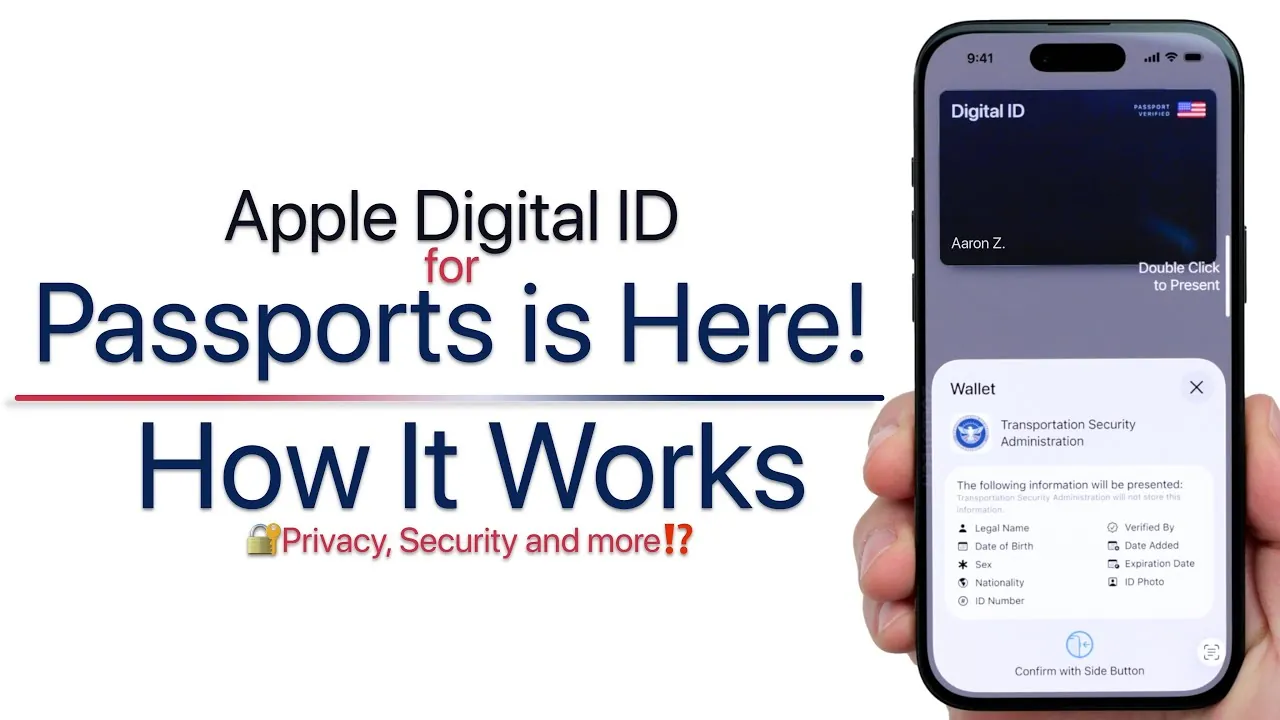
Apple has introduced a new feature that allows U.S. passport holders to store and use their passport information digitally on their iPhone or Apple Watch. Integrated into the Apple Wallet app, this feature is designed to simplify identity verification for domestic travel and other approved scenarios. With a strong focus on privacy and security, Apple’s digital ID initiative represents a significant advancement in digital identity management. Below is a detailed exploration of how it works, its benefits, and its current limitations in a new video from Zollotech.

Who Can Use Apple’s Digital ID?
Apple’s digital ID feature is currently available exclusively in the United States and is accessible to users who meet the following requirements:
- A valid U.S. passport.
- An iPhone or Apple Watch running iOS 26.1 or later.
- Access to the Apple Wallet app.
This feature is entirely optional and is intended to complement physical passports rather than replace them. At present, its use is limited to domestic travel and specific identity verification purposes. Users should note that the digital ID is not yet applicable for international travel, making the physical passport essential for such scenarios.
How to Set Up Your Digital ID
Setting up your digital ID is a secure and user-friendly process, designed to ensure that only authorized individuals can store and access their passport information. Follow these steps to activate your digital ID:
- Open the Apple Wallet app and navigate to the “Driver’s License and ID Cards” section.
- Use your device to scan the NFC chip embedded in your passport for verification.
- Complete biometric authentication using Face ID or Touch ID.
- Submit your application for approval. Once approved, your digital ID will be activated and ready for use.
This multi-step process incorporates advanced security measures to protect your personal information and prevent unauthorized access.
Where and How You Can Use It
Currently in its beta phase, Apple’s digital ID can be used at over 250 TSA checkpoints across U.S. airports for domestic travel. This eliminates the need to carry a physical passport for these specific scenarios, offering a streamlined and convenient travel experience.
In addition to TSA checkpoints, the digital ID can also be used for:
- Booking flights and reserving hotel rooms.
- Opening accounts with financial institutions.
- Verifying identity in other approved contexts, such as age verification for certain purchases.
However, it is important to emphasize that the digital ID is not yet functional for international travel. For trips outside the United States, you will still need to carry your physical passport.
Privacy and Security: What Sets It Apart
Apple has placed privacy and security at the core of its digital ID feature. Several key measures have been implemented to protect user data and ensure secure transactions:
- Encryption: All digital ID data is encrypted and stored locally on your device, making sure that Apple cannot access or track its usage.
- Biometric Authentication: Every transaction or data-sharing request requires your authorization through Face ID or Touch ID, adding an extra layer of security.
- Selective Data Sharing: Only the necessary information is shared during transactions, minimizing the exposure of personal data and reducing potential risks.
These features align with Apple’s broader commitment to user privacy, giving you greater control over how and when your information is shared.
Limitations and Future Developments
While Apple’s digital ID offers significant convenience, there are some limitations to consider:
- The feature is currently available only in certain states and Puerto Rico, as its rollout depends on partnerships with state governments.
- It is exclusive to Apple devices and is not available on Android platforms, limiting its accessibility to non-Apple users.
- Adoption is optional, meaning users can continue to rely on their physical passports if they prefer.
Looking ahead, Apple plans to expand the availability of the digital ID to more states and explore its potential for international travel. These developments will depend on regulatory approvals and further advancements in technology. As the feature evolves, it may pave the way for broader adoption and integration into other aspects of digital identity management.
What This Means for You
Apple’s digital ID for passports represents a significant step forward in the evolution of digital identity management. By integrating encryption, biometric authentication, and selective data sharing, Apple has created a solution that balances convenience with security.
Although its current scope is limited to domestic travel and select use cases, the potential for broader adoption is promising. As the feature continues to develop, it could redefine how you manage and use your identity in the digital age, offering a glimpse into a future where physical documents may no longer be necessary for everyday transactions and travel.
Browse through more resources below from our in-depth content covering more areas on Apple Digital ID.
- The iOS 18.6.2 Update Apple Doesn’t Want You to Ignore
- How to Unlock the Full Potential of Apple Wallet
- Apple News Roundup & iOS 18.3 Breakdown
- Is Your Apple ID Safe? Essential Security Steps
- How to Use Apple Pay: A Complete Guide to Its Features
Source & Image Credit: zollotech
Disclosure: Some of our articles include affiliate links. If you buy something through one of these links, Geeky Gadgets may earn an affiliate commission. Learn about our Disclosure Policy.
