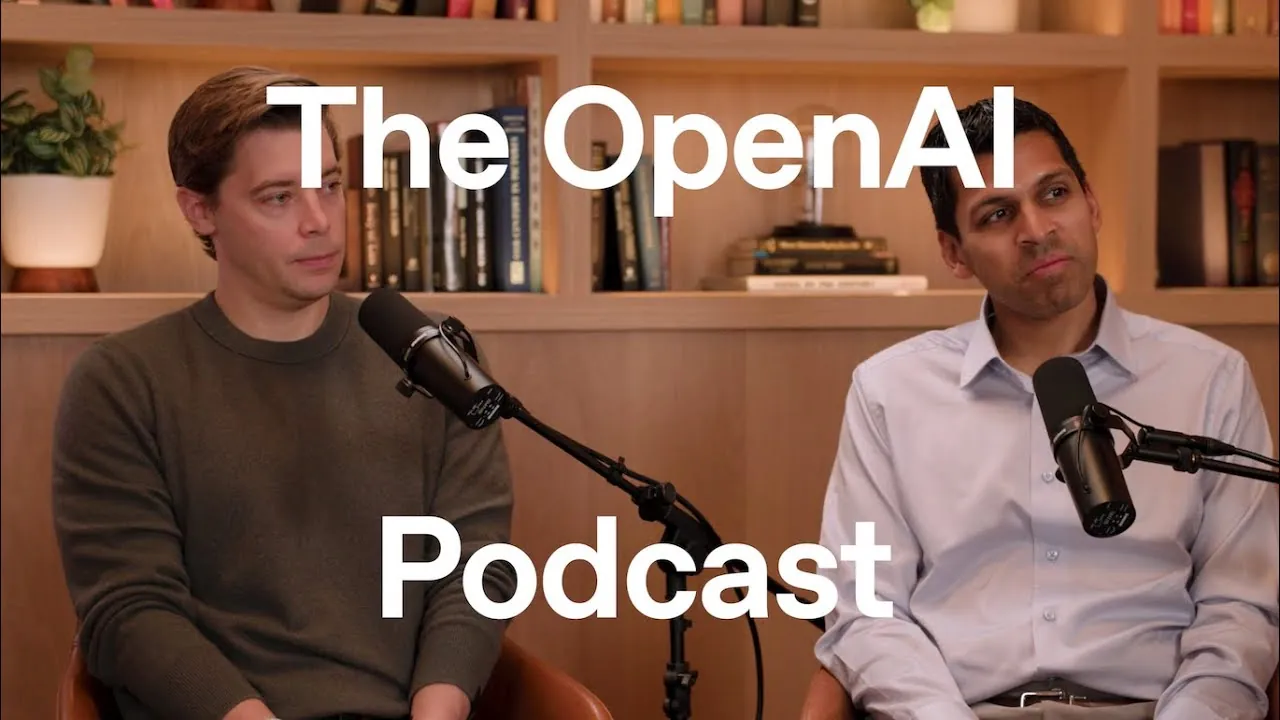
What if the tools reshaping our economy could also redefine what it means to work, learn, and create? Artificial Intelligence (AI) is no longer a distant concept—it’s here, transforming industries and daily life in ways both profound and practical. From automating repetitive tasks to unlocking new realms of creativity, AI is driving a seismic shift in how we approach productivity and innovation. But as this transformation unfolds, it raises critical questions: How will AI impact jobs? Can it foster equitable growth, or will it deepen existing divides? OpenAI’s Brad Lightcap and Ronnie Chatterji, two leading voices in this space, offer a unique lens into how AI is shaping the global economy and what it means for the future of work.
This OpenAI podcast provides more insights into the duality of AI as both a disruptor and an enabler. You’ll explore how tools like ChatGPT are empowering individuals—from rural entrepreneurs to urban professionals—to compete on a global scale. Discover how AI is not just automating tasks but also enhancing creativity, reshaping education, and providing widespread access to access to opportunities. Along the way, we’ll unpack the economic shifts, workforce evolution, and ethical considerations that come with this technological revolution. As you read, consider this: Is AI the great equalizer we’ve been waiting for, or does it demand a new kind of vigilance to ensure its benefits are shared widely?
AI’s Impact on Work and Growth
TL;DR Key Takeaways :
- AI is transforming productivity and creativity by automating repetitive tasks and allowing individuals and businesses to focus on higher-value activities like innovation and problem-solving.
- AI is reshaping the workforce by creating new opportunities, emphasizing the importance of critical thinking and adaptability, and fostering lifelong learning in a rapidly evolving job market.
- AI enhances education and skills development by acting as a personalized tutor, bridging gaps in access to quality education, and supporting modern workforce needs.
- AI adoption varies across industries and regions, with significant potential to drive growth and innovation in emerging markets and underserved areas through affordable and scalable solutions.
- OpenAI collaborates with policymakers and educators to ensure responsible AI adoption, balancing innovation with ethical considerations and promoting equity and inclusion globally.
AI as a Fantastic option for Productivity and Creativity
AI is transforming the way tasks are performed, enhancing both efficiency and creativity. Tools like ChatGPT make AI accessible through intuitive conversational interfaces, allowing you to interact with technology in practical and meaningful ways.
For example:
- Small business owners can use AI to generate innovative ideas, draft compelling content, and streamline daily operations.
- Students can use AI as a learning companion to explore complex concepts and improve their understanding.
- Professionals across diverse industries can simplify workflows, freeing up time for strategic decision-making and innovation.
By automating repetitive tasks and simplifying complex processes, AI allows you to focus on higher-value activities such as problem-solving, creativity, and innovation. This dual role of enhancing productivity while fostering creativity highlights AI’s fantastic potential in both professional and personal contexts.
Economic Shifts and Workforce Evolution
AI is driving significant changes across industries, from healthcare and education to software engineering and professional services. It provide widespread access tos access to expertise, allowing individuals and small businesses—even in remote or underserved areas—to compete on a global scale. For instance, a rural entrepreneur can now use AI tools to analyze market trends, optimize operations, and expand their reach with minimal resources.
While concerns about job displacement persist, AI is also creating new opportunities. By automating routine tasks, it enables you to focus on higher-value activities, fostering creativity and innovation. Entirely new industries, such as AI-powered personalized learning platforms and advanced analytics services, are emerging, offering exciting career paths.
Moreover, AI is reshaping the skills landscape. As automation takes over repetitive tasks, skills like critical thinking, adaptability, and emotional intelligence (EQ) are becoming increasingly valuable. This shift underscores the importance of lifelong learning and adaptability in a rapidly evolving job market.
OpenAI’s Brad Lightcap & Ronnie Chatterji

Expand your understanding of the Artificial Intelligence Economy with additional resources from our extensive library of articles.
- NVIDIA CEO Jensen Huang Declares AI a $100 Trillion Opportunity
- The Economic and Ethical Impacts of OpenAI’s Deep Research
- Satya Nadella’s Vision for AI: Transforming Industries and Society
- Ex-OpenAI Employee reveals the future of AI and AGI
- How Artificial General Intelligence Will Reshape Society by 2035
- What Are OpenAI Super Agents? The Future of AI and Work
- NVIDIA emphasizes importance of nations investing in sovereign AI
- How to Build AI Agents and Earn $10,000 a Month
- How OpenAI’s Redefinition of AGI Could Change the World
- How AI Will Reshape the Jobs : Insights from Sam Altman
AI in Education and Skills Development
AI is transforming education by acting as a personalized tutor, adapting to your unique learning needs and pace. It provides tailored support, helping you grasp complex concepts more effectively. For example, OpenAI’s collaboration with institutions like Cal State University integrates AI tools into curricula, enhancing both teaching and learning outcomes.
In addition to improving traditional education, AI supports skills development for the modern workforce. It helps you refine critical thinking, decision-making, and adaptability—skills that are essential in an AI-driven economy. By serving as a lifelong learning companion, AI ensures that you remain competitive in a rapidly changing job market.
AI also bridges gaps in access to quality education. Whether you’re a student in a remote area or a professional seeking to upskill, AI-powered platforms provide scalable and affordable solutions. These advancements highlight AI’s potential to make education more inclusive and effective.
Sectoral and Regional Trends in AI Adoption
AI adoption varies significantly across industries and regions. Sectors with fewer regulatory barriers, such as finance and professional services, are implementing AI solutions more rapidly than heavily regulated fields like healthcare. However, even in complex industries, AI is beginning to address challenges such as patient care, administrative efficiency, and resource allocation.
Emerging markets stand to benefit significantly from AI adoption. For example:
- In agriculture, AI-powered tools optimize crop yields, reduce waste, and improve resource management, helping farmers in developing economies.
- Small businesses in these regions can access affordable AI solutions to enhance productivity, streamline operations, and reach new markets.
These advancements demonstrate AI’s potential to drive growth and innovation globally, particularly in regions that have historically faced economic and technological barriers.
AI’s Role in Promoting Equity and Inclusion
AI has the potential to bridge gaps in access to healthcare, education, and professional opportunities. Tools like ChatGPT provide scalable, affordable solutions for coaching, counseling, and mentorship, helping underserved populations overcome barriers to economic participation. For instance, an aspiring entrepreneur in a remote area can use AI to develop a business plan, seek mentorship, and refine their strategy.
By addressing systemic inequities, AI fosters a more inclusive economy where opportunities are accessible to all. OpenAI’s commitment to equitable access ensures that the benefits of AI are distributed widely, rather than concentrated in specific regions or industries. This focus on inclusivity highlights AI’s role in creating a more balanced and equitable global economy.
The Future of Work and Organizational Impact
AI is allowing smaller teams to achieve large-scale impact, allowing even small organizations to compete with larger counterparts. By automating routine tasks, AI frees you to focus on strategic initiatives, fostering innovation and efficiency. This shift not only enhances organizational performance but also enables individuals to take on more meaningful and impactful roles.
OpenAI itself anticipates continued growth in its workforce, reflecting the increasing demand for AI expertise across industries. This trend underscores the importance of investing in education and training to prepare for the jobs of the future. As AI continues to evolve, organizations that embrace its potential will be better positioned to thrive in a competitive global economy.
Collaborating with Policymakers and Educators
To ensure the responsible adoption of AI, OpenAI actively collaborates with policymakers and educators. By providing evidence-based research and fostering global partnerships, OpenAI helps shape regulatory frameworks that balance innovation with ethical considerations.
For example:
- OpenAI works with governments to address concerns about data privacy, security, and ethical AI usage.
- It supports educators in integrating AI tools into curricula, enhancing learning outcomes and preparing students for the future workforce.
These efforts highlight the importance of aligning technological advancements with societal values. By fostering collaboration between technology developers, policymakers, and educators, OpenAI ensures that AI’s benefits are maximized while its risks are mitigated.
Everyday Applications of AI
AI’s versatility extends beyond professional contexts into everyday life. Whether you’re planning meals, seeking fitness advice, or training a pet, AI can serve as a reliable assistant. By offering tailored recommendations and insights, it simplifies daily tasks and enhances decision-making.
For instance, ChatGPT can help you create a personalized fitness plan, track progress, and adjust goals based on real-time feedback. Similarly, it can assist with budgeting, meal planning, or even learning a new language. These practical applications demonstrate AI’s potential to improve both professional and personal outcomes, making it an indispensable tool in modern life.
Media Credit: OpenAI
Disclosure: Some of our articles include affiliate links. If you buy something through one of these links, Geeky Gadgets may earn an affiliate commission. Learn about our Disclosure Policy.
