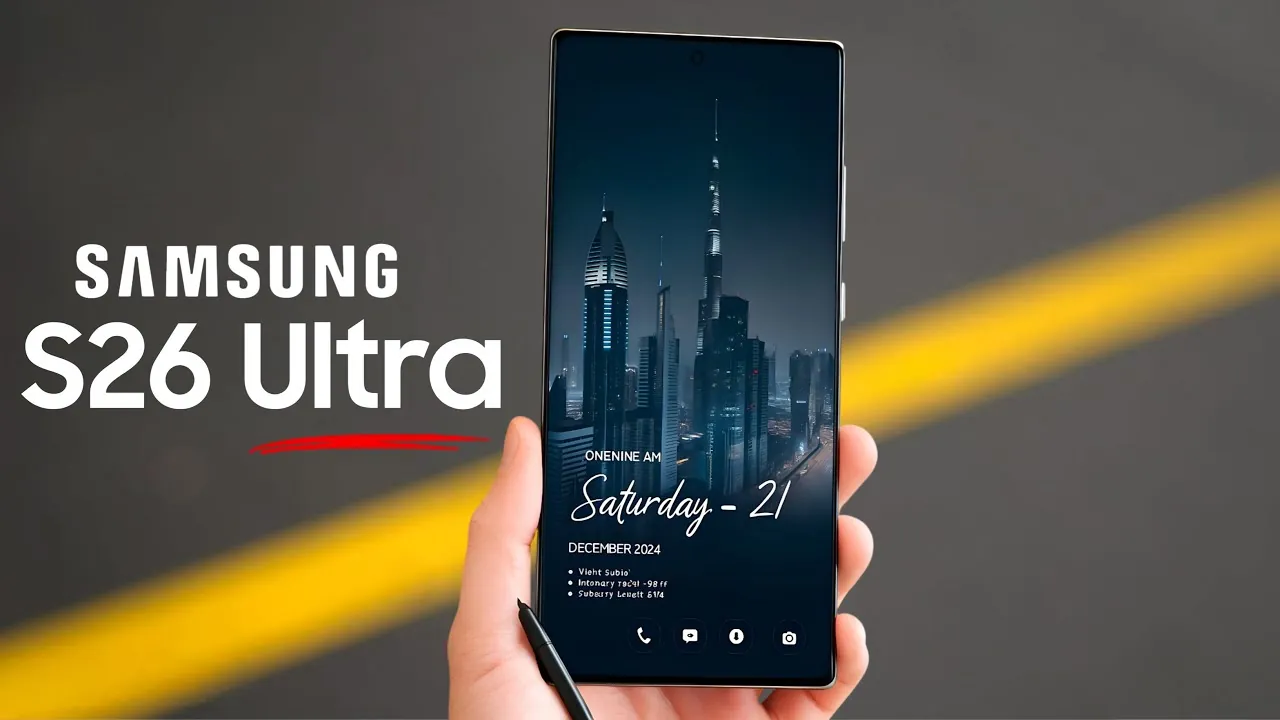
The Samsung Galaxy S26 Ultra is set to make a significant impact in the smartphone market with its innovative dual-chip strategy. By reintroducing its in-house Exynos processor alongside Qualcomm’s Snapdragon in select regions, Samsung aims to regain its competitive edge in the chipset market. This strategic decision reflects the company’s ambition to challenge industry leaders and address the growing demand for high-performance mobile processors. With this approach, Samsung is not only diversifying its offerings but also taking a bold step toward redefining the standards of smartphone performance

Exynos 2600: Harnessing 2nm Technology for Unmatched Efficiency
At the core of Samsung’s strategy lies the Exynos 2600, a processor built using innovative 2nm process technology. This advancement represents a significant leap forward in manufacturing, promising notable improvements in efficiency, speed, and thermal management. The Exynos 2600 is designed to address the shortcomings of its predecessors while delivering a host of benefits, including:
- Faster processing speeds to handle demanding applications and multitasking
- Lower power consumption, resulting in extended battery life
- Improved thermal performance to minimize overheating during intensive usage
These enhancements position the Exynos 2600 as a serious contender against Qualcomm’s Snapdragon lineup. By using 2nm technology, Samsung aims to demonstrate its ability to compete at the highest level of mobile processor innovation.
Dual-Chip Strategy: Meeting Diverse Consumer Needs
Samsung’s dual-chip strategy is a calculated approach to cater to a wide range of consumer preferences and market demands. The Galaxy S26 lineup is segmented to optimize performance across different models. While the Galaxy S26 and S26 Edge will feature the Exynos 2600, the flagship Galaxy S26 Ultra will exclusively use the Snapdragon 8 Elite Gen 2. This segmentation allows Samsung to:
- Provide tailored solutions for varying consumer needs and budgets
- Maximize the strengths of both chipsets to enhance user experience
- Ensure competitive performance across all price points
By adopting this strategy, Samsung ensures that its devices appeal to a broader audience without compromising on quality or performance. This dual-chip approach also highlights the company’s commitment to offering customized solutions for different markets.
Regional Deployment: Strategic Allocation of Chipsets
Samsung’s decision to allocate chipsets regionally is a strategic move aimed at balancing performance expectations and market dynamics. In regions such as the United States and South Korea, all Galaxy S26 models will feature Snapdragon processors, using Qualcomm’s established reputation for reliability and performance. Meanwhile, European and other global markets will receive Exynos-powered devices, providing Samsung with an opportunity to showcase the capabilities of the Exynos 2600. This regional deployment strategy enables Samsung to:
- Maintain consumer trust in key markets where Snapdragon is preferred
- Test the Exynos 2600’s performance in diverse environments
- Gradually rebuild confidence in its in-house processors
By carefully considering regional preferences, Samsung is positioning itself to succeed in both established and emerging markets. This approach not only strengthens its global presence but also allows the company to refine its chipset technology based on real-world feedback.
Performance Comparison: Exynos 2600 vs. Snapdragon 8 Elite Gen 2
Early performance benchmarks indicate that the Exynos 2600 has the potential to rival, and in some cases surpass, the Snapdragon 8 Elite Gen 2. While the Snapdragon 8 Elite Gen 2, built on a 3nm process, remains a powerhouse in terms of speed and efficiency, the Exynos 2600’s 2nm process technology offers a distinct advantage in certain areas. Key performance highlights of the Exynos 2600 include:
- Superior multitasking capabilities for seamless user experiences
- Enhanced gaming performance with advanced graphics rendering
- Faster processing speeds for AI-driven applications
This competition between the two chipsets is expected to drive innovation and set new benchmarks for mobile performance. By pushing the boundaries of what is possible with mobile processors, Samsung is positioning itself as a leader in the next generation of smartphone technology.
Broader Implications: A New Era for Samsung and the Industry
The Galaxy S26 Ultra’s dual-chip strategy marks a pivotal moment for Samsung’s Exynos division and the broader smartphone industry. By reintroducing Exynos processors with state-of-the-art technology, Samsung is signaling its intent to compete directly with Qualcomm and Apple in the global chipset market. If successful, this strategy could:
- Restore consumer confidence in Samsung’s in-house processors
- Strengthen the company’s position as a leader in mobile technology
- Encourage further advancements in processor innovation
This move has the potential to reshape the competitive landscape of the smartphone industry. By demonstrating the capabilities of the Exynos 2600, Samsung could inspire other manufacturers to explore similar strategies, ultimately benefiting consumers through increased innovation and competition.
Looking Ahead: The Future of Samsung’s Dual-Chip Strategy
The Samsung Galaxy S26 Ultra represents a bold step forward in the evolution of smartphone technology. By combining the advanced 2nm process technology of the Exynos 2600 with the proven performance of the Snapdragon 8 Elite Gen 2, Samsung is taking a calculated risk to diversify its offerings and redefine the standards of mobile performance. As the Galaxy S26 lineup rolls out globally, its reception will serve as a critical test for Samsung’s dual-chip strategy. The success of this approach could pave the way for future innovations in mobile processors, solidifying Samsung’s position as a leader in the industry.
Explore further guides and articles from our vast library that you may find relevant to your interests in Samsung Galaxy S26 Ultra.
- Samsung Galaxy S26 Ultra’s Design is a Big Surprise
- Samsung Galaxy S26 Ultra: Performance Upgrades & More
- Samsung Galaxy S26 Ultra: Specs, Features, and Performance
- Samsung Galaxy S26 Ultra: Key Features and Updates
- Samsung Galaxy S26 Ultra: 6 Key Updates Revealed
Source & Image Credit: Demon’s Tech
Disclosure: Some of our articles include affiliate links. If you buy something through one of these links, Geeky Gadgets may earn an affiliate commission. Learn about our Disclosure Policy.
