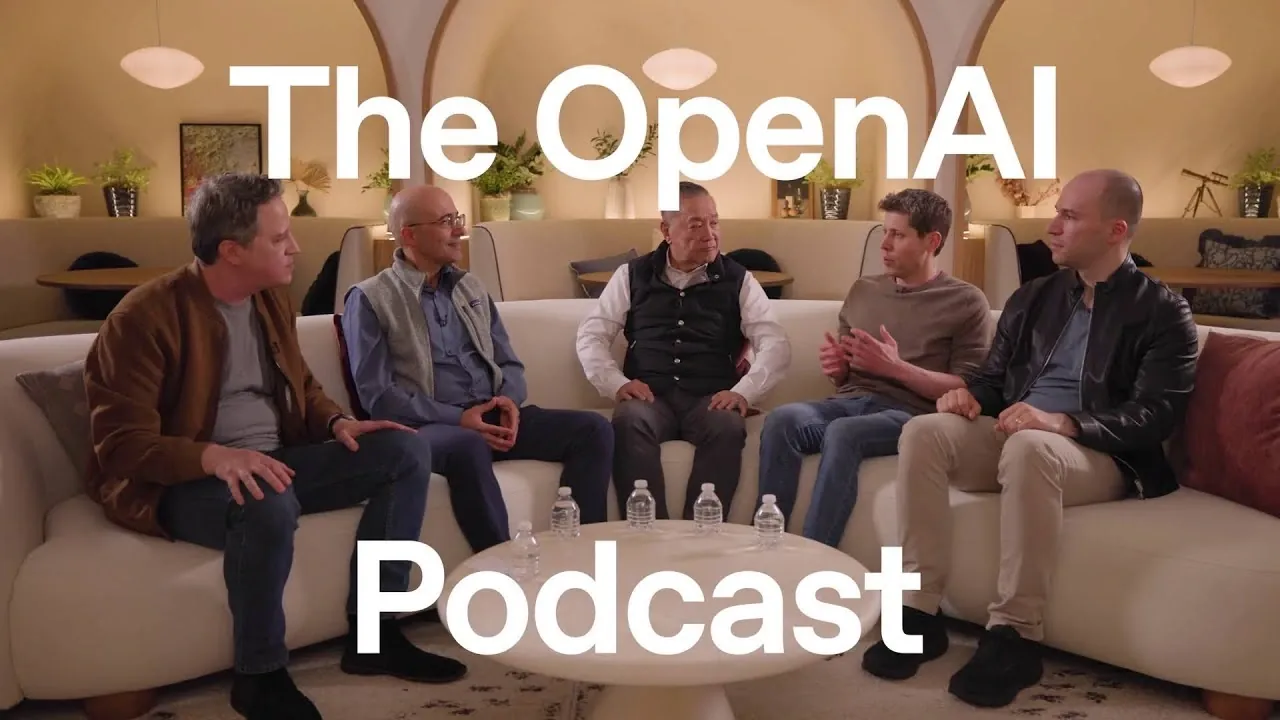
What happens when two giants in their respective fields join forces to reshape the future of technology? The recent partnership between OpenAI and Broadcom is poised to answer that question. In a bold move to address the surging demand for advanced AI infrastructure, these industry leaders are collaborating to design custom AI chips that promise to transform how artificial intelligence operates at scale. With plans to deploy a staggering 10 gigawatts of computing power by next year, an infrastructure rivaling the scale of major industrial projects, this partnership is not just about keeping pace with the AI boom; it’s about setting a new standard. At its core, this collaboration represents a powerful fusion of expertise: OpenAI’s mastery of AI workloads and Broadcom’s leadership in semiconductor innovation. Together, they’re tackling one of the most pressing challenges in tech today: how to make AI systems faster, more efficient, and globally scalable.
In this OpenAI podcast learn more about the fantastic potential of this alliance, from the innovative technologies driving their custom chip designs to the broader implications for AI development. Readers will discover how innovations like 3D chip stacking and optical switching are poised to redefine AI hardware capabilities, allowing faster model training and inference. But the story doesn’t stop at the technical level, this partnership also signals a shift in how AI infrastructure is conceived, with a focus on vertical integration and seamless optimization across hardware and software. Whether you’re curious about the future of generative AI, the practical applications of these advancements, or the vision of AI as a foundational global utility, this collaboration offers a glimpse into the next chapter of technological evolution. As we unpack the details, one question lingers: could this partnership be the key to unlocking AI’s full potential?
OpenAI-Broadcom AI Chip Partnership
TL;DR Key Takeaways :
- OpenAI and Broadcom have partnered to design custom AI chips and deploy 10 gigawatts of computing infrastructure by late next year, addressing the growing global demand for AI capabilities.
- The collaboration focuses on vertically integrated systems, optimizing hardware and software for AI workloads to maximize performance and efficiency.
- Key technological innovations include 3D chip stacking, optical switching, and transistor-to-algorithm optimization, enhancing AI hardware capabilities and efficiency.
- The partnership aims to scale AI infrastructure to over 30 gigawatts in the future, supporting advanced AI models like GPT-6 and GPT-7 and allowing fantastic applications across industries.
- By combining OpenAI’s AI expertise with Broadcom’s semiconductor innovation, the partnership seeks to position AI as a foundational global utility, driving economic growth and improving quality of life worldwide.
Strategic Goals: Building Scalable and Efficient AI Infrastructure
The collaboration between OpenAI and Broadcom is centered on developing custom AI chips specifically tailored to the unique demands of AI workloads. By integrating chip design with data center deployment, the partnership aims to establish a seamless, vertically integrated system. This approach ensures that every component, from hardware to software, is optimized to maximize performance and efficiency for AI applications.
The overarching goal is to address the growing global demand for AI infrastructure while supporting the development of next-generation AI models. By focusing on scalability and efficiency, the partnership seeks to enable the widespread adoption of AI technologies, making sure they remain accessible and practical for a broad range of applications.
Technological Innovations: Advancing AI Hardware Capabilities
To achieve their ambitious objectives, OpenAI and Broadcom are using innovative technologies that redefine the boundaries of AI hardware. These innovations include:
- 3D Chip Stacking: This advanced technique increases computational density by vertically layering chips, reducing latency and significantly enhancing processing performance.
- Optical Switching: By replacing traditional electrical connections with optical ones, data transfer speeds are dramatically improved, accelerating both AI model training and inference processes.
- Transistor-to-Algorithm Optimization: The collaboration focuses on optimizing the entire stack, making sure seamless integration between hardware and AI algorithms for unparalleled efficiency.
These technological breakthroughs aim to deliver faster, more efficient, and cost-effective AI systems. By addressing key bottlenecks in AI hardware, the partnership is paving the way for applications that can transform industries ranging from healthcare to finance and beyond.
$10 Billion AI Power Play: OpenAI & Broadcom’s Bold Partnership

Below are more guides on OpenAI from our extensive range of articles.
- The Complete ChatGPT Artificial Intelligence OpenAI Training
- OpenAI o3 and o3-mini Introduced
- New OpenAI Swarm Framework Designed to Simplify Multi-Agent AI
- What Is OpenAI’s Index-Free RAG System and How Does It Work
- How to use OpenAI Assistants API
- Different OpenAI models and capabilities explained
- OpenAI AI Model 03 Surpasses Human Reasoning – AGI?
- OpenAI’s $3 Billion Windsurf Acquisition Changes AI Forever
- OpenAI GPT-5 vs GPT-6 : Key Features and Future Impacts
- OpenAI AI Agent 2.0 being developed to control your computer
Scaling Infrastructure: Meeting the Growing Global Demand for AI
A cornerstone of this partnership is the deployment of a massive computing infrastructure designed to meet the escalating global demand for AI capabilities. OpenAI and Broadcom plan to roll out 10 gigawatts of computing capacity by late next year, with a long-term vision to scale this infrastructure beyond 30 gigawatts.
To put this into perspective, such infrastructure rivals the scale of major industrial projects, reflecting the ambition and complexity of this initiative. This level of capacity is critical for supporting the training and deployment of advanced AI models, including future iterations like GPT-6 and GPT-7. By investing in scalable infrastructure, the partnership aims to ensure that AI technologies remain robust, reliable, and capable of addressing increasingly complex challenges.
Broader Implications for AI Development
The collaboration between OpenAI and Broadcom is poised to unlock new possibilities in AI development, allowing the creation of more powerful and efficient generative AI models. These advancements will support a diverse range of applications, including:
- Enterprise Automation: Enhancing operational efficiency and streamlining workflows for businesses across industries.
- Personalized AI Agents: Delivering tailored user experiences through advanced, context-aware interactions.
- Superintelligence Development: Addressing complex global challenges with highly advanced AI capabilities.
By driving innovation and expanding the potential of AI technologies, the partnership aims to provide widespread access to access to these tools, making sure that users worldwide can benefit from their practical applications and fantastic potential.
Collaborative Expertise: Combining Strengths for Innovation
The partnership uses the complementary expertise of OpenAI and Broadcom to achieve its ambitious goals. OpenAI brings deep knowledge of AI workloads and model development, while Broadcom contributes its leadership in semiconductor innovation and hardware design. Together, they are creating chips and systems optimized for AI applications, fostering a collaborative ecosystem that prioritizes efficiency, scalability, and innovation.
This synergy ensures that the resulting technologies are not only innovative but also aligned with the broader mission of advancing AI for the benefit of humanity. By combining their strengths, OpenAI and Broadcom are setting a new standard for AI infrastructure development, emphasizing both technical excellence and practical utility.
Future Vision: AI as a Foundational Global Utility
Looking ahead, the partnership between OpenAI and Broadcom is set to drive continued advancements in AI chip design and infrastructure. Future AI models, such as GPT-6 and GPT-7, will benefit from enhanced performance, scalability, and efficiency enabled by these innovations. The long-term vision is to position AI as a foundational global utility, akin to the internet or electricity, serving billions of users worldwide.
By prioritizing efficiency, scalability, and accessibility, OpenAI and Broadcom aim to ensure that AI technologies contribute to economic growth and improve quality of life for people across the globe. This partnership represents a pivotal moment in the evolution of AI infrastructure, redefining the role of AI in shaping a more connected, intelligent, and equitable world.
Media Credit: OpenAI
Disclosure: Some of our articles include affiliate links. If you buy something through one of these links, Geeky Gadgets may earn an affiliate commission. Learn about our Disclosure Policy.
