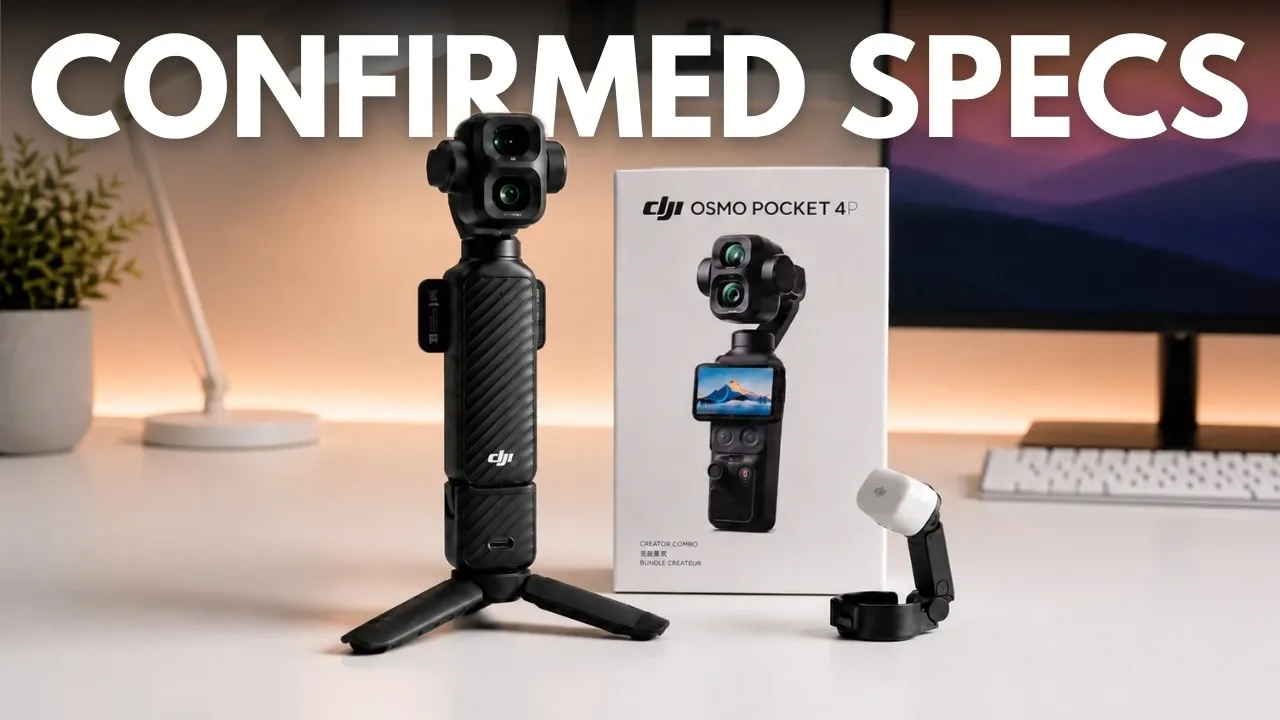
The recently announced DJI Osmo Pocket 4P brings a mix of advancements and trade-offs, aiming to refine the compact camera experience for creators. As highlighted by Tech Court, standout features include a dual-camera system with wide-angle and portrait lenses, a 1-inch sensor offering 17 stops of dynamic range and 4K recording at 240 FPS for slow-motion storytelling. These upgrades cater to those seeking high-quality visuals and streamlined workflows, but the absence of features like 6K recording and native 4K vertical video raises questions about its adaptability to modern content creation trends.
In this guide, you’ll explore how the Osmo Pocket 4P balances its strengths and limitations. Gain insight into its enhanced low-light performance with the LED fill light, the creative potential unlocked by D-Log 2 color grading, and the practicality of built-in storage for extended shoots. You’ll also uncover the gaps in its design, such as the telephoto lens compromises and restricted vertical recording options, helping you determine whether this compact camera aligns with your creative needs.
Refinement Meets Versatility
TL;DR Key Takeaways :
- The DJI Osmo Pocket 4P features a dual-camera system with wide-angle and portrait lenses, a 1-inch sensor for improved image quality and advanced D-Log 2 color grading support for professional workflows.
- It offers 4K recording at 240 FPS for cinematic slow-motion, 103 GB of built-in storage for extended shooting and an LED fill light for enhanced low-light performance.
- Optional Pro Combo accessories, including a remote controller and microphone, cater to advanced setups, while a new white color option adds a stylish aesthetic.
- Key omissions include the lack of native 4K vertical recording, no 6K resolution and limitations in telephoto lens performance and D-Log 2 support for the secondary camera.
- Scheduled for release in mid-June 2026, the Osmo Pocket 4P focuses on refinement and usability, appealing to creators seeking high-quality visuals but may fall short for those prioritizing innovative features or social media-centric content creation.
The Osmo Pocket 4P introduces a host of upgrades aimed at enhancing the creative process. These features are designed to provide a balance of quality, convenience and versatility:
- Dual-Camera System: Equipped with both a wide-angle and portrait lens, this setup minimizes the need for digital zoom, delivering sharper and more versatile compositions for various shooting scenarios.
- 1-Inch Sensor: The larger sensor significantly improves image quality, offering 17 stops of dynamic range. This makes it ideal for capturing high-contrast scenes, such as dramatic landscapes or vibrant urban environments.
- D-Log 2 Support: Advanced color grading capabilities allow for greater flexibility in professional post-production workflows, allowing creators to achieve their desired aesthetic with precision.
- 4K at 240 FPS: High-frame-rate recording opens up creative possibilities for slow-motion storytelling, adding a cinematic touch to your projects.
- Built-In Storage: With 103 GB of internal storage, the device ensures extended shooting sessions without the constant need to swap out memory cards.
- LED Fill Light: Enhanced low-light performance ensures better image quality in dim environments, making it a reliable tool for nighttime or indoor shoots.
- Pro Combo Accessories: Optional accessories, such as a remote controller and microphone, cater to advanced setups. Additionally, the new white color option introduces a stylish, lifestyle-oriented aesthetic.
These features collectively position the Osmo Pocket 4P as a versatile and user-friendly tool for creators who prioritize high-quality visuals and streamlined workflows.
What’s Missing: Gaps in the Vision
While the Osmo Pocket 4P brings several enhancements, it also leaves some creators wanting more. Certain omissions may limit its appeal for specific use cases:
- No Native 4K Vertical Recording: The lack of vertical recording in 4K is a notable drawback for creators focused on social media platforms like Instagram and TikTok, where vertical content is the standard.
- Telephoto Lens Limitations: Although the telephoto lens adds versatility, it does not fully use the 1-inch sensor, resulting in compromises in image quality for zoomed-in shots.
- D-Log 2 Restrictions: This feature is limited to the main camera, reducing the telephoto lens’s potential for professional workflows and advanced color grading.
- No 6K Recording: Despite rumors, the absence of 6K recording capabilities places the Osmo Pocket 4P behind competitors that offer higher resolutions for more detailed footage.
These limitations suggest that while DJI has focused on refining existing features, it may have overlooked emerging trends and demands in the content creation landscape.

Take a look at other insightful guides from our broad collection that might capture your interest in DJI Osmo Pocket 4P.
- DJI Osmo Pocket 4P Global Launch is Finally Here
- Why DJI Kept the Osmo Pocket 4P Specs a Secret at Cannes
- How the Insta360 Luna Ultra Challenges DJI’s Cinematic Dominance
- What the Latest DJI Osmo Pocket 4P Leaks Actually Mean
- DJI’s Osmo Pocket 4 Pro Faces a Hidden Threat from Insta360
- DJI Pocket 4 vs Pocket 4P : Are the New Pro Features Worth the Upgrade?
- Why the DJI Osmo Pocket 4P is Launching Under a Completely Different Name in the U.S.
- Everything We Know About the DJI Pocket 4 Pro Sensor Upgrade
- DJI Pocket 4 Pro is a Much Bigger Upgrade Than Expected
- DJI Osmo Pocket 4 vs Insta 360 Luna Ultra : Everything You Need to Know
Strategic Focus: Refinement Over Experimentation
DJI’s strategy with the Osmo Pocket 4P emphasizes refinement and usability rather than bold experimentation. By improving optics, stabilization and overall functionality, the company aims to deliver a reliable tool that appeals to a broad audience. This approach prioritizes consistency and ease of use, making the device a dependable choice for creators seeking high-quality visuals without a steep learning curve.
However, this strategy contrasts with competitors like the Luna Ultra, which takes a more modular and creator-centric approach. For instance, the Luna Ultra’s customizable design allows users to adapt their setup to specific needs, offering a level of flexibility that the Osmo Pocket 4P does not match. This difference highlights DJI’s focus on providing a polished, all-in-one solution rather than a platform for experimentation and customization.
Release Timeline and Market Position
The DJI Osmo Pocket 4P is scheduled for release in mid-June 2026, positioning itself as a strong contender in the compact camera market. Its confirmed features make it an attractive option for creators who value quality and convenience. However, the absence of key functionalities, such as 4K vertical recording and 6K resolution, may limit its appeal for those who prioritize innovative capabilities or social media-focused content creation.
Ultimately, the Osmo Pocket 4P represents a step forward in refinement and usability. Whether it meets your needs will depend on your specific creative priorities and goals. For those seeking a reliable, high-quality compact camera, it offers a compelling package. However, creators looking for maximum flexibility or the latest innovations may find themselves exploring alternative options.
Media Credit: Tech Court
Disclosure: Some of our articles include affiliate links. If you buy something through one of these links, Geeky Gadgets may earn an affiliate commission. Learn about our Disclosure Policy.
